
Covering approaches 20 billion won in annual revenue through collection density
Covering, the operator of the household waste recycling service Ricle, is approaching 20 billion won in annual revenue by optimizing collection density to turn a profit.
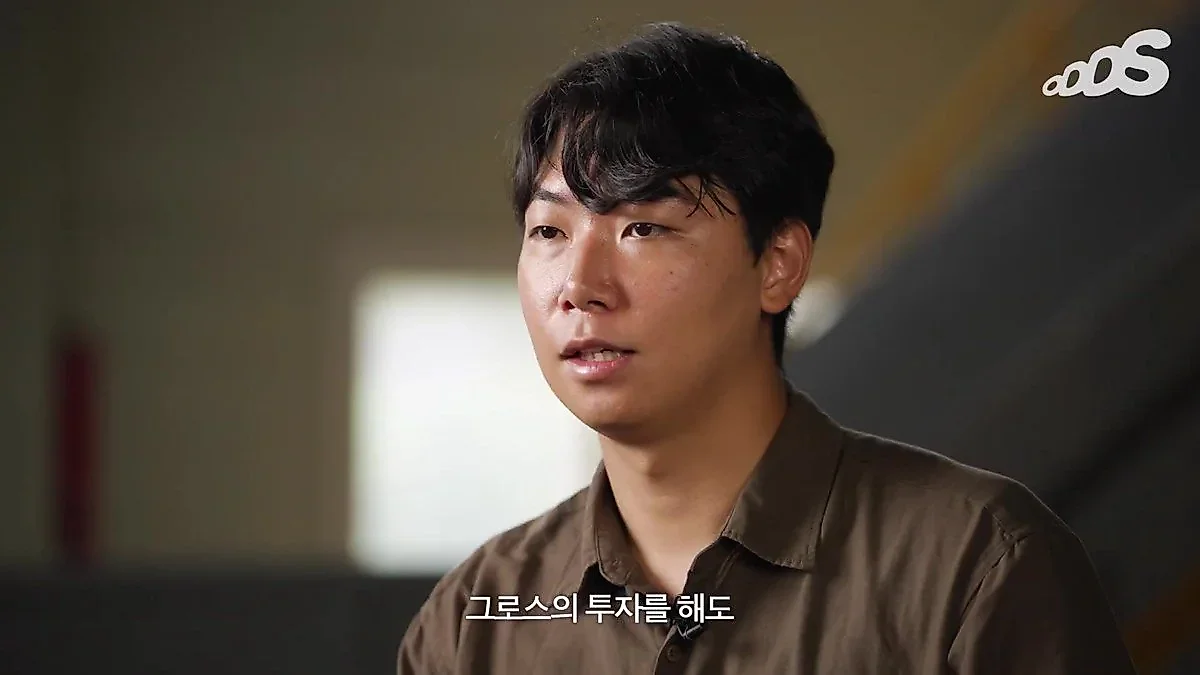
Covering, the operator of the Ricle recycling service, is expected to exceed 20 billion won in annual revenue this year after overcoming early deficits. By increasing collection density in areas like Gwanak-gu and Gangnam District, the company grew its revenue from 400 million won in 2023 to 9.5 billion won in the first half of this year.
A service that handles the disposal of food delivery waste is approaching an era of 20 billion won in annual revenue. Covering, the operator of the household waste recycling service Ricle, has secured 80,000 users who use the service at least once a month by turning the "dirty work" of waste collection and sorting—tasks avoided by most—into a business.
The story of Covering CEO Kang Seong-jin, as reported by EO Korea, contains the intense process of moving from his college days of roaming the streets at night with trash bags to overcoming a deficit to establish a profitable structure.
"A deficit structure where costs exceeded 10,000 won in revenue... broken through with 'collection density'"
In the early stages of its founding, Covering's situation was not easy. CEO Kang Seong-jin recalled that growth was difficult during the first two to three years of the service due to a structure where revenue and costs were nearly equal. Even if a single collection generated 10,000 won in revenue, when combined with approximately 5,000 won in collection costs and approximately 2,000 won in sorting costs for recycling, the margin was only around 3,000 won; when operational efficiency was low, the structure actually required spending more than 10,000 won to earn 10,000 won. Even as investment increased, the deficit continued to grow.
To solve this problem, Kang focused on "collection density." To lower collection costs, orders must be concentrated in a narrow area. He found the optimal density for profitability by randomly placing 100 pins on NAVER Map and individually calculating the time it took to move by car. The areas with the highest number of orders were Gwanak-gu and Gangnam District, where single-person households are concentrated.
The turning point for the profit structure was increasing order volume through marketing investment. Once marketing began based on investment and government support, order volume increased, which naturally led to an increase in collection density. As density rose, the collection cost per case decreased, completing a virtuous cycle where a margin of 1,000 to 2,000 won was left for every 10,000 won in revenue. In fact, Covering's revenue grew rapidly from approximately 400 million won in 2023 to 1.7 billion won in 2024 and 7 billion won in 2025, recording 9.5 billion won in the first half of this year alone. Annual revenue for this year is expected to exceed 20 billion won.
"Three years in a nauseating underground sorting facility; it was about enduring rather than certainty"
To achieve current growth, Kang spent three years collecting trash every night and sorting it in an underground sorting facility during the day. At the time, the facility was in poor condition, with a stench emanating from food waste. It was grueling work, such as having to manually remove motors to wash away residue when water pooled in the basement. During his college years, Kang performed collection work every night while attending school.
Kang described this period as "enduring" rather than having "certainty." He persevered with the determination that he had decided to invest this time there and would do his best. "Even though my body smelled of trash at the time, I believed that this investment of time would return as much greater value in five or ten years," he said.
This persistence gained momentum from customer responses. Following COVID-19, customers who felt the inconvenience of handling delivery waste showed high retention, with many re-applying for the service in less than a week after using it once. Kang recalled, "Anyone seeing that response would feel that they must do this business."
Kang's motivation for starting the business began during an internship in the investment industry. During his internship at a private equity (PE) firm, he felt greater value in the sight of startup CEOs working passionately on their tasks rather than in markets where large sums of money move. He stated, "My desire to create my own work grew, so I decided to start a business at a young age."
Innovation in a 'dirty market' that AI cannot replace
While many industries are changing due to the rapid development of AI technology, Covering's business model has instead established itself in an area that is difficult for AI to replace. This is because it is a "field-centered" business where physical collection and on-site sorting are essential. Kang explained this as "a very strong company that AI cannot replace."
He views the waste market, which is a "dirty market" not preferred by young talent, as an opportunity. It is an area that someone must inevitably innovate, and the more one understands the structure of the industry, the clearer the points for improvement become. Kang expressed his ambition, stating, "I will create more attempts and innovations in this area in the future."
Kang emphasized that he values the process more than the business results. Due to the nature of a business with high uncertainty where things do not go according to plan, he places meaning in the process of setting strategies with colleagues and enjoying the journey. He said, "I focus on the best process to the point where, looking back later, I feel certain that I would have made the same choice."
Source: EO Korea (YouTube)



0Comments
Comments are currently disabled.