
RLWRLD unveils DexBench to prioritize robot dexterity over movement
RLWRLD CEO Ryu Jung-hee defines the core value of robots as dexterity and has partnered with NVIDIA to launch DexBench, a new benchmark for evaluating industrial robot performance.
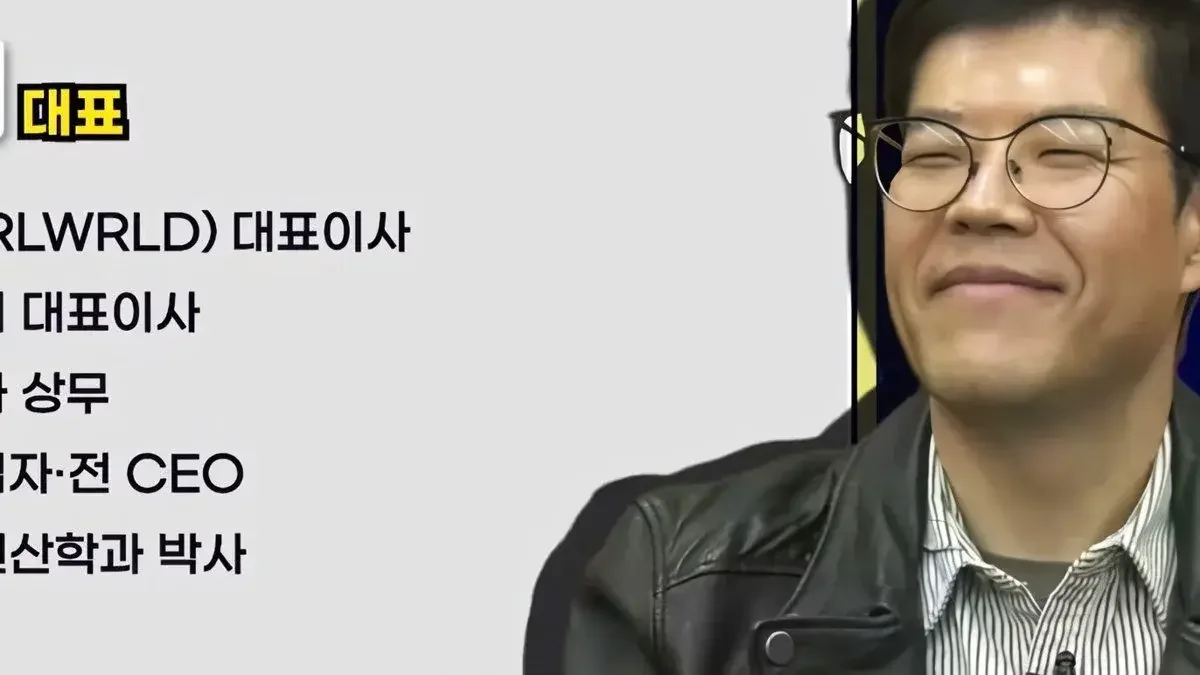
RLWRLD CEO Ryu Jung-hee has introduced DexBench, a new dexterity benchmark developed with NVIDIA, to better evaluate robot performance for industrial sites. The company aims to deploy its hardware-agnostic foundation model, RLDX-1, which has already outperformed open-source models across eight benchmarks.
“Why should a robot run around? We have cars for that. The rest of the body is just a tool to deliver hands.”
As robot movements become more flamboyant, the perspective from industrial sites remains cold. While Chinese robots have recently drawn attention by demonstrating dynamic movements such as performing backflips or running marathons, critics point out that these actions are far from the practical purpose of replacing human labor. Ryu Jung-hee, CEO of RLWRLD, defined the core value of robots as "dexterity," emphasizing that "human-level" technology—combining high intelligence with sophisticated hand movements—is essential for robots to 100% replace human labor.
'DexBench', created in collaboration with NVIDIA, sets a new standard for industrial robot evaluation
RLWRLD recently unveiled "DexBench," a new benchmark for evaluating robot dexterity, in collaboration with NVIDIA. While existing robot benchmarks have mostly been limited to testing simple motions, such as moving boxes in research institutes or university laboratories, DexBench focuses on reflecting the complexity of actual industrial sites.
CEO Ryu clearly identified the limitations of existing benchmarks, noting that being good at housework does not mean a robot will perform well in a factory, logistics center, or hotel. He analyzed that benchmarks created by researchers or academics failed to sufficiently capture the context of real labor. Consequently, RLWRLD established a "Taxonomy" that analyzes labor occurring at actual work sites to extract common elements. Based on this, they implemented specific scenarios, such as convenience stores, logistics centers, and factories, within a simulation environment.
Notably, DexBench utilizes NVIDIA's physical simulation engine "Newton" and "Isaac Sim" simulator technology to precisely reflect physical properties such as an object's weight, slipperiness, and transparency. This follows the judgment that a benchmark holds no value unless the physical properties of objects are perfectly implemented. DexBench is expected to be used as a standard tool by robot companies worldwide to objectively prove the performance of their models. RLWRLD stated that its robot foundation model, "RLDX-1," has already outperformed open-source models across eight types of benchmarks.
'Hardware Agnostic' universal AI: A B2B strategy for the robot market
RLWRLD's strategy focuses on creating a "robotics foundation model" that can be installed on any robot, rather than manufacturing hardware directly. This distinguishes them from the approach taken by Tesla's "Optimus" or Figure AI, which develop both the robot body and the AI directly. RLWRLD aims for a "hardware agnostic" model that is not limited by specific hardware.
The reason Ryu focuses on software is due to the unique nature of the robot market. The robot market is a 100% B2B market targeting corporations rather than individual consumers. Corporate work environments vary; some require sophisticated robots, while others need robots with the strength to lift heavy loads. Since a single robot body cannot satisfy all environments, RLWRLD calculates that a universal AI model capable of supporting diverse hardware holds greater competitiveness in the market. He explained that because the robot market is fundamentally 100% B2B, a foundation model that can support various hardware is essential to meet the different requirements of each company.
He explained that just as Large Language Models (LLMs) learn various languages to understand context without translation, robot AI can also transfer motions between different hardware once sufficient data is accumulated. The core of a foundation model is to cross the "embodiment" threshold, where a motion learned on a specific robot can be implemented on a robot of a different form. He compared this to how human knowledge can exist in an English database yet still allow for answering questions in Korean.
A battle of milliseconds: Real-time control determines success or failure
The decisive difference between robot AI and LLMs is "real-time capability." While users can tolerate an LLM like ChatGPT taking seconds or even minutes to provide an answer, a robot must respond immediately to physical changes occurring in the split second it grabs an object. "The time taken for a robot to correct its posture so it doesn't slip when grabbing an object must occur within tens to hundreds of milliseconds (ms)," Ryu warned. "If the feedback loop does not operate within this time, the robot may lose its balance and fall over."
This means that the "planning" area, where high-level intelligence plans a path, must be sophisticatedly combined with the "local control" area, which responds immediately through fingertip sensations. Citing the views of KAIST Professor Gong Gyeong-cheol, Ryu expressed agreement with the "System 1, System 2" concept, which divides thought into the cognitive area determined by the brain and the sensory area occurring at the fingertips. To respond to an object's slipperiness or weight, a hybrid structure involving a real-time feedback loop is essential, in addition to the probabilistic approach of large models.
Ultimately, RLWRLD aims to complete robot intelligence capable of immediate deployment to industrial sites through a hybrid structure that combines the intelligence of a massive foundation model with a software stack that enables real-time control. Recently, attempts to solve robotics problems using Agentic AI, such as Astra or Argon, have also been ongoing. Ryu predicted that humanoids will become the ancestor of all robots and foresaw that the full-scale deployment of robots into industrial sites will occur around 2028.
Source: original video (YouTube)

0Comments
Comments are currently disabled.