
Anthropic token costs approach annual salaries of its 5,300 employees
Anthropic is disrupting the software market by creating "AI-native" document formats designed for AI to read and edit, moving beyond simple human assistance. Park Jong-cheon, CAIO of JiranJigyo Soft, predicts that the company's massive investment in token costs and its rapid development speed will make it a leader in the AI market.
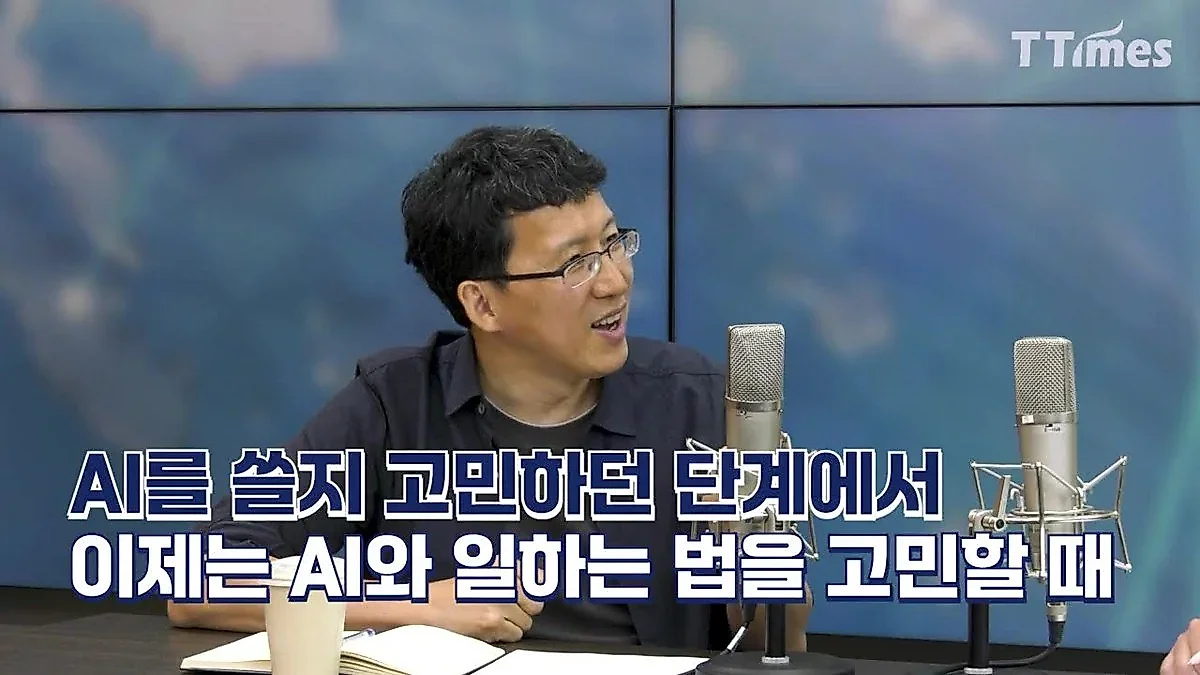
Anthropic is driving an AI-native revolution by creating document formats designed for AI to read and edit, with annual token costs estimated to reach trillions of won. JiranJigyo Soft CAIO Park Jong-cheon noted that these massive resource investments allow the company to compete with much larger firms.
The era of "AI-native" has arrived, where AI goes beyond merely assisting human-written documents to creating documents in the best format for AI to read and edit itself. This is because the products introduced by AI model developer Anthropic are shaking the fundamental grammar of the existing software market.
Park Jong-cheon, CAIO of JiranJigyo Soft, predicted in an interview with T Times TV that Anthropic is highly likely to grow into a leading stock in the future AI market. Park identified Anthropic's strong competitiveness not just in product direction, but in "speed." He analyzed that "the speed at which Anthropic releases and improves a single product is incomparably faster than general software companies," adding, "Beyond simply supporting existing documents, they are directly creating document formats that are easy for AI to write."
Token costs surpass labor costs as AI agents redefine "work quality"
Anthropic's moves are not limited to improving model performance. The recently released "Claude Sheets" has issued a powerful challenge to existing spreadsheet tools like MS Excel. Instead of humans editing data one by one, the method involves giving commands to the AI to perform data organization, graph generation, and analysis. "The impact was so large that MS stock prices were affected at the time of the Claude Sheets announcement," Park explained. "The core is 'Claude-native' documents designed so that AI can immediately understand and edit the content."
Of particular note is Anthropic's overwhelming input of resources. According to Park, Anthropic is investing massive resources, with recent token costs used to run its models approaching the scale of the total annual salaries of its employees. Considering Anthropic has approximately 5,300 employees, annual token costs are estimated to reach trillions of won. He diagnosed that "as more tokens are used, there is an aspect where the intellectual ability of the AI improves," and "while the number of employees is small, the development competitiveness secured through massive token input is on par with companies of hundreds of thousands in scale."
The combination of MCP as "hands and feet" and the AI agent ecosystem
If an AI model is the "brain," it needs "hands and feet" to be applied to actual work. Park identified data centers that generate tokens and companies based on MCP (Model Context Protocol), which act as the "hands and feet" to allow Claude to perform practical tasks, as the key companies that will survive in the future AI industry ecosystem.
Currently, companies are connecting internal systems to AI models like Claude through MCP. Through this, it has become possible for AI to fetch internal documents to write reports or directly upload organized data to internal systems. "An era is coming where humans no longer need to explain tasks to other humans," Park said. "It has become possible to have AI agents extract skills and then pass them to other agents to complete a task."
He predicted that these changes will alter the very foundation of the software industry. His analysis is that while existing software was designed in a "way that is easy for humans to use," it will be reorganized into a "way that is easy for AI to read and write." Adobe adopting an AI-native strategy by adding MCP follows this same context.
"The last three months equal a year's worth of change"... Accelerating AI transformation
The pace of AI technology development is exceeding prediction ranges. Park emphasized, "There is a world of difference between a year ago and now, and the changes in the last 2 to 3 months have been more extreme than the past year." He stated that even within JiranJigyo Soft, they are pursuing a company-wide AI transformation, such as converting the development team to a "Vibe Coding" system and making all documents into forms shareable with AI.
In fact, he is experiencing dramatic changes in his personal work methods. While he previously had to search for data himself, he now asks questions to a personal AI (Mini JC) built on data accumulated over the past few months to receive immediate answers. He predicted, "As data accumulates, AI remembers more than humans do and answers more quickly," and "Next year, 'Super AI' that surpasses human work capabilities will become commonplace."
Ultimately, his conclusion is that future competitiveness depends on how well one utilizes AI and what kind of data and tools (hands and feet) are provided so that AI can complete tasks.
Source: original video (YouTube)


0Comments
Comments are currently disabled.