
Nasdaq falls as Anthropic IPO signals shift in Big Tech financing
An analysis from Park Jong-hoon's Knowledge Remedy suggests that massive IPOs may act as a market deterrent, as Big Tech companies shift from stock buybacks to new share issuances to fund heavy capital expenditures.
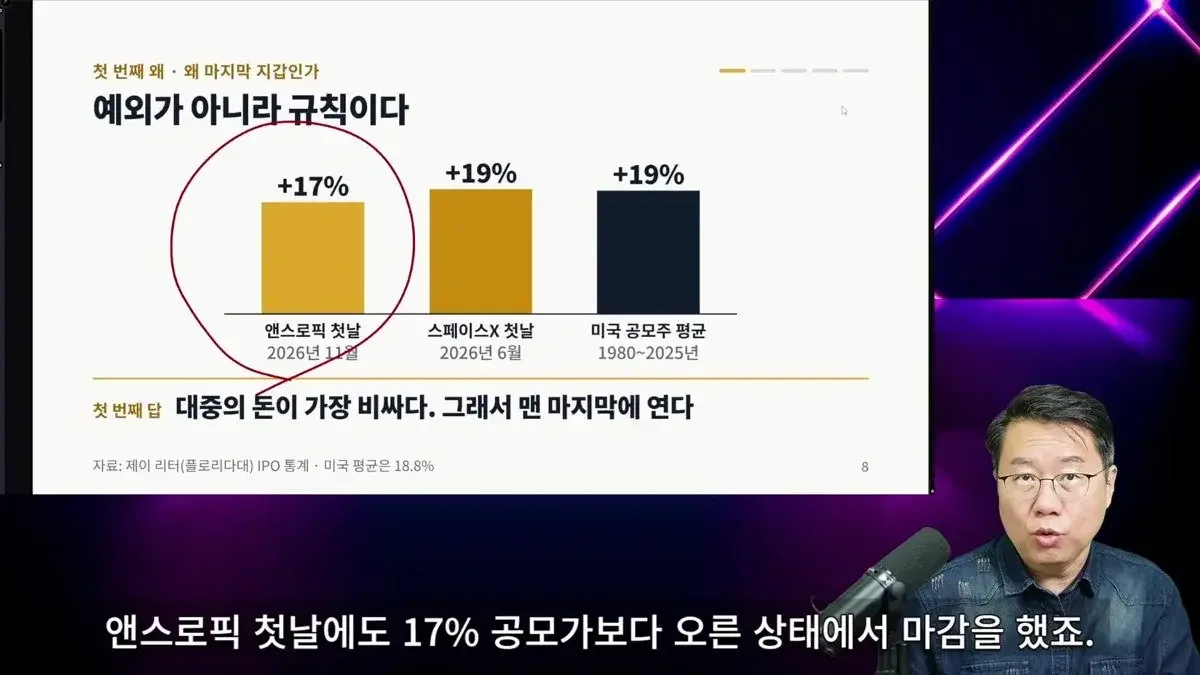
The Nasdaq plummeted over 5.2% in a single day following the historic Anthropic IPO, which saw the company's stock drop to $83. This market decline coincides with a shift in Big Tech financing as companies move from stock buybacks toward issuing new shares to cover massive capital expenditures.
An analysis has emerged suggesting that a wave of record-breaking initial public offerings (IPOs) may actually act as a negative factor for the stock market. Following the recent historic listing of Anthropic, the Nasdaq index plummeted, leading to observations that changes in how corporations raise capital are exerting pressure on the market.
The Mobilization of the 'Third Wallet' and Anthropic's Stock Trend
According to an analysis provided by Park Jong-hoon's Knowledge Remedy, Anthropic's IPO had a negative impact on the market despite being one of the largest in history. Anthropic opened at a price of $83 and reached an initial price of $111, but the closing price fell to $97, and it dropped further to $83—near the offering price—the following day. Following Anthropic's listing, the Nasdaq fell by more than 5.2% in a single day and showed a downward trend of 10% over one week. Anthropic's own stock also exhibited volatility, falling by 9%.
The stages of a company securing funds are divided into three. First, they operate using their own earnings; if those are insufficient, they take out loans; and when even that is impossible or when stock prices are deemed high, they choose an IPO—the "third wallet"—to draw in public money. In Anthropic's recent offering process, 97.6% of the total funds flowed into the company through the issuance of new shares, while seven founders sold 2.4% of their holdings. Notably, high demand caused the number of offered shares to increase significantly from the originally planned 825 million shares to 980 million shares, suggesting the possibility of equity dilution due to the increase in total shares.
Changes in Big Tech: From Stock Buybacks to Issuances
In the past, Big Tech companies in the United States boosted stock prices through "stock buybacks," using earned profits to purchase and cancel shares. However, recently, Big Tech companies in the United States are undergoing a fundamental change in financing methods to cover massive capital expenditure costs. While Big Tech companies used approximately 40% of their profits for capital expenditures over the past 10 years, this proportion is expected to approach 100% in 2026, facing a situation where they must cover the deficit with debt.
In fact, the average corporate bond issuance for five Big Tech companies surged from approximately $28 billion in 2024 to $120 billion in 2025, and is expected to reach $370 billion by November 2026. As companies facing fund shortages began opening their "third wallet" by issuing new shares beyond corporate bonds, Big Tech companies issued $276 billion worth of new shares by November 2025. This stands in contrast to the past method of managing stock prices through buybacks and exerts pressure on the Nasdaq similar to the phenomenon where the South Korea KOSPI market was trapped in a box range due to rights offerings and IPOs.
Early Lock-up Expirations and Market Overheating Signals
The increasing frequency of large-scale IPOs has historically been linked to market peaks. During the Great Depression of the 1930s and the Dot-com bubble of 2000, the proportion of companies listed for less than three years within the total market capitalization significantly exceeded the average of 4.6%. This is why concerns are being raised that the proportion of companies listed for less than three years within the United States market capitalization may rise again.
In the case of Anthropic, the fact that its lock-up regulations are unusually short compared to other companies has drawn market attention. While there is a common practice of restricting the sale of shares for a certain period after listing, Anthropic has volumes that will be released from lock-up on December 15, just 27 days after its listing. Such a structure, where large volumes of shares can enter the market immediately after listing, may act as an additional burden on future stock prices.
Source: original video (YouTube)



0Comments
Comments are currently disabled.