
Semiconductors and PCBs overtake steel as top South Korean exports to Thailand
South Korean exports to Thailand are shifting toward high-tech electronics, such as semiconductors and PCBs, driven by the Thai government's industrial policies and increased data center investment.
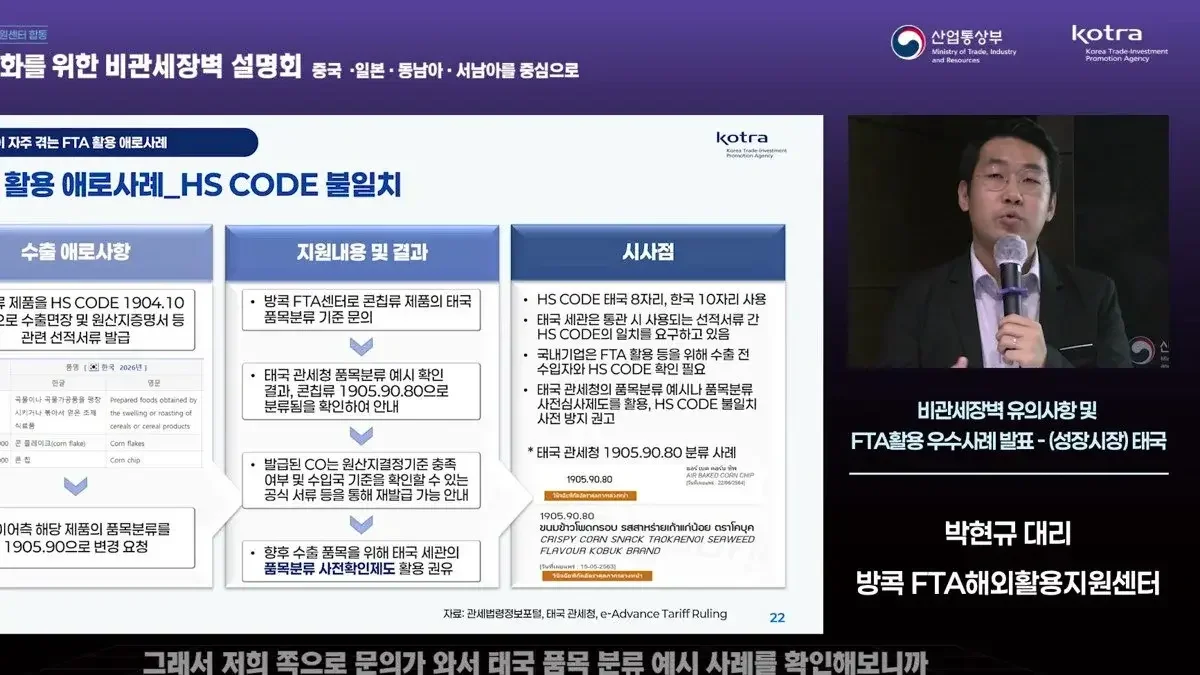
High-tech electronics have replaced steel as the leading South Korean export to Thailand, with bilateral trade reaching approximately $15 billion in 2025. This shift follows increased demand for semiconductors and PCBs as the Thai government expands investment in data centers and advanced industries.
The leadership of the Thai export market is shifting. High-tech electronics have emerged as the new mainstay, overtaking steel products which had previously been the core of South Korean exports to Thailand. This change is a result of surging demand for South Korean semiconductors and PCBs (printed circuit boards) as the Thai government promotes advanced industries and expands investment in data centers.
According to data from the "Briefing on Non-Tariff Barriers for 2026 Export Diversification" provided by Park Hyeon-gyu, an assistant manager at the Korea Trade-Investment Promotion Agency (KOTRA) Bangkok Trade Center, bilateral trade between the two nations reached approximately $15 billion in 2025. Thailand ranks as the 9th largest market for South Korea's total trade. While the overall trade volume remained similar to the previous year, export value increased by more than 4% compared to the previous year. Notably, a generational shift in export items occurred in 2025 as electronic products overtook steel products, which had been the top export until 2024. This is analyzed to be due to increased demand following the Thai government's expansion of advanced electronic industry cultivation and data center investments.
Consumption trends led by K-content... 'Hangul packaging' creates a premium image
The growth engine of the Thai market stems from a harmonious structure of service and manufacturing sectors. The service sector, accounting for more than 60% of Thailand's GDP, and the manufacturing sector, which is one-fourth the size, drive economic growth, and the country maintains high trade dependency as the third-largest economy in ASEAN. Since the 1998 ASEAN financial crisis, Thailand has expanded trade openness and currently has 14 free trade agreements (FTAs) in effect with 18 countries. In addition to the existing Korea-ASEAN FTA and RCEP, South Korea is newly pursuing a bilateral agreement, CEPA, with Thailand. The 7th round of negotiations for this agreement was completed last September, and upon signing, customized economic cooperation is expected to strengthen, including the opening of agricultural and fishery markets and the expansion of new technology investment.
Recently, the influence of the Korean Wave in Thailand has directly led to the expansion of the consumer goods market. The popularity of K-content, such as K-pop and dramas, is a key factor increasing demand for South Korean consumer goods like cosmetics and food. According to a consumer perception survey by the trade center, the mere presence of Hangul on product packaging has the effect of evoking a "premium image" for Thai consumers. Accordingly, South Korean companies need to strategically utilize Korean-style designs and packaging to target the market by reflecting local consumer preferences. Thailand's GDP per capita is approximately $8,000, making it an attractive market in terms of purchasing power as it ranks 4th among ASEAN nations.
Changes in demographic structure are also creating new markets. Thailand is one of the countries in ASEAN experiencing rapid low birth rates and aging. Since 2000, the population growth rate has remained below 1%, and last year, the birth rate stayed at approximately 0.8. These changes are leading to growth in the pet supplies market, premium baby products centered on single-child households, and the medical and healthcare market due to aging. Furthermore, demand for electric vehicle batteries and electronics for data center construction is expected to expand following the Thai government's policies to foster the renewable energy and electric vehicle industries.
From ramen to salt bread... K-food penetrates deep into local distribution networks
The penetration of South Korean products in the food sector is very high. Not only ramen, seaweed, and fresh fruit, but also snacks and frozen foods can be easily found on the shelves of large marts and convenience stores in Thailand. In particular, demand for seaweed products has increased noticeably recently due to the combination of interest in healthy foods and the influence of K-content. As kimbap and lunchbox culture spreads, demand for seasoned seaweed and seaweed for kimbap is also on the rise.
Collaborations with K-content are translating into actual sales. Representative cases include a Thai ramen company releasing squid ink ramen or seasoned seaweed featuring specific character designs in conjunction with the airing of the Netflix series Squid Game 2. Additionally, as salt bread, which was popular in South Korea, spread through reviews by Thai influencers, salt bread and butter rice cakes can now be easily encountered in local Thai cafes and bakeries.
The medical device and cosmetics markets are also promising. Based on its excellent medical infrastructure, Thailand serves as a hub for medical tourism within ASEAN. In 2025, South Korean medical device imports grew by 9% compared to the previous year, and according to the statistical platform Statista, an average annual growth rate of more than 6% is projected from 2025 to 2029. In the case of pharmaceuticals, the country has a high dependence on imports, with import values exceeding export values by approximately five times. For cosmetics, utilizing FTAs can lower tariffs from the existing 30% to 0%, which is advantageous for securing price competitiveness alongside the Korean Wave craze.
Strengthening non-tariff barriers... Warning against uncertified products
As much as there are market opportunities, the strengthening of non-tariff barriers is a point of caution. Recently, the Thai government has been intensifying crackdowns, such as raiding warehouses, to prevent the distribution of uncertified products including food, cosmetics, medical devices, and manufactured goods. According to local media reports, seizures of illegal products and warehouse raids are occurring frequently. Especially as the e-commerce market grows rapidly, government management and supervision are trending toward becoming more strict.
In fact, in December 2025, the Thai Customs Department signed a Memorandum of Understanding (MOU) with major e-commerce platforms such as Shopee, Lazada, and TikTok to monitor the distribution of sub-standard products. Certification management agencies, such as the FDA and the Thai Industrial Standards Institute, are also directly monitoring online sites to identify and remove uncertified products. Accordingly, exporting companies must thoroughly check prior certification requirements to prepare for strengthened inspections during import customs clearance.
For food certification, products are divided into four stages depending on the risk level (specifically controlled foods, standard foods, labeled foods, and other general foods). The higher the risk level of a product, the more stringent document submissions are required, such as ingredient lists, manufacturing process charts, and test reports. All certification procedures are led and conducted by the local importer, and exporters must cooperate by providing manufacturing facility certificates and safety-related documents required for certification. In particular, it should be noted that additional costs and time may be required if an academic or safety evaluation is necessary for unregistered ingredients.
Source: KOTRA TV (YouTube)



0Comments
Comments are currently disabled.