
Easing of Housing Pension Residency Requirements and Reduction of Guarantee Fees: Summary of the 2026 Amendments
The Housing Pension system underwent two major amendments in 2026, lowering entry barriers by easing residency requirements and reducing initial guarantee fees.
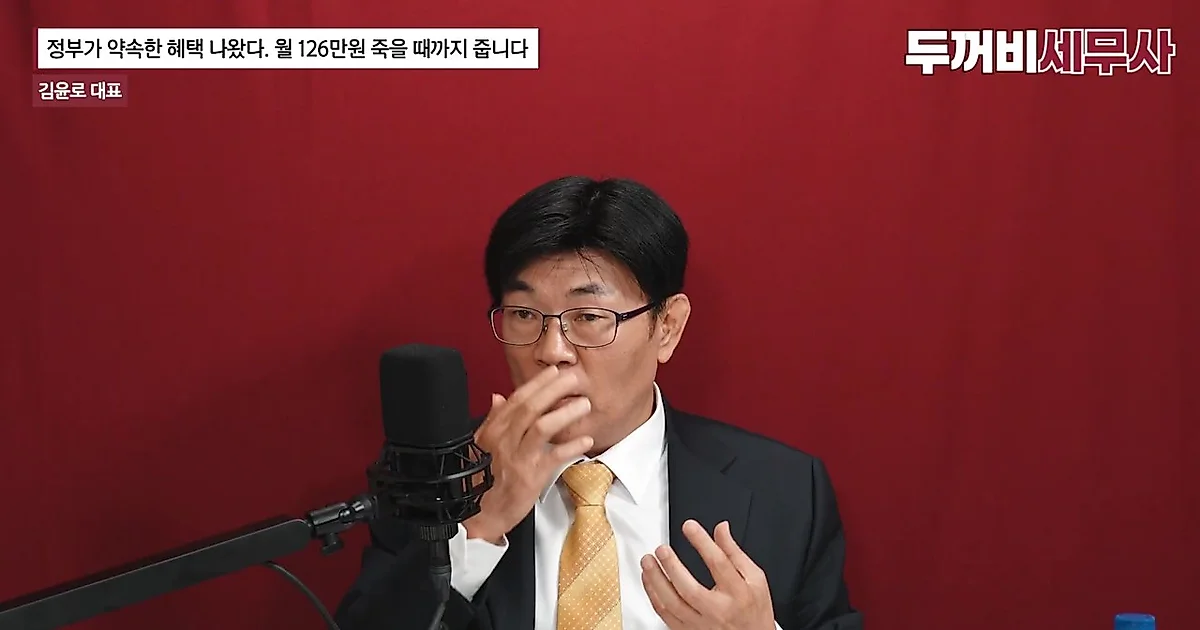
As the systems related to the Housing Pension were amended twice in 2026, changes have occurred in the enrollment conditions and cost structures. In particular, the system was modified in a direction that lowers the entry barriers for subscribers, such as easing residency requirements and reducing initial guarantee fees.
Easing of Residency Requirements and Changes in Guarantee Fee Structure
According to a video from the Finance with Toad Tax Accountant YouTube channel, amendments related to the Housing Pension were made throughout March and June 2026. The most notable change is the 'easing of residency requirements' implemented in June. Previously, there was a requirement that Housing Pension subscribers must reside in the house in question, but now, if reasons such as admission to a nursing home, use of elderly facilities, or direct cohabitation/support by children are proven, they can receive the pension without necessarily residing in that house. In particular, if the trust method of the Korea Housing Finance Corporation is utilized, it becomes possible to operate leases (Jeonse), which was impossible under the existing mortgage method, thereby broadening the scope of the eased residency requirements.
Additionally, through the March amendment, the burden of the initial guarantee fee was reduced. The initial guarantee fee, which was previously 1.5% of the house price, was lowered by 0.5 percentage points to 1%. However, the annual guarantee fee paid every year was increased by 0.2 percentage points from the existing 0.75% to 0.95%, changing to a structure that lowers the initial entry barrier but increases the maintenance cost. Furthermore, the period during which guarantee fees can be refunded upon mid-term withdrawal was extended from the existing 3 years to 5 years, strengthening the subscribers' right to choose.
In addition, the March amendment included content that increases the monthly Housing Pension payment by 3.13%. However, the presenter added that such an increase is similar to the level at which the Basic Pension rises every year and is not at an extraordinary level. Also, the 'Intergenerational Home Pension' method, where children (aged 55 or older) succeed the Housing Pension after the parents' death, was mentioned as a factor that increases enrollment convenience. This is a method where, when parents pass away while receiving the Housing Pension, instead of the children directly bearing the parents' debt, the debt is converted into internal debt and the pension is continued.
Compound Interest Effect and Strategies for Low-Value Homeowners
The video cited the 'monthly compound interest' structure as a core feature of the Housing Pension. The presenter explained that if a 65-year-old subscriber holding a house worth 500 million won receives the pension for 5 years, the amount received is about 76 million won, but the compound interest effect grows larger as time passes. While the interest to be borne over 5 years is about 16,078,000 won, after 10 years, the interest burden increases to the 50 million won range, and upon receiving it for 15 years, it reaches 120 million won. In particular, the presenter explained that if the pension is received for 25 years until age 90, the total amount received can reach approximately 380 million won. In this way, the compound interest effect has the characteristic of growing exponentially over time.
In particular, an analysis suggested that utilizing the Housing Pension may be advantageous for those who are recipients of the Basic Pension and hold relatively low-value homes. The presenter stated, "When calculating the Basic Pension, residents of low-value homes receive about 20% more in monthly pension distribution than the general public," and "If you hold a low-value home with little potential for price appreciation, utilizing the Housing Pension at an early stage can be an alternative to secure cash flow." This is a strategy applicable to holders of low-value homes in provincial areas where there is little room for house prices to rise.
Perspective on Asset Management: Inheritance to Children and Utilization of Immediate Annuity
The psychological burden of 'having to leave the house to children' was identified as a major reason for hesitating to enroll in the Housing Pension. It was mentioned that female subscribers, in particular, tend to avoid enrollment to leave the house to their children. However, the presenter advised, "There are many cases where children actually want their parents' economic independence," and "Even considering the increase in real estate value, rational judgment is needed to secure old-age living expenses." The intent is that even considering that real estate prices will rise in consideration of the inflation rate, utilizing the Housing Pension for immediate living expenses can be positive for the children as well.
Meanwhile, 'Immediate Annuity' was also suggested as an alternative for the retired generation holding large sums of money, such as retirement pay. The presenter analyzed that the Immediate Annuity is used not so much as an active investment tool, but as a means to secure a 'regular cash flow' that cannot be taken away by anyone. This is to protect assets from voice phishing or monetary demands from those around them and to prepare stable living expenses. Explaining that depending on the product type, for a life annuity, a monthly amount of about 300,000 won may be possible upon a 100 million won payment, and for a fixed-term type (based on 20 years), a monthly amount of about 1.05 million won may be possible, it was recommended to accurately understand the product characteristics through consultation with experts. In the case of the inheritance type, the monthly receiving amount was presented as about 200,000 won.
0Comments
Comments are currently disabled.