
Bank of Korea raises base rate to 3.0%... Caution over inflation and financial stability amid surge in nominal growth
The Bank of Korea has raised the base interest rate to 3.0% following two consecutive hikes, responding to strong growth, inflationary pressures…
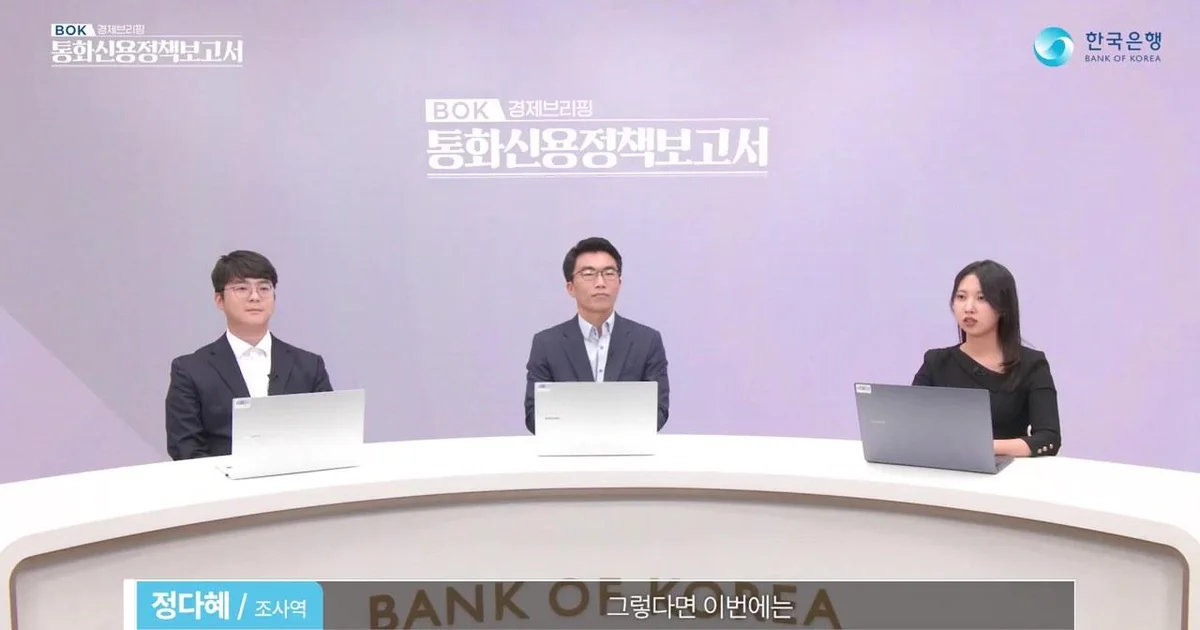
The Bank of Korea has opened the era of a 3.0% base rate by raising the base rate twice in a row recently. This decision considers the stronger-than-expected growth trend, inflationary pressures, and financial stability risks simultaneously.
Base rate raised to 3.0%... Responding to inflation and financial stability risks
According to Bank of Korea video, the Bank of Korea maintained the base rate at 2.5% in April and May, but subsequently raised the rate twice in a row in July and August. Accordingly, the current base rate is set at 3.0%. This decision to raise the rate is based on the judgment that preemptive policy responses are necessary as inflationary pressures and growth trends increase simultaneously due to the rise in international oil prices following political strife in the Middle East and the favorable semiconductor business climate.
Looking at the monetary and credit policy operating conditions, inflation has expanded to a level around 3% due to the aftermath of the Middle East war. The Bank of Korea projected that as cost pressures transfer and demand-side pressures increase due to improved income conditions, inflation will show a trend of exceeding the target level for a considerable period. In terms of growth, the economic scale has expanded more significantly than expected, with exports and investment showing high growth trends, centered on the IT sector. Accordingly, the growth rate is projected to be 3.3% this year and 2.9% next year.
In terms of financial stability, volatility has expanded. Treasury bond yields rose sharply due to the influence of the base rate hike and interest rate increases in major countries, and the KRW-USD exchange rate soared to the mid-1,500 won range before dropping to the 1,300 won range after July. In particular, since the second quarter, housing prices centered on the metropolitan area are rising again and the growth of household loans is expanding, so it is a situation where it is necessary to check the possibility that financial imbalances may further expand.
Nominal GDP surges, recording the largest gap since the early 1990s
A notable issue in this report is the surge in the nominal GDP (Gross Domestic Product) growth rate. Recently, a phenomenon occurred where the gap between the nominal growth rate and the real growth rate exceeded 10 percentage points, which is a figure appearing for the first time since the early 1990s. The Bank of Korea cited 'improvement in terms of trade' as the main cause of this surge in nominal growth rate. The analysis suggests that the nominal growth rate rose sharply as the prices of export items, including semiconductors, IT items, and chemical products, rose more significantly than the prices of import items.
These changes are expected to have complex effects on the overall economy. First, in addition to the IT industry, positive trends are observed in sectors such as shipbuilding and machinery, where facility investment is expanding due to improved performance. In terms of household income, no significant changes have appeared yet, but it is projected that if the effect of bonuses from semiconductor companies spreads after next year, the wage growth rate will rise, contributing to the recovery of consumption and domestic demand.
However, concerns about side effects due to differentiation by sector are also being raised. If the favorable business conditions are concentrated in some large corporations, the income gap between corporate sizes, industries, and households may deepen. Additionally, an environment is being created where increased demand can pull up inflation more significantly and for a longer period, so caution regarding inflationary pressure is necessary.
Future monetary policy direction... Suggesting inflation stability and the possibility of additional rate hikes
The Bank of Korea plans to focus on ensuring that the inflation rate stabilizes at the target level of 2% in its future monetary and credit policy operations. At the same time, it plans to closely examine the financial stability situation along with checking the growth trend.
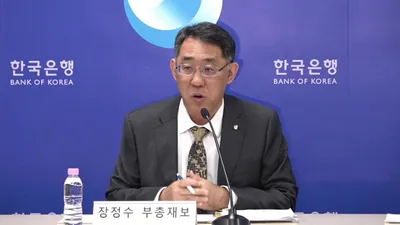
In particular, the Bank of Korea cited inflation, economic trends, and financial stability situations as key variables for future policy decisions. While the steady growth trend continues due to favorable exports and investment, inflation is expected to exceed the target for a considerable period, and the rise in metropolitan area housing prices and the increase in household debt are also subjects of continuous attention. A Bank of Korea official stated, "We will determine the timing and speed of additional base rate hikes while closely checking inflation, economic trends, and financial stability situations."
In the case of financial intermediary support loans, despite the base rate hike in August, the rate was maintained at 1.25% to alleviate the financial burden on small and medium-sized enterprises. Additionally, the system will be reorganized in stages to expand its function as a future monetary policy tool and to strengthen support for local small and medium-sized enterprises.

0Comments
Comments are currently disabled.