
"Telling us to include rental housing is blackmail"... The essence of reconstruction revealed by the backlash of Haan Jugong owners
The conflict over the installation of rental housing during the reconstruction of Haan Jugong in Gwangmyeong City, Gyeonggi Province, highlights fundamental questions regarding who should bear the costs of reconstruction projects. Owners are protesting against the government's policy of imposing unilateral financial burdens on existing asset holders to meet public needs.
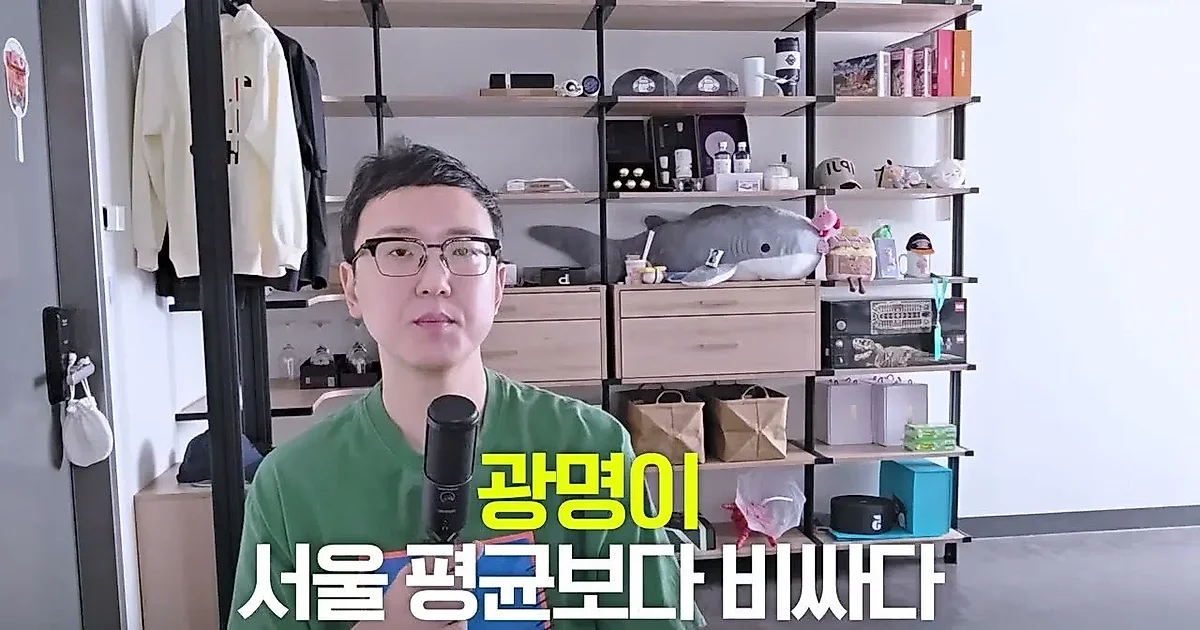
The recent conflict over the installation of rental housing during the reconstruction process of Haan Jugong in Gwangmyeong City, Gyeonggi Province, is raising fundamental questions about the entity responsible for bearing the costs of reconstruction projects. According to a video by author Song Hee-gu, a situation has arisen where owners are strongly protesting after Gwangmyeong City conveyed a policy to install rental housing in Haan Jugong, which is undergoing reconstruction. Owners expressed anger at the method of imposing a unilateral cost burden on existing asset holders under the pretext of public necessity.
"Installing rental housing is no different from blackmail"... Concerns over increased contributions from owners
The video pointed out that Gwangmyeong City's situation, where it demanded the installation of rental housing as a condition for reconstruction approval, is "almost blackmail, as it asks to include rental housing without providing any benefits." Reconstruction is a process in which owners bear massive contributions, such as relocation costs, financial costs, and various project expenses, while also taking on the risk of project delays. The analysis suggests that if the ratio of rental housing increases during this process, it not only increases the contributions of union members because the volume of general sales decreases, but it can also affect the desirability or consumer preference of the complex.
The speaker advised that when considering the purchase of a reconstruction or redevelopment property, one must check the ratio of rental units. This is because, if one considers the impact of the rental ratio on market prices, it must be regarded as a 'cost' that owners must bear, beyond mere policy implementation. The video posed the question, "If the public gains benefits through rental housing, who must bear the burden of the increased contributions and the decline in asset value that occurs in the process?"
The core of public policy is 'numbers and compensation'... Need for compensatory measures such as increasing floor area ratio
The video did not deny the necessity of public rental housing itself. However, it pointed out the problem with the method of unilaterally transferring costs to specific individuals (owners) for the sake of public interest. The speaker emphasized that if the public wants rental housing, corresponding 'compensatory measures' must be carried out in parallel. As a specific example, the method of increasing the floor area ratio by an additional 100–200% was cited. This means that a 'compensation based on numbers' should be provided, such as lowering the contributions of union members by securing additional volume for general sales.
In other words, the logic is that when making policy decisions, one must closely examine not only the benefits but also to whom the costs accrue. The speaker explained, "If someone gains benefits and someone else bears the cost, a proposal that returns business feasibility to the owners as much as the public desires must be presented together for the policy to be sustainable."
The Haan Jugong case leaves implications for reconstruction complexes nationwide
Fortunately, in the case of Haan Jugong, an agreement was reached to reduce the rental housing ratio to 1%, but this leaves important implications for many reconstruction projects underway across the country. If the installation of rental housing becomes established as a natural obligation as in this case, owners pursuing reconstruction in the future may face similar cost burden issues.
The speaker advised that owners of reconstruction and redevelopment projects should not respond to public rental housing demands simply out of selfishness, but should recognize it as an issue tied to their asset value and livelihood. Emphasizing that "reconstruction contributions are provided by owners with money earned through labor," the speaker stressed the need for union members to unite and voice clear opinions regarding public demands.


0Comments
Comments are currently disabled.