
Youth make up over 70% of Jeonse fraud victims
With more than 70% of Jeonse fraud victims concentrated among the youth, fraudulent methods are becoming increasingly sophisticated, prompting the Ministry of Land, Infrastructure and Transport to release guidance on prevention.
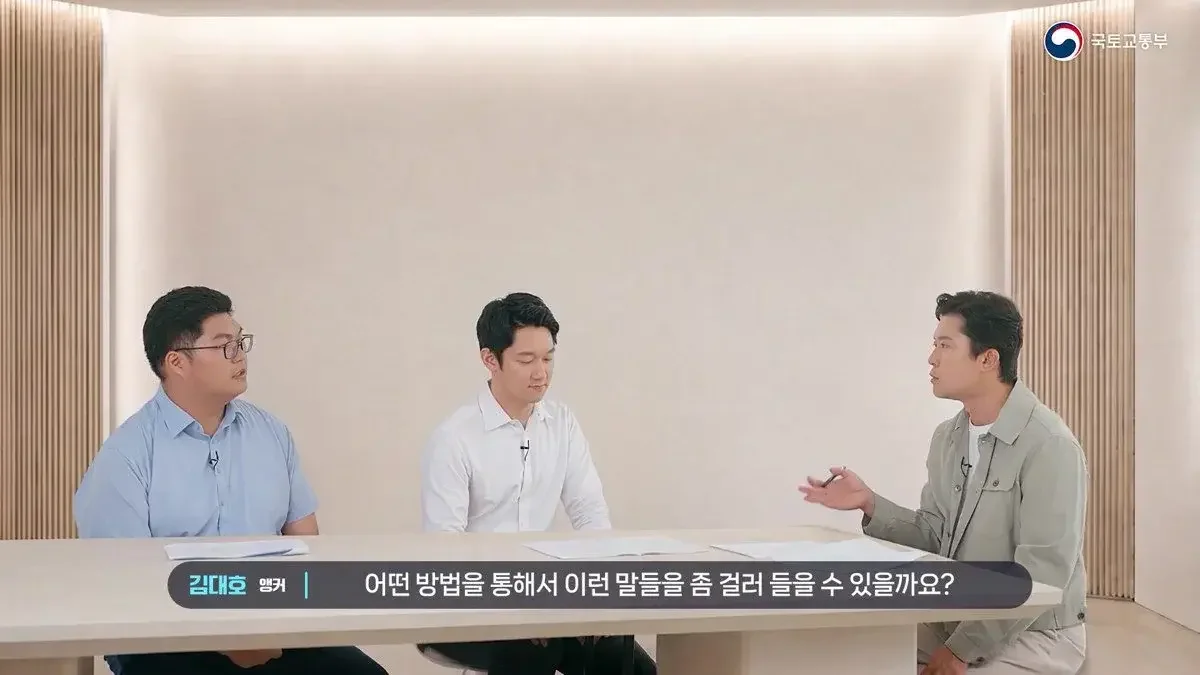
The Ministry of Land, Infrastructure and Transport released a video on the 9th detailing how sophisticated Jeonse fraud, including zero-capital gap investments and unauthorized contracts, has led to over a thousand recognized cases of unauthorized agreements.
As more than 70% of Jeonse fraud victims are concentrated among the youth, fraudulent methods threatening housing stability are becoming increasingly sophisticated. From zero-capital gap investment to unauthorized contracts made through agents, victims are being exposed to deceptive practices they could not detect at the time of contract, losing deposits that represent their entire assets.
A special news video released by the Ministry of Land, Infrastructure and Transport on the 9th addressed major types of Jeonse fraud and specific countermeasures based on actual damage cases. Kim Hyun-seok, an official from the Ministry of Land, Infrastructure and Transport, and Park Jun-il, a manager at HUG, appeared in the video to explain risk factors and prevention methods by type.
"They said the landlord was wealthy"... Zero-capital gap investment requires checking market prices
The most common type, "zero-capital gap investment," is a method where a lessor purchases multiple properties by cycling through tenants' Jeonse deposits while possessing almost no personal capital. A case of a woman in her 20s introduced in the video is representative. She signed a contract believing a real estate agent's claim that "the landlord is very wealthy," only to find out the lessor was a so-called "villa king" owning dozens of villas in the vicinity. If the lessor lacks the ability to return the deposit and house prices fall or a new tenant cannot be found, the damage falls entirely on the tenant.
To prevent this, one must check market prices directly rather than relying solely on an agent's words. It is essential to compare transaction prices of similar age and size in the vicinity through the Ministry of Land, Infrastructure and Transport Real Estate Transaction Disclosure System. This is because the prices presented by agents are often "asking prices" desired by the landlord. In particular, it is difficult to determine market prices for newly built villas due to a lack of actual transaction data. Kim Hyun-seok advised, "A method is to check the appraisal documents from an appraiser or to estimate the market price based on the land value of the building and the building unit price used as a standard for acquisition tax for a conservative approach."
Methods to verify a lessor's financial strength were also presented. By using the 'Safe Jeonse App' operated by the Ministry of Land, Infrastructure and Transport, one can easily view national and local tax payment certificates with the lessor's consent. Additionally, it is important to check whether the lessor is a habitual defaulter (someone with a history of not returning deposits) through HUG. Including a special contract clause stating "the lessor will not be changed in the middle of the term" is a practical way to prevent zero-capital gap investment. The video added that since there are many cases where the lessor is changed immediately after the contract, it is safe to write in the contract that "this house will not be sold."
Believing "the mortgage will be released soon"... Beware of contractual deception
Cases of "contractual deception," where a lessor provides false information to induce a contract, are also frequent. A 25-year-old male victim lost a deposit of 110 million won after believing a lessor's claim that "a loan was taken urgently due to inheritance tax, but the mortgage will be released soon once the land is sold." It turned out the lessor had used the deposit as gambling funds.
In such cases, the 'Eul-gu' section of the certified copy of the real estate register must be examined closely. The 'Eul-gu' records rights other than ownership, such as mortgages. However, since there may be senior claims (such as unpaid national or local taxes) that do not appear in the register, one should request and verify certificates of full payment of national and local taxes from the lessor.
Park Jun-il emphasized, "To prepare for cases where the lessor's promises are not fulfilled, they must be documented as special contract clauses. If a contract was made under the condition of canceling a mortgage, one must verify the actual cancellation and prepare a minimum safety device by subscribing to HUG's 'Jeonse Deposit Return Guarantee'." However, subscription is impossible for certain properties such as commercial officetels, and subscription may be rejected if the deposit is excessive compared to the market price. Furthermore, if rights such as seizures or provisional seizures appear on the real estate register, subscription is impossible, so such contracts should be avoided.
Unauthorized contracts using agents: Identity and qualification verification is essential
Damage from "unauthorized contracts," where an agent who is not a party to the contract enters into an agreement without authority, is also serious. A university student victim paid the deposit believing the landlord's daughter, acting as an agent, because she carried an ID and a seal, but it turned out the landlord was entirely unaware of the contract and the agent had departed the country. To date, more than a thousand cases have been recognized as unauthorized contracts through the Jeonse Fraud Victim Committee.
To prevent damage from unauthorized contracts, one must thoroughly verify who the actual owner is and whether the agent has been duly delegated authority. In particular, the process of verifying to whom the ownership of the house has ultimately been transferred is essential. Additionally, caution is required as unqualified brokers using borrowed licenses may be involved in the real estate brokerage process. One can check if a broker is a registered professional through the Ministry of Land, Infrastructure and Transport's 'V World' site or the 'Safe Jeonse App'.
The government is operating various support policies to minimize Jeonse fraud damage. Representative examples include a minimum guarantee system for victim support and safe contract consulting. As the types of damage diversify, it is more important than ever to establish a three-step line of defense: checking market prices before a contract, recording special clauses, and subscribing to guarantee insurance.
Source: original video (YouTube)
0Comments
Comments are currently disabled.