
"Is Pension Exempt from Health Insurance Premiums?"... A Comprehensive Guide to Assessment Standards for National, Retirement, and Private Pensions
The article clarifies misconceptions regarding health insurance premiums for various types of pensions, explaining how National, Retirement, and Private pensions are assessed differently. It also warns of the potential financial burden when transitioning to local subscriber status after retirement.
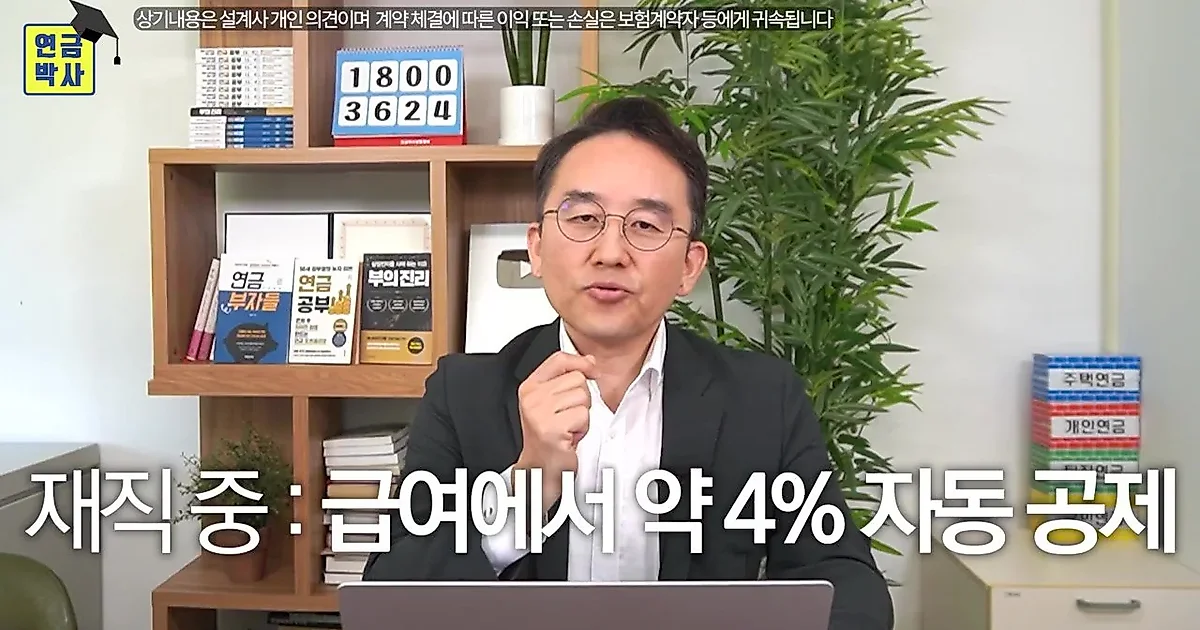
When receiving pensions, which are the core of retirement preparation, one aspect many people overlook is health insurance premiums. The perception that "if you receive a pension, you won't be charged health insurance premiums" is incorrect information, as the assessment standards vary depending on the type of pension, necessitating thorough prior preparation.
How do the health insurance premium assessment standards for National Pension, Retirement Pension, and Private Pension differ?
According to the Pension Doctor video, whether health insurance premiums are charged varies clearly by pension type. First, the National Pension is subject to health insurance premiums. However, it is not charged on the full amount received; rather, the premium is calculated based on 50% of the received amount. For example, if you receive 2 million won per month in National Pension, health insurance and long-term care insurance for the elderly are charged on half of that, which is 1 million won.
In the case of Retirement Pension, its fate depends on the method of receipt. If the retirement pension is received as a lump sum, it is classified as 'retirement income' and health insurance premiums are not charged. On the other hand, if it is transferred to a pension savings account or an IRP (Individual Retirement Pension) account and received in the form of an annuity, it is converted to 'pension income' and becomes subject to health insurance premiums. Pension savings and IRP prepared individually are also calculated as pension income, so they are included in the target for health insurance premiums.
For Annuity Insurance from life insurance companies, the standard is whether it is taxable. If you subscribe within the tax-exempt limit and meet the tax-exempt requirements, health insurance premiums are exempt, but if you exceed the limit or fail to meet the requirements and become subject to taxation, health insurance premiums are charged upon receiving the pension. On the other hand, Housing Pension has the nature of a loan secured by a house, so no taxes or health insurance premiums are charged on the pension itself. However, for local subscribers, the owned house itself may be counted as an asset, which can affect the calculation of health insurance premiums.
Why is there concern about a 'Health Insurance Premium Bomb' when transitioning to local subscriber status after retirement?
The reason office workers feel a heavy burden of health insurance premiums after retirement is the transition to 'local subscriber' status. During their time as workplace subscribers, the company bears half of the premium and it is automatically deducted from their salary, so the perceived impact is low, but after retirement, once they become local subscribers, they must pay the full amount themselves. This leads to not only a psychological burden but also an actual increase in expenditures.
Additionally, the upward trend of the health insurance premium rate itself is a variable. The Ministerio de Salud y Bienestar (Corea del Sur) announced that the health insurance premium rate will be frozen at 7.19% this year, but this is only a temporary measure. The video points out that the premium rate, which was 6.12% in 2016, has risen to 7.19% currently, and explains that the possibility of it increasing to the legal upper limit of 8% in the future cannot be ruled out. When the long-term care insurance for the elderly (about 0.9448% of income) is added, the actual burden exceeds 8% of income.
"State benefits are not eternal"... The importance of prior preparation
The video warned of the possibility of health insurance premiums being charged for some pensions that are currently exempt by policy. While retirement pensions or private pensions (pension savings/IRP) are currently being deferred or exempted from health insurance premiums by policy, this may be a temporary measure according to national policy. In other words, one must note that they could be converted into targets for taxation at any time depending on future policy changes.
In conclusion, taxes and health insurance premiums occurring during retirement are unavoidable expenditures. The video emphasized, "Death and taxes are unavoidable, but you can reduce taxes by utilizing tax-saving standards," and stressed that identifying the requirements for health insurance premium exemption when receiving pensions and establishing a pension receipt strategy accordingly is the key to protecting retirement assets.



0Comments
Comments are currently disabled.