
"Decrease in Debt-to-GDP is an Illusion"... Professor Lee Hyun-hoon Warns of the Reality of Household Debt
Professor Lee Hyun-hoon analyzes the current real estate market trends, the dangers of household debt, and asset management strategies in an era of uncertainty via KB Real Estate TV.
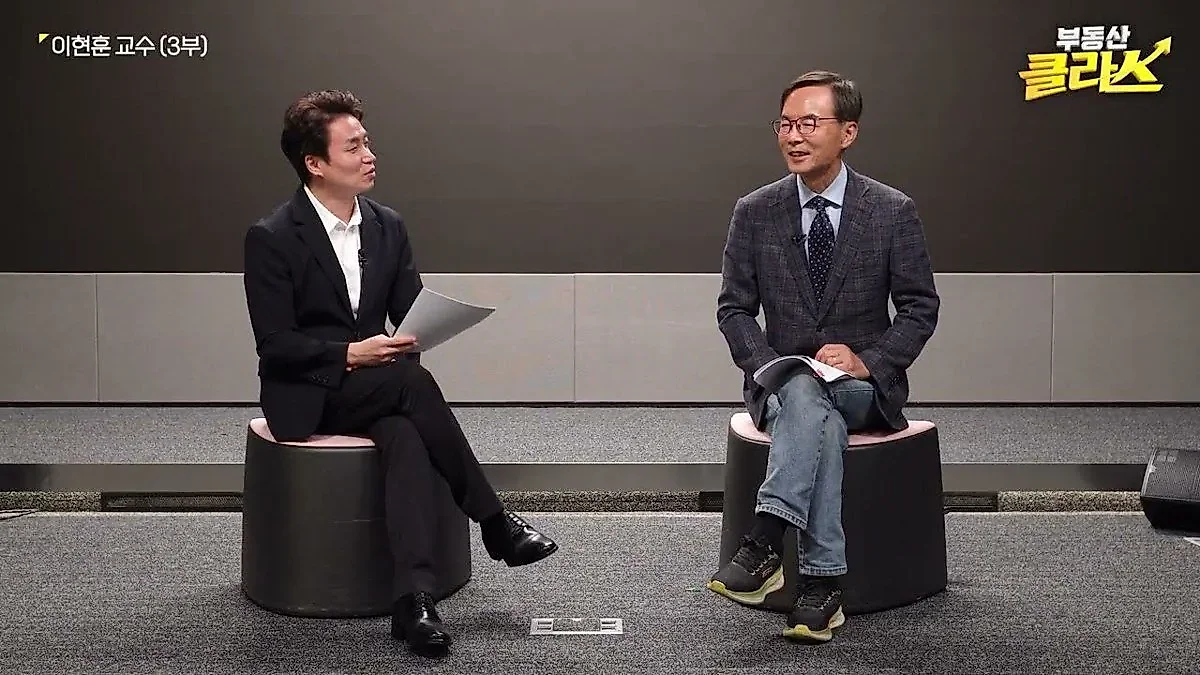
Despite successive real estate measures, market anxiety surrounding house prices is not subsiding. Although the government has pulled various cards such as demand management, supply expansion, and tax reform, the perceived temperature of the market remains hot. Professor Lee Hyun-hoon diagnosed the current trends in the real estate market, the dangers of household debt, and asset management strategies in an uncertain era through KB Real Estate TV.
Real Estate Market with Minimal Policy Effects, "House Prices May Continue to Rise"
Since the launch of the current government, real estate-related measures have been implemented approximately six times. These included the expansion of the land transaction permit system and loan restrictions for demand management, measures for supply expansion, and tax reform plans. However, Professor Lee Hyun-hoon showed a skeptical view regarding the performance of these policies. He pointed out the limitations of the policies in stabilizing the market, stating, "The government worked harder than other governments to catch the real estate market, but as a result, the score is not high."
In particular, he analyzed that demand management measures produced the side effect of actually shrinking supply. He explained that when loans are restricted and regulations are strengthened to suppress demand, consumers who need to sell existing houses to buy new ones are unable to move, which ultimately results in reducing the supply in the market. He also explained that supply measures remain at the permit stage, so there is a time lag before they lead to actual supply resulting in move-ins, and anxiety that house prices will rise in the meantime is dominating the market.
Regarding the tax reform plan, he evaluated, "It may have had an effect on adjusting the prices of some high-priced houses, but it was insufficient to prevent the rise in house prices in the outskirts of Seoul and the overall metropolitan area." He mentioned that house prices have risen sharply, with a cumulative increase reaching 17.7% from the beginning of this year until recently, and predicted, "Since all the measures that could be released have already been released, the structure is such that house prices have no choice but to continue rising."
Decrease in Debt-to-GDP Ratio is an 'Illusion'... Serious Discrepancy with Household Income
Although recent statistics show indicators that the household debt-to-GDP ratio is falling, Professor Lee strongly warned that this is an 'illusionary phenomenon.' His analysis is that the reason only the ratio is decreasing while the total amount of household debt has never decreased is that the denominator, nominal GDP, has increased rapidly. The core point is that while nominal GDP rose as the value added earned by companies increased due to strong exports, this did not lead to an increase in the real income of general households.
His argument is that "household debt should be judged by dividing it by actual household income, not GDP." While nominal GDP has increased significantly, the nominal income growth rate of monthly wage earners remains at the level of 0.4% per year, failing to keep up with the growth rate of household debt. Especially in a situation where about 75% of household debt is real estate mortgage loans, the structure where debt increases while income remains stagnant increases the burden on the common people's economy.
Additionally, the unique Korean issue of 'Jeonse deposit' was cited as a serious variable. The Jeonse deposit is estimated to be around 1,000 trillion won, and when compared to GDP, South Korea shows a very high debt level even among OECD countries. Professor Lee emphasized that "Jeonse deposit is 'debt between individuals' borrowed by the landlord from the tenant, and it can be more dangerous than loans from financial institutions," and that debt management including Jeonse deposits is absolutely necessary considering the risks of reverse Jeonse or 'empty shell' Jeonse.
"Must Escape Real Estate Concentration"... Urges Diversification of Asset Portfolios
Warnings were also raised regarding the structural problem where about 75% of South Korean household assets are concentrated in real estate. While real estate investment continues due to expectations that house prices will keep rising, changes in the interest rate environment could be a variable. He stated, "We have entered the 'New Normal' stage where interest rates are moving from a low-interest rate era to a high-interest rate era," and mentioned the case where even apartments in the Gangnam area saw prices plummet if interest rates rose sharply like in 2022.
Professor Lee diagnosed, "If interest rates surge while too many assets are invested in real estate, it can lead to great failure not only for individuals but also nationally," suggesting that this risks following a path similar to the economic crisis experienced by China or Japan's 'Lost 30 Years.' Therefore, he advised being wary of the current structure where a large portion of assets is tied up in real estate.
As an alternative for wise asset formation amidst uncertain economic conditions, he suggested 'portfolio diversification.' He advised moving away from investments centered on Won-denominated assets skewed toward real estate and diversifying into various financial assets such as stocks and bonds. He also added that in the mid-to-long term, strategies to safely protect assets and increase returns are needed by holding dollar assets or studying alternative assets such as gold and Bitcoin.
Source: original video (YouTube)



0Comments
Comments are currently disabled.