
KAI, born from the merger of Samsung, Hyundai, and Daewoo, opens the space era with KF-21 Boramae
KAI, located in Sacheon, Gyeongsangnam-do, is preparing for the global space era through the KF-21 Boramae, a 4.5-generation supersonic fighter developed with independent technology. A video released by the Ministry of Trade, Industry and Energy showcases KAI's production sites, advanced fighter technology, and the process of Sacheon becoming an aerospace mecca.
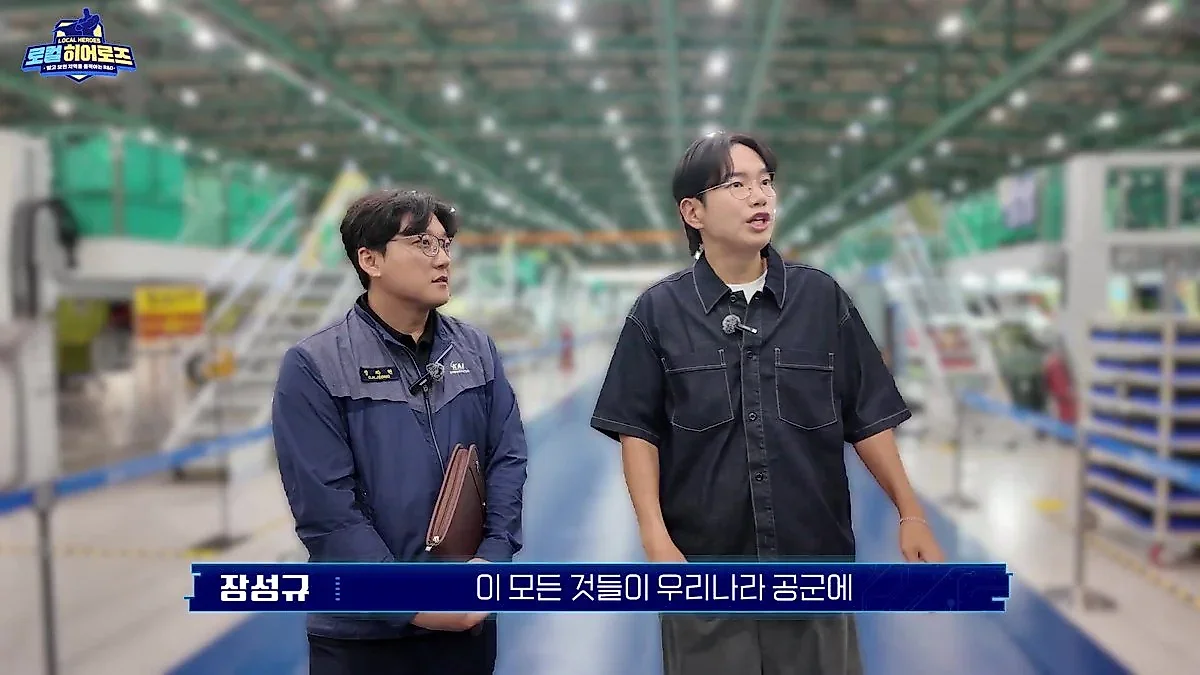
KAI, located in Sacheon, Gyeongsangnam-do, the center of South Korea's aerospace industry, is preparing for the global space era through the KF-21 Boramae, a 4.5-generation supersonic fighter developed with independent technology. A video released by the Ministry of Trade, Industry and Energy contains KAI's production sites, advanced fighter technology, and the process of Sacheon establishing itself as an aerospace mecca.
25 years of technology achieved through the integration of Samsung, Hyundai, and Daewoo aviation sectors
KAI was born in 1999 through the integration of the aviation sectors of three companies: Samsung, Hyundai, and Daewoo, which were in charge of the aviation industry. It is the only comprehensive aircraft manufacturer in the country that performs the entire process from single component design to final assembly, flight testing, and delivery to customers. The KAI production site shown in the video includes facilities for the final assembly of fixed-wing aircraft and houses approximately 60 aircraft, many of which are in the final stages.
In particular, the most notable aircraft here is the KF-21 Boramae. Developed as a 4.5-generation supersonic fighter, the KF-21 Boramae is equipped with the AESA (Active Electronically Scanned Array) radar, which is called the "eyes" of the fighter. The AESA radar is a core technology that allows the fighter to track all targets within its radius while performing missions.
80 million won helmets and simulators... a concentration of advanced aviation technology
KAI's technological prowess is evident not only in the fighter jet body but also in the advanced equipment that assists the pilot's safety and mission execution. Flight simulators, designed so that pilots can perfectly master flight procedures before engaging in actual flight, are used for pilot training starting about two months before the actual aircraft is delivered. Inside the simulator, devices similar to an actual cockpit, such as the throttle that controls engine thrust, are arranged, allowing for practice such as increasing engine thrust by pushing the throttle forward.
The unit prices of fighter-related equipment exceed imagination. A single helmet worn by a pilot costs approximately 80 million won. This helmet is equipped with advanced systems that operate the TADS (Target Acquisition and Designation System) function, which follows the pilot's gaze and movements. When the pilot moves their head, the aircraft identifies the pilot's position, distance, and angle information in real time to provide information.
Furthermore, the operation algorithms for weapon systems, such as attack helicopters, are also highly advanced. In the video, the case of the Marine Attack Helicopter was introduced. To prevent the center of gravity from shifting to one side during weapon firing, an algorithm designed to fire weapons alternately on the left and right sides is applied to maintain the stability of the aircraft. For example, when a weapon on one side is used, the weight balance is maintained by firing the weapon on the opposite side alternately. To achieve this, a system capable of monitoring and managing all situations in real time is essential.
Sacheon, leaping to become the mecca of South Korea's aerospace industry
Sacheon, Gyeongsangnam-do, where KAI is located, is growing beyond a simple manufacturing base to become a core base for South Korean aerospace. Sacheon is located where the Republic of Korea Air Force Education and Training Command is situated, providing weather conditions optimized for flight training, and it is also where the manufacturing base of Samsung Aerospace Industries was established in the past. Recently, with KASA also being established in Sacheon, its position as a center for the aerospace industry is being further solidified.
KAI is now seeking expansion beyond aircraft into the space era. A KAI official expressed the ambition, saying, "We will play a leading role in the space industry so that Korea can leap forward as a global leader in the new space era." KAI has the goal of contributing to South Korea entering the top 3 in the global space industry in the future.
Over the past 25 years, KAI has proven its independent aircraft manufacturing capabilities by breaking the prejudice that it is "impossible." As the only facility in the country capable of manufacturing complete aircraft, KAI is playing a pivotal role in revitalizing the local economy and creating jobs, as well as expanding South Korea's aerospace territory beyond Earth.
Source: original video (YouTube)


0Comments
Comments are currently disabled.