
100-Year-Old Seed Soy Sauce in a Chungju Traditional House Awakens the Deep Umami of Mulberry Leaf Rice
A restaurant in a traditional house in Chungju, which offers views of Crocodile Island at Chungju Lake, serves mulberry leaf rice flavored with 100-year-old seed soy sauce. The establishment has been run by the same family for five generations, utilizing traditional methods such as adding medicinal herbs like Tobokryeong (arrowroot) to their soy sauce.
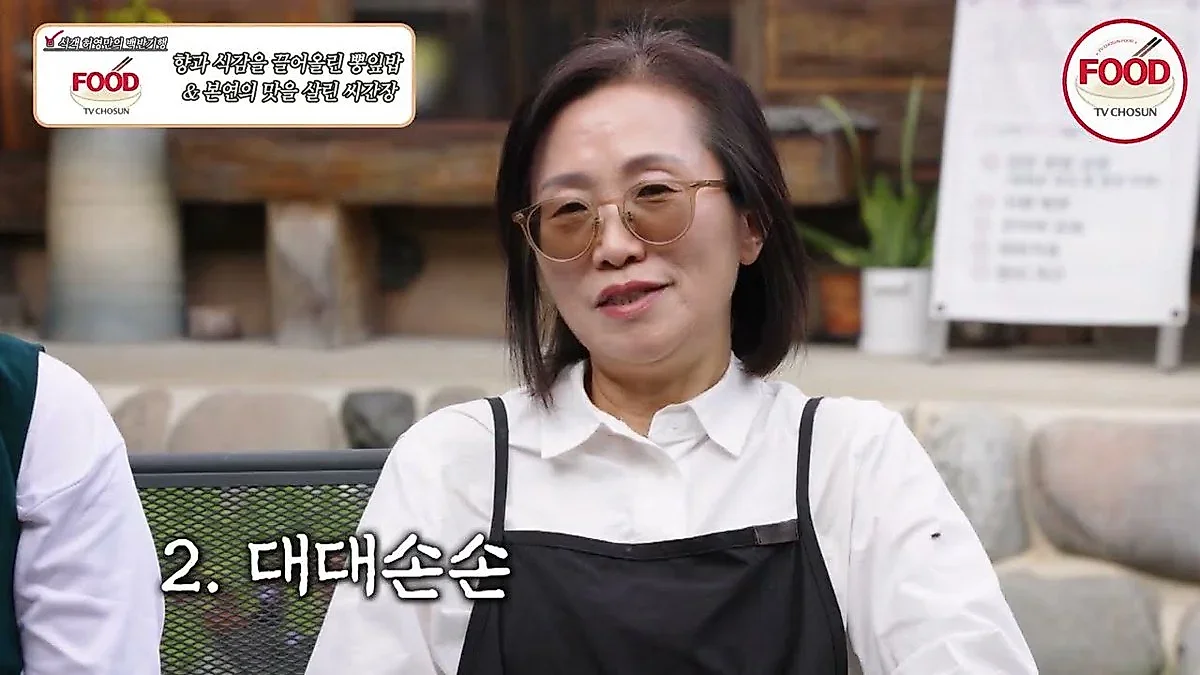
In a traditional house in Chungju that offers a view of Crocodile Island at Chungju Lake, a taste containing 100 years of time unfolded. This restaurant, introduced through TV CHOSUN's 'Home-Style Meal Travels', is a place where the family business has been passed down for five generations, providing a landscape where tiles over a hundred years old and an antique courtyard harmonize. Moss and grass grow between the pillars and tiles, hinting at the long years of the traditional house.
The Taste of Time Passed Down Through Five Generations, the Meeting of 100-Year-Old Seed Soy Sauce and Tobokryeong
The core that supports the taste of this house is the seed soy sauce that has endured long years. While the restaurant cites the courtyard in harmony with nature and the scenery that changes with each season as its strengths, they explained that above all, the taste of the soybean paste and soy sauce passed down for over a hundred years is the greatest secret. In particular, they adhere to a traditional method of adding Tobokryeong (arrowroot), a medicinal herb, when making soy sauce to add deep flavor. The time-aged soy sauce made by adding Tobokryeong and mulberry leaves becomes a masterstroke that adds depth to the food.
Ingredients are used that are directly grown in the nearby vegetable garden. The mulberry leaves, the main ingredient of the mulberry leaf rice, are harvested when they are tender in the spring and stored for use. Since the condition of the ingredients varies according to the season, during periods like now when the leaves have become stiff, they undergo a sufficient boiling process to achieve a soft texture.
The Completion of Mulberry Leaf Rice, the Harmony of Leaves Spread at the Bottom and Seed Soy Sauce
The single menu focus here is mulberry leaf rice. It is characterized by spreading mulberry leaves at the bottom of the rice cooker to cook, which is a cooking method intended to allow the leaves to receive the heat of the rice directly to create a softer texture. The completed mulberry leaf rice is served with side dishes that change according to the season of the day.
The participant who had the meal defined the taste of the mulberry leaf rice, evaluating that while the texture of the mulberry leaves themselves is soft, the harmony is excellent when mixed with the rice. In particular, the reaction was that when accompanied by the seed soy sauce made with Tobokryeong, the natural umami unique to Joseon soy sauce comes alive and completes the flavor of the mulberry leaf rice. The participant conveyed that the texture created as the mulberry leaf rice mixes with the rice shows the inherent natural taste of Korean food.
Source: TVCHOSUN JOY (YouTube)



0Comments
Comments are currently disabled.