
Tesla Cybercab's 'Low Efficiency' Air Conditioning Design is Due to its 'Robotaxi' Purpose
Tesla's Cybercab utilizes an indirect HVAC system designed for extreme production automation and operational efficiency rather than immediate cooling performance. This design reflects a shift in vehicle requirements as the industry moves toward robotaxis.
As the era of autonomous robotaxis approaches, the fundamental paradigm of automotive design is changing. The HVAC (Heating, Ventilation, and Air Conditioning) system design of the robotaxi 'Cybercab' introduced by Tesla has adopted a radical method that breaks the common sense of the existing automotive industry. While initial cooling performance may be somewhat lower, it is a design that possesses overwhelming advantages in terms of production efficiency and maintenance.
"Robotaxis without drivers don't need over-engineering"... Cybercab's radical HVAC design
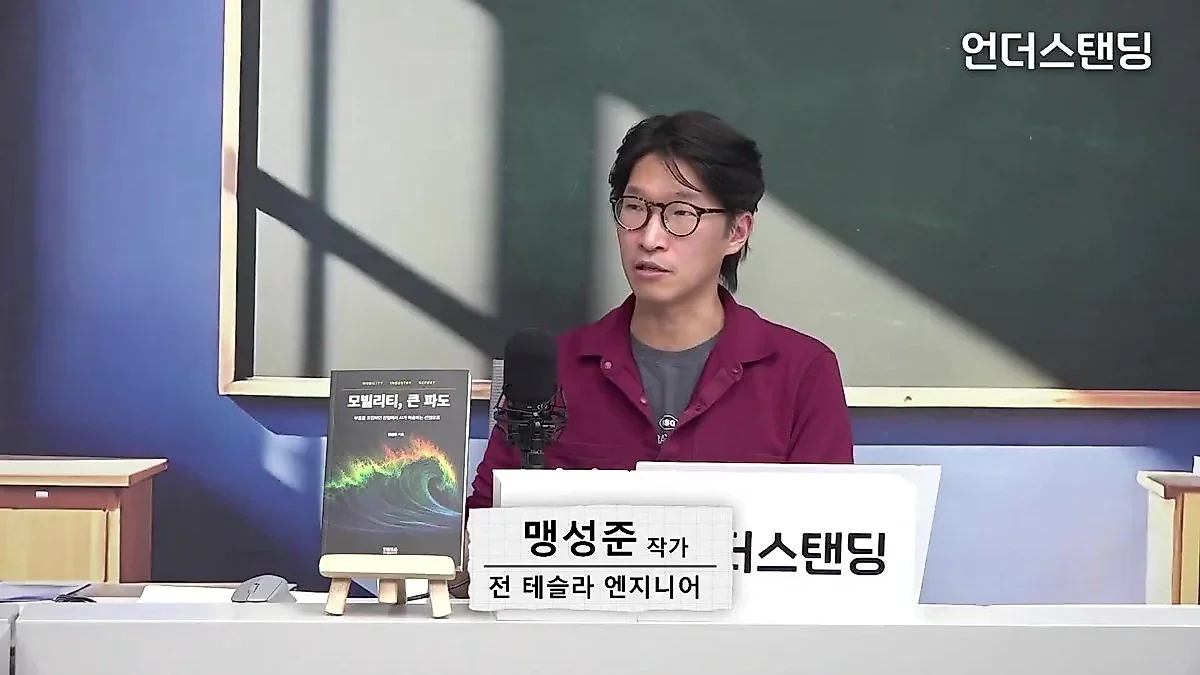
According to the explanation by writer Maeng Seong-jun provided by Understanding: All the Knowledge in the World, the Tesla Cybercab features an HVAC system that is completely different from existing automobiles. The core is the 'Indirect HVAC system.' Existing cars use a direct structure where the refrigerant enters the interior directly to absorb heat. Because the refrigerant pipes must be connected long distances from the condenser at the front of the car to the evaporator inside the cabin, it has the disadvantage of being difficult to assemble and hard to automate. In particular, if the refrigerant lines are long, the amount of refrigerant to be charged also increases, which can be disadvantageous in terms of greenhouse gas emissions as environmental regulations strengthen.
On the other hand, the indirect method applied to the Cybercab drastically reduced the refrigerant piping. By integrating the condenser, evaporator, and compressor into a single package, the refrigerant lines were made very short. This is a key factor that can extremely increase the automation rate of the production line. The background behind Tesla being able to implement an extreme automation process that produces one Cybercab every 2 to 3 seconds lies in this modularization of parts. This is because the existing direct method was a major obstacle to automation, as long refrigerant lines often required manual assembly by people.
Of course, there is a performance trade-off. Because the indirect method involves a process of transferring the heat of the refrigerant to water and then using that water to cool the interior, the 'peak performance'—where cold air comes out immediately upon turning on the air conditioner—is lower than the existing method. However, Maeng analyzed that this is a choice possible only because it is a robotaxi. Human-driven vehicles tend to invest massive engineering resources into 'over-engineering' because drivers want to reach the desired temperature within one minute as soon as they start the car on a hot summer day. However, for a robotaxi, which operates continuously and is rarely parked, continuous operational efficiency and production optimization are more important than powerful cooling performance at a specific moment.
Ultimately, transitioning to robotaxis means that the vehicle's requirements themselves change completely. For a car carrying humans, all specifications such as acceleration performance, top speed, and ride comfort are important, but a car driven by a robot can abandon excessive obsession with ride comfort or top speed and be precisely designed according to its purpose. Maeng explained that the Cybercab's HVAC design is a representative example showing this change in the 'Robot-driven' era.
The pinnacle of vertical integration, Tesla expanding beyond automobiles to AI infrastructure
This difference in design stems from Tesla's unique 'Vertical Integration' strategy. Most finished car manufacturers adopt a method of purchasing HVAC systems from external specialized companies and assembling them. Even in the case of Hyundai Motor Company, the structure is that they have a subsidiary in charge of HVAC or buy systems from external companies. However, Tesla aims for a structure where it directly designs and integrates parts and systems. Maeng found the core driving force behind Tesla evolving beyond a simple automaker into an AI company in this vertical integration.
Tesla's vertical integration is now expanding beyond automotive parts to lithium refining, semiconductor production, and AI infrastructure construction. The 'Terafab' promoted by Elon Musk is a representative example. Tesla is establishing a massive plan to build computing chip design, memory, wafer, and packaging facilities all within one building. Maeng explained that Tesla is showing a strong will to directly manufacture even semiconductor manufacturing process equipment, citing Elon Musk's recent interview where he mentioned, "I have visited many places like Intel, TSMC, and Samsung, but Tesla's factory is full of process machines and equipment that we made ourselves."
Ultimately, Tesla's goal is to bind the entire hardware and software required to drive AI into one organic ecosystem. This is completely different from the existing 'Horizontal Integration' method of gathering the best products made by specialized experts in each field. Maeng analyzed that since the current electric vehicle and future mobility markets are not yet in a mature stage, the vertical integration method, where Tesla controls everything directly and adjusts the speed, may be more advantageous in matching the speed of change.
Competitiveness in the AI era, "The 4050 generation with experience and judgment might be more advantageous"
Changes in technology are also affecting individual work methods. Maeng predicted that the advancement of AI will bring 'vertical integration' not only to companies but also to individual capabilities. This is because the era is coming where, by utilizing AI, an engineer can directly perform tasks in adjacent fields such as software development or design beyond their own professional domain. In other words, a phenomenon of vertical integration where the boundaries of work are breaking down is appearing even at the individual level.
In particular, he noted the potential that the 40–50s generation can have in the AI era. He presented the view that if a skilled generation with abundant work experience and judgment actively utilizes the powerful tool of AI, they may experience an even more overwhelming increase in productivity than the younger generation. This is because 'judgment'—deciding where and how to apply the technology rather than the technology itself—becomes the core competitiveness.
Maeng emphasized that in the flow of change, the ability to read the changes and opportunities of the era is more important than finding immediate answers. He added that an attitude of expanding the horizons of knowledge and experience through continuous learning and interaction with new people is the most important survival strategy for living in the AI era.
Source: original video (YouTube)


0Comments
Comments are currently disabled.