
Kia deploys Vision AI to 70 global factories for vehicle identification
Kia is replacing manual vehicle identification inspections with multimodal AI technology that verifies vehicle identification numbers in real time across approximately 70 production sites worldwide.
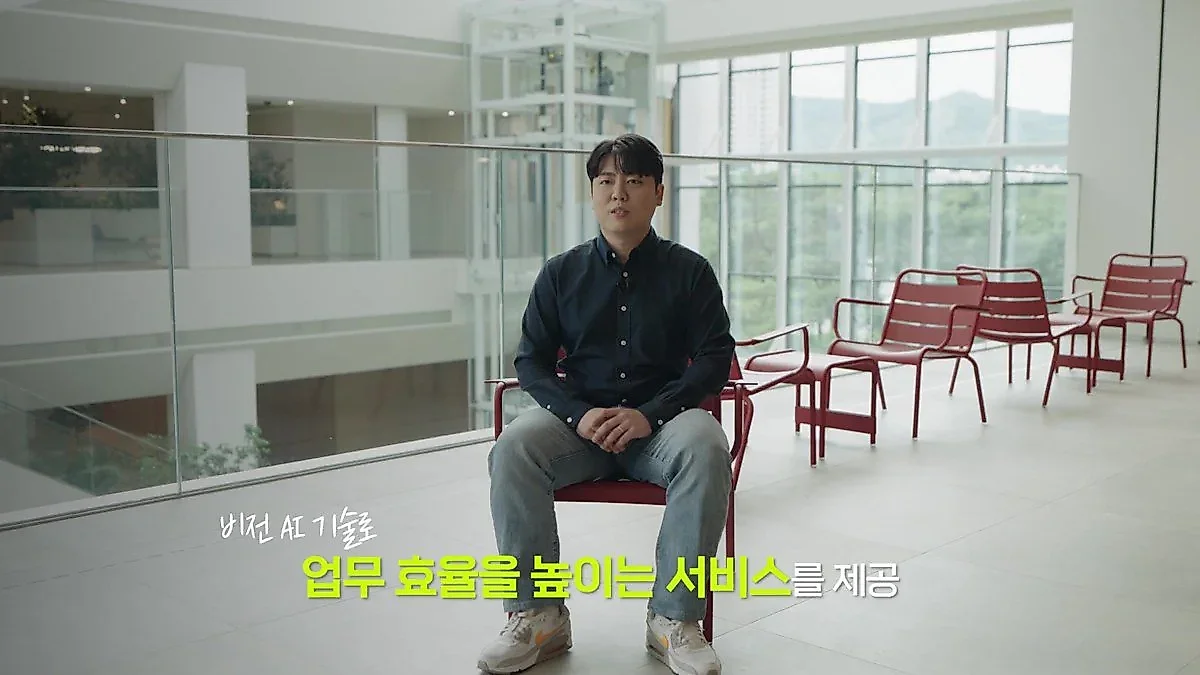
Kia has expanded its Vision AI technology to approximately 70 production sites across the Americas, Europe, India, the Asia-Pacific region, and domestic plants including Ulsan and Asan. The multimodal AI system replaces manual visual inspections by performing real-time comparisons between vehicle identification numbers and registered system data to improve production accuracy.
The process of inspecting vehicle identification numbers, which previously required workers to verify them manually with their eyes on automotive production sites, is being replaced by artificial intelligence (AI). This method increases production process accuracy by having AI perform real-time readings to ensure that physical vehicles match the specification information in the system.
According to a video released by HYUNDAI Motor Group, the Kia Vision AI analysis team is operating a service that automatically recognizes and manages vehicle identification numbers using multimodal AI technology based on the latest computer vision and Vision Language Models (VLM). Previously, the process relied solely on specification information registered in the system or required workers to perform manual visual inspections. However, as processes became more complex, there was a risk of errors occurring where physical vehicles did not match the data, which could lead to production quality issues.
Securing operational stability at 70 global sites through transition to a single integrated model
Currently, Kia's Vision AI technology is applied to approximately 70 production sites worldwide, including all domestic plants in Ulsan, Asan, Jeonju, Gwangmyeong, Hwaseong, and Gwangju, as well as sites in the Americas, Europe, India, and the Asia-Pacific region. When cameras installed on the production line photograph a vehicle identification number, the AI analyzes the image, compares it in real time with the registered system information, and immediately determines whether they match.
To respond to the rapidly increasing number of applied factories, the service architecture was recently completely reorganized. Previously, the system operated in a "siloed" manner, where models were trained only with data specialized for each process and services were provided without inference engine optimization. However, as the scope of application expanded, limitations appeared in managing and maintaining the versions of individual models.
To resolve this, Kia configured a single integrated model to unify management points and newly established API endpoints based on an inference engine. Through this, the company improved the universal recognition performance of the models while completing an extensible end-to-end environment capable of processing inference requests from multiple factories without delay.
Evolution toward the era of 'Physical AI'... aiming to overcome physical constraints in manufacturing sites
Kwon Oh-hyeon, an engineer on the Kia Vision AI analysis team, predicted that within the next five years, AI technology will evolve beyond "Agentic AI," which designs tasks itself, into "Physical AI," which performs immediate physical actions at manufacturing and mobility sites.
Following these changes, the importance of model inference in device areas, such as robots, and infrastructure including networks is expected to increase further. It is analyzed that AI, which previously remained in digital space, will overcome the physical constraints of the real world to complete industrial automation in a true sense.
"The charm of this job is being able to directly experience the process where the latest AI technology from the laboratory is applied to actual manufacturing sites to create practical value," Kwon stated. "I want to contribute to completing a stable AI pipeline that can immediately provide complex models as a service."
Source: original video (YouTube)



0Comments
Comments are currently disabled.