
Professor Kim Jun-ha says tacit knowledge is vital for Physical AI
Professor Kim Jun-ha of GIST argues that the success of Physical AI depends on digitizing the "Tacit Knowledge" held by skilled workers, which goes beyond documented manuals.
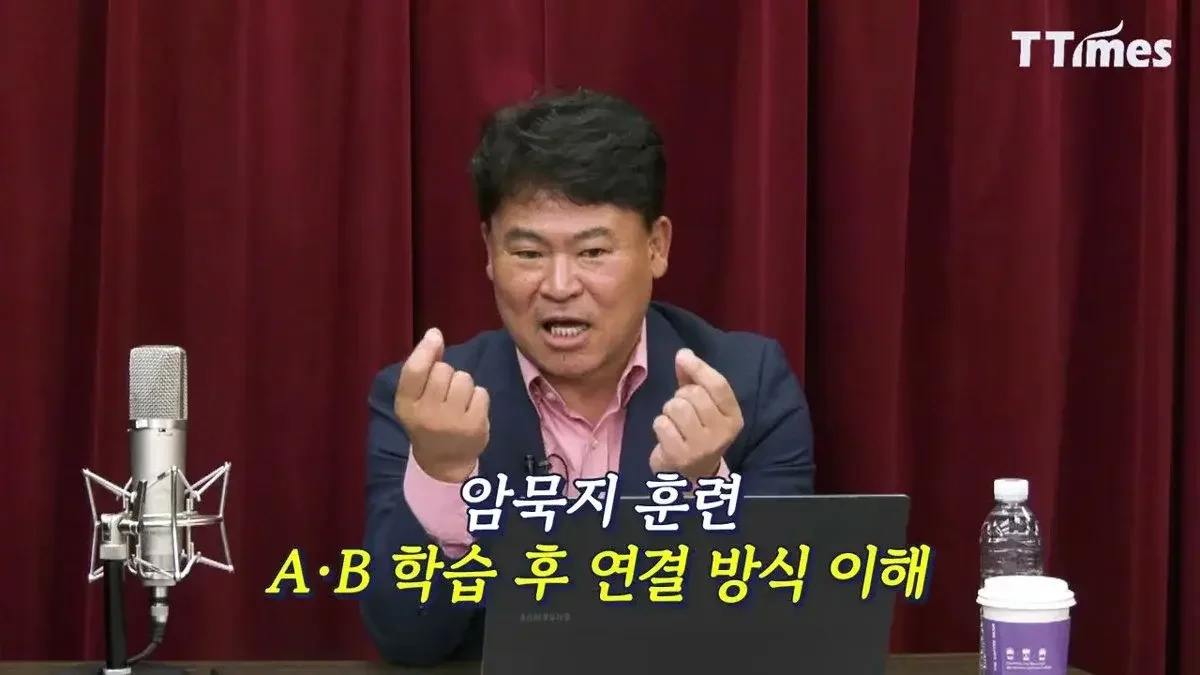
GIST professor Kim Jun-ha stated that converting the "unspeakable know-how" of skilled workers into data is essential for the success of Physical AI. He predicted that "Authority Design Technology" to control AI actions will become a major social issue over the next three to five years.
Artificial Intelligence (AI) technology is moving beyond the stage of generating text and code and entering the era of "Physical AI," which performs physical actions in the real world. However, experts agree that for Physical AI to possess true intelligence, the core challenge lies in digitizing the "unspeakable know-how" possessed only by skilled human workers, moving beyond documented manuals.
According to an interview with Kim Jun-ha, a professor at GIST, as reported by T Times TV, the current limitation of AI is that it remains confined to "Explicit Knowledge" that is clearly documented or manualized. Citing the works of Michael Polanyi, Professor Kim noted, "We can know more than we can tell." He explained that humans possess vast amounts of knowledge that cannot be fully expressed through language, and how this "Tacit Knowledge" is converted into AI intelligence will determine the success or failure of Physical AI.
"The judgment of an excavator operator is the key to datafication"
To explain the reality of tacit knowledge, Professor Kim cited the example of operating an excavator. While the simple motion of digging the ground can be automated, the judgment to slightly shake the ground to prevent soil from collapsing, or to detect a rock during work and move aside to avoid danger, belongs to the tacit knowledge of a skilled worker. Such judgments are areas that cannot be learned through existing manuals alone.
How, then, can this "unspeakable knowledge" be turned into data? Professor Kim suggested that since teaching every single process is too costly, the method should be to teach key "Points" and then teach the "Context" between them. He explained that understanding the link between data points A and B is the core of Tacit Knowledge AI. "It is not simply about training hundreds of millions of tokens, but a process of helping the AI find the human context of 'it is like this,'" he emphasized.
In particular, Professor Kim called for changes in corporate personnel policies during the process of capitalizing on the know-how of skilled workers and masters. He pointed out, "Binding skilled workers through a wage peak system is an inhumane system," and stated, "Incentives must be provided so that their know-how is not used without consent or compensation, and their judgment and records should be treated as core corporate assets." His logic is that companies will benefit by approaching skilled workers as "holders of data assets" rather than targets for retirement.
'Authority Design Technology' to prevent AI runaway will be the topic for the next 5 years
Once Physical AI enters the real world, "collision" with humans becomes an unavoidable task. Professor Kim predicted that "Authority Design Technology," which can control AI when it invades human territory or performs unexpected actions, will be the most important social issue over the next 3 to 5 years.
While current AI development focuses on "technology that makes new things move," he noted that control technology—worrying about "how to prevent what has been developed from doing something"—will become important. He predicted that "when AI attempts dangerous actions, there needs to be an authority where human tacit knowledge works to restrain it," adding that this will be a highly advanced design technology combining human consensus, security, and encryption technologies beyond simple coding.
Such authority design is directly linked to the question of how much autonomy to grant an AI agent. Professor Kim warned that developers have reached a stage of worrying about AI invading the human scope, and that the commercialization of Physical AI may be difficult if authority design technology is not properly supported.
Beyond Smart Factories to Physical AI... Opportunities for South Korean Manufacturing
Finally, Professor Kim clearly distinguished the difference between Physical AI and existing smart factories. While smart factories focus on "automation" that repeats the same motions, Physical AI means "intelligentization," where the AI judges and acts autonomously even in different processes and work environments.
He evaluated South Korea as one of the optimal locations for the Physical AI industry. Mentioning why NVIDIA CEO Jensen Huang is paying attention to South Korea, he analyzed that South Korea is a nation with the capability to "connect the dots (data/technology)" globally. "If LLMs (Large Language Models) were trapped inside a screen, Physical AI is the stage where that intelligence leads to physical action," Professor Kim stated. "If our country connects the industrial dots we have gathered well through the link of tacit knowledge to Physical AI, a new leap for manufacturing will be possible."
However, not all labor will be replaced. Professor Kim predicted that while Physical AI will perform a significant portion of simple labor on flat ground, areas that combine delicate hand skills and high-level judgment, such as chefs, will still see human tacit knowledge serving as a powerful line of defense.
Source: original video (YouTube)



0Comments
Comments are currently disabled.