
Gibbs Free Energy serves as a vital design tool for modern industry
Min Tae-gi, director of SNH Research Institute, explains how Gibbs Free Energy serves as a critical mathematical tool for predicting chemical changes and designing advanced technologies like rockets and batteries.
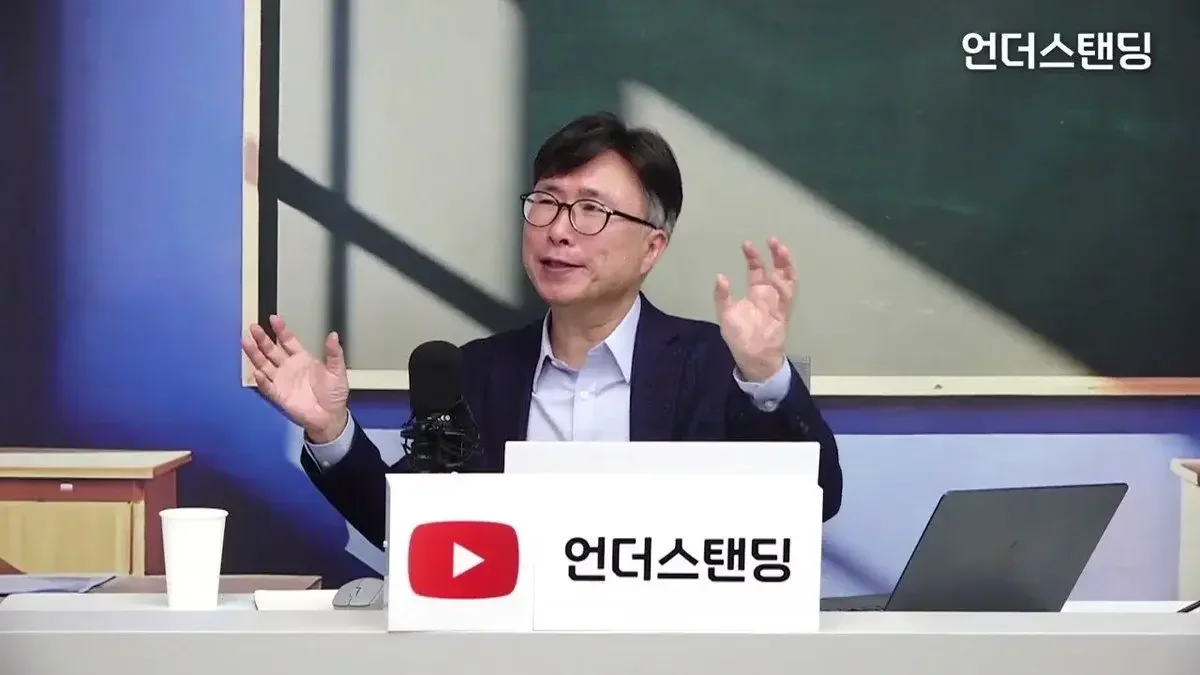
Min Tae-gi, director of SNH Research Institute, explained that Gibbs Free Energy allows engineers to mathematically predict spontaneous changes and material stability. This principle is used to optimize secondary battery materials, alloy design, and rocket fuel for space launch vehicles.
Understanding entropy merely as a "phenomenon where disorder increases" means missing a core principle of modern advanced industry. While a messy room is often used as an analogy for entropy, from an engineering perspective, entropy is a decisive indicator that determines the direction of material changes through interaction with the surrounding environment.
In a video presented by Understanding: All the Knowledge in the World, Min Tae-gi, director of SNH Research Institute, began by correcting common misconceptions about entropy. Min emphasized that in recent physics, the term "disorder" is being avoided because it can cause confusion, noting that from an engineering standpoint, the industrial value of entropy itself is far more important than the concept of disorder. He explained that entropy is like a water droplet falling and splashing out, stressing its meaning as a tool to judge the direction of change rather than just a phenomenon of spreading.
Direction of change varies by environment
The core of entropy lies in the fact that the direction of change varies depending on given conditions. To explain this, Min used the relationship between ice and water as an example. In a room temperature environment of 20 degrees Celsius, ice melting naturally is a spontaneous change; however, if the surrounding temperature is minus 20 degrees Celsius, the natural direction is for water to turn into ice. In other words, whether a change occurs spontaneously is determined not just by the properties of the material, but by the surrounding environment, such as temperature and pressure. He used a metaphor stating that if the given environment changes, even a room can become clean, implying that the directionality of entropy can change when the environment changes.
This logic sometimes conflicts with everyday intuition. Min noted that the energy required to melt 1kg of ice is much greater than the energy required to melt 1kg of gold, questioning why gold does not melt at room temperature while ice does. This is due to the difference in energy caused by the specific heat capacity; while gold's specific heat is 0.129, water's is 4.18, making water's value dozens of times larger. Although it requires less energy to melt gold, the surrounding environment (temperature) is not sufficient to melt it, so the change in gold does not occur spontaneously. The key is that the surrounding environment must be considered to judge the direction of change.
Furthermore, Min emphasized the concept of "latent heat" (hidden heat), where energy continues to enter or leave during a "phase change" even though the temperature does not change. There are intervals where the temperature remains constant, such as when water boils at 100 degrees Celsius or freezes at 0 degrees Celsius, and the fact that energy is accumulated or released during this process serves as an important foundation for understanding entropy and the direction of change.
Gibbs Free Energy: A design tool for modern industry
The concept that evolved to apply entropy to actual industry is "Gibbs Free Energy." Established by the American scientist Willard Gibbs, this concept allows for the mathematical calculation of which direction a substance will change and which state is most stable under constant temperature and pressure conditions. By utilizing the principle that spontaneous changes occur in the direction of decreasing Gibbs Free Energy, complex chemical reactions or changes in the state of matter can be predicted.
Min explained that Gibbs Free Energy is utilized as a "design tool" in modern advanced industries. While scientists in the past had to find results through numerous trials and errors in experiments, it is now possible to predict optimal conditions in advance through mathematical calculations using Gibbs Free Energy. This plays a role in dramatically increasing the efficiency of technology development. He added the importance of an engineering approach based on mathematical grounds, stating, "One must input physical values such as pressure, density, and specific heat accurately and calculate them as numbers to avoid misunderstanding."
From batteries to rocket fuel: The foundation of advanced engineering
The fields where Gibbs Free Energy theory is applied are extensive. Representative examples include alloy design, secondary battery material development, and the selection of fuel for space launch vehicles (rockets). For example, while aluminum and silicon each have high melting points, mixing the two materials in a specific ratio can create an alloy that melts at an even lower temperature. While such phenomena are difficult to predict intuitively, the exact mixing ratio and melting point can be calculated theoretically using Gibbs Free Energy.
Additionally, predicting electrochemical performance based on the chemical composition of battery materials, as well as calculating combustion reactions and equilibrium compositions of rocket fuel, are also based on this theory. Min emphasized that "one cannot talk about modern industry without leaving out Gibbs Free Energy," asserting that this theory is a practical basis supporting future industries like rockets and batteries beyond being a simple scientific law. Just as the Earth's temperature is maintained at a constant level due to the high specific heat of water, providing an environment suitable for life, these thermodynamic characteristics serve as core principles penetrating both massive natural phenomena and advanced technologies.
Ultimately, understanding entropy and Gibbs Free Energy is not merely about learning about disordered states, but about learning how to mathematically control the "directionality" and "stability" of changes occurring in the natural world and industrial sites.
Source: original video (YouTube)



0Comments
Comments are currently disabled.