
Democratic Party AI regulation could trigger US stagflation
Economic expert Kwak Su-jong warns that the Democratic Party's control of both chambers of the U.S. Congress could lead to stagflation if aggressive regulations on the AI industry and data centers are implemented.
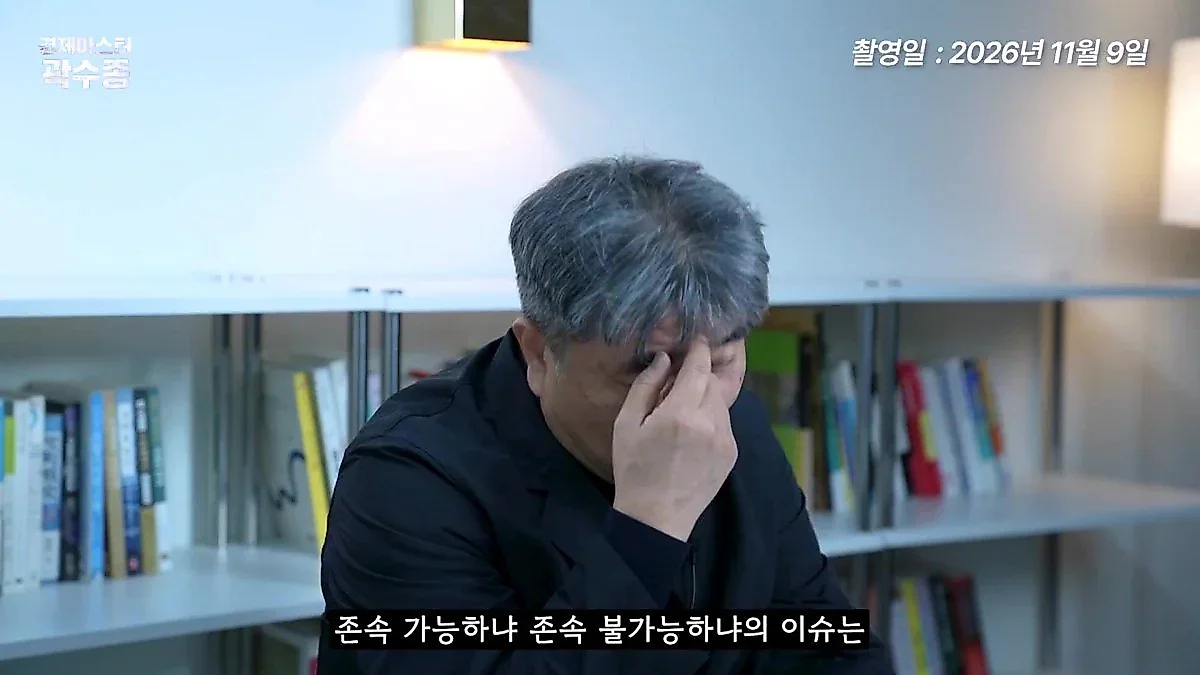
Dr. Kwak Su-jong warned that the Democratic Party's victory in the U.S. midterm elections could lead to stagflation if excessive regulations on the AI industry and data centers stifle economic growth. Such oversight could halt planned employment for thousands and cause the U.S. economy to face high inflation alongside low growth.
While the Democratic Party has triggered a so-called "Blue Tsunami" by seizing control of both the House and the Senate in the U.S. midterm elections, analysis suggests this victory could instead become an economic burden for the party. There are warnings that excessive regulation and oversight of the AI (artificial intelligence) industry could stifle the growth engine of the U.S. economy, leading to stagflation characterized by high inflation and low growth.
The Fear of 'Stagflation' Triggered by Strengthened AI Industry Regulation
According to the analysis provided by economic master Dr. Kwak Su-jong, the Democratic Party's control of Congress is a double-edged sword. While the party enjoys a "party time" following its victory, the U.S. economy could face an unexpected crisis if strong investigations and regulations on the AI industry and data centers are initiated. In particular, with recent scandals involving NVIDIA CEO Jensen Huang surfacing, it is noted that if pressure for a robust investigation and oversight system for the AI industry begins, the market may cross a line it does not desire.
Dr. Kwak specifically pointed out the chain of economic damage that could occur if regulations on data center construction are strengthened. If data center construction is halted due to reasons such as power supply issues, rising electricity costs, or environmental destruction caused by securing water resources, the planned employment of thousands of people will vanish. Companies will face not only the costs resulting from the suspension of data center construction but also fundamental questions regarding whether AI industry profits can exceed costs in a high-interest-rate environment. This could ultimately lead to a stagflation phase where interest rates rise, inflation increases, and growth rates fall.
“The AI industry will not collapse, but it will shrink significantly, and if that happens, the U.S. economy will inevitably experience a difficult form of stagflation,” Dr. Kwak warned. He added that if the Democratic Party focuses only on corruption issues involving former President Trump's family or the Republican Party rather than economic issues, they could suffer a serious blow in the next presidential election. Citing "Easy economics to feet" mentioned by former Fed Chair Greenspan, he explained that being immersed only in political disputes without focusing on economic issues could pose a threat to the Democratic Party.
A Crisis and Opportunity for the Republican Party: Between 'Corruption Scandals' and 'Economic Responsibility'
While the Democratic Party faces economic burdens through regulation, the Republican Party is confronted with internal corruption scandals and the issue of economic responsibility. As the Democratic Party controls both chambers, there is a prospect that Senator Elizabeth Warren of Massachusetts will likely become the chair of the Banking Committee, increasing the possibility that corruption allegations within the Republican Party will be revealed through hearings. In particular, along with corruption issues centered on former President Trump's family, the suspicion of cryptocurrency lobbying shown by Elon Musk, who has invested significant election funds including 150 million dollars, poses a major political burden for the Republican Party. Dr. Kwak analyzed that "the situation where more is revealed the more one digs can be seen as a crisis for Republican candidates."
However, a chance for a reversal exists for the Republican Party. If the AI and data industries are shaken due to the Democratic Party's strengthened regulations, the Republican Party can achieve a turnaround by defining this as a "mistake of the Democratic Party" and proposing pledges for economic growth. Dr. Kwak explained that if the Republican Party shows appropriate regulatory ability to avoid criticism of pursuing excessive private interests in specific industries like virtual assets, they could seize economic leadership by taking advantage of the Democratic Party's "own goal." This aligns with the political dynamics seen during the conflict with the Trump administration during the era of former House Speaker Nancy Pelosi.
The End of the Semiconductor Cycle and the 'Winter' of the South Korean Economy
Changes in the U.S. political landscape and the direction of the AI industry directly affect the South Korean economy. Based on the previously mentioned semiconductor cycle, Dr. Kwak provided a future outlook for the South Korean economy. He diagnosed, "By the end of December, we will have reached the point where the semiconductor cycle ends, and it seems winter has begun to arrive for the South Korean economy as well." Concerns were also raised that if the surge in value of AI-related companies turns out to be an illusion like a mirage, the global economy could face the worst-case scenario, such as the Great Depression of the 1930s. Recalling that it took 30 years for the U.S. economy to bounce back during the Great Depression, he explained that the probability of a near-apocalyptic scenario for human economic issues is "not zero percent."
However, how long this "winter" lasts depends on the Fed's interest rate policy in the first half of 2027. Whether the war in Iran ends, and the resulting trends in oil prices and inflation, are expected to be key variables that determine the stance on interest rate cuts or hikes. Even if the Iran war issue is resolved, there is a variable that the current situation is likely to persist for the next year. Ultimately, the intersection of U.S. political decisions (Democratic regulation vs. Republican economic pledges) and geopolitical risks (the Iran war) is expected to determine the direction of the South Korean stock market and the semiconductor industry.
Dr. Kwak added that political mistakes can threaten the existence of a nation, emphasizing that whether the U.S. Congress can present practical alternatives to solve economic problems will be the key to resolving uncertainty in the future global economy.
Source: original video (YouTube)

0Comments
Comments are currently disabled.