
Chasing returns and FOMO cause gap between market and investor reality
Expert Song Tae-heon explains why individual investors often face losses despite rising KOSPI indices, citing "chasing trades" and FOMO as primary causes. He advocates for a fundamental approach focused on managing principal, returns, and time to benefit from compound interest.

Song Tae-heon warned that individual investors often incur losses despite rising indices because they enter markets too late due to FOMO. During a discussion on The Man Who Explains the Economy, he noted that chasing high returns often leads to reckless leveraged investing after prices have already peaked.
Why does a phenomenon persist where the KOSPI index rises, yet individual investors' accounts record losses? The causes are identified as "chasing trades"—following market upward trends too late—and "FOMO" (fear of missing out), which leads investors to become obsessed with rapid returns.
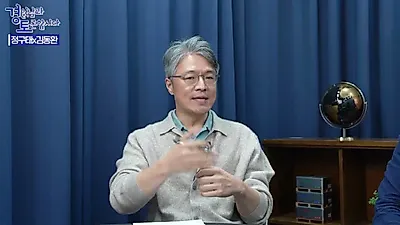
In a dialogue with expert Song Tae-heon hosted by The Man Who Explains the Economy (Kim Kwang-seok TV), the massive gap between the returns of investment products and the actual returns experienced by investors was discussed. Song Tae-heon, who has been in charge of product strategy at Shinhan Asset Management for 23 years, provided a realistic analysis of why investors miss market trends and incur losses.
FOMO becomes toxic when returns surge
Song Tae-heon warned that the moments when the returns of investment products appear highest are actually the most dangerous times for individual investors. While public interest is low during the early stages of a product, interest begins to rise as media outlets start introducing products with good returns.
The problem is that by the time investors become aware, a significant portion of the market price has already been reflected. By the time experts begin explaining product features and outlooks, and investors study them to deploy actual funds, the product's returns have often already peaked. "If you rush in because of news of good returns, you enter at a point where the price has already risen once more," Song explained. "At that point, even if the product remains in a profit zone based on its benchmark if the market dips just once, the individual investor may suffer significant losses."
In particular, this chasing behavior does not stop at merely entering late. He pointed out that due to the anxiety of being late, many people invest larger amounts of capital or even use leverage (borrowing) to invest recklessly, causing the scale of losses to grow uncontrollably. He highlighted the recurring structure of investing without fundamentals by citing the China fund craze of the 2000s and recent examples of leveraged products.
Song cited the "absence of financial education" as the fundamental reason this phenomenon repeats. "In school, students learn theories like supply and demand curves, but they are not taught the practical financial management that is important in real life," he noted. He also pointed out that even finance textbooks are often written from a corporate perspective rather than an individual's, making them difficult for individuals to understand. He emphasized that the world of investing is not divided into amateur and professional leagues; because individuals jump into a market where institutional investors and professional managers operate with limited information and insufficient fundamentals, their assets are easily eroded. He compared this to "jumping into the water without knowing how to swim."
"Financial management is not just about returns"... Three core elements
Song defined the essence of financial management not as focusing solely on a single return (R), but as simultaneously managing three elements: ▲management of investment principal, ▲management of returns, and ▲management of time. This means the value of money changes over time, and utilizing this change is the core of financial management.
Explaining the principles of money, he emphasized the importance of "time value." He stated that the value of money changes over time, and the most important principle for increasing value is time. He used the example of the difference in value between keeping 10 million won in a safe versus depositing it in a bank 10 years ago. While 10 million won kept in a safe 10 years ago maintains its nominal value, money in a bank increases in value due to interest. Conversely, the money in the safe experiences a loss in value, as it can no longer purchase the same items it could 10 years ago.
"People want to earn money immediately to achieve economic freedom or retire (FIRE movement), but this constantly conflicts with the principles of money," Song said. "The essence of financial management is managing principal, returns, and time together."
Need for 'patience of time' to wait for the magic of compound interest
Identifying "compound interest" as the core framework of financial management, Song emphasized that there is inevitably a period where profits increase exponentially. Compound interest grows assets by adding interest upon interest, increasing in an exponential rather than a linear form. However, this exponential growth is invisible in the early stages and typically only begins to manifest in earnest after the 20th to 25th year.
"Most investors cannot wait for this exponential period," he said, stressing the importance of patience. Just as an apple tree requires a long preparation period to bear fruit, investing requires the ability to endure time until the point where profits explode.
"There are people who earn money among short-term investors, but there are also many who lose," he added. "However, among those who have engaged in long-term investing, those who have suffered losses are (theoretically) very rare." Ultimately, his analysis is that the success or failure of financial management depends on "fundamentals"—protecting the principal and securing sufficient time for compound interest to work, rather than chasing high returns in front of one's eyes.
Source: original video (YouTube)
0Comments
Comments are currently disabled.