
SpaceX AI infrastructure pivot fuels potential merger with Tesla
The shifting business structure of SpaceX, which is pivoting from space exploration to AI infrastructure, is increasing the likelihood of a merger with Tesla to complete Elon Musk's "Physical AI" ecosystem.
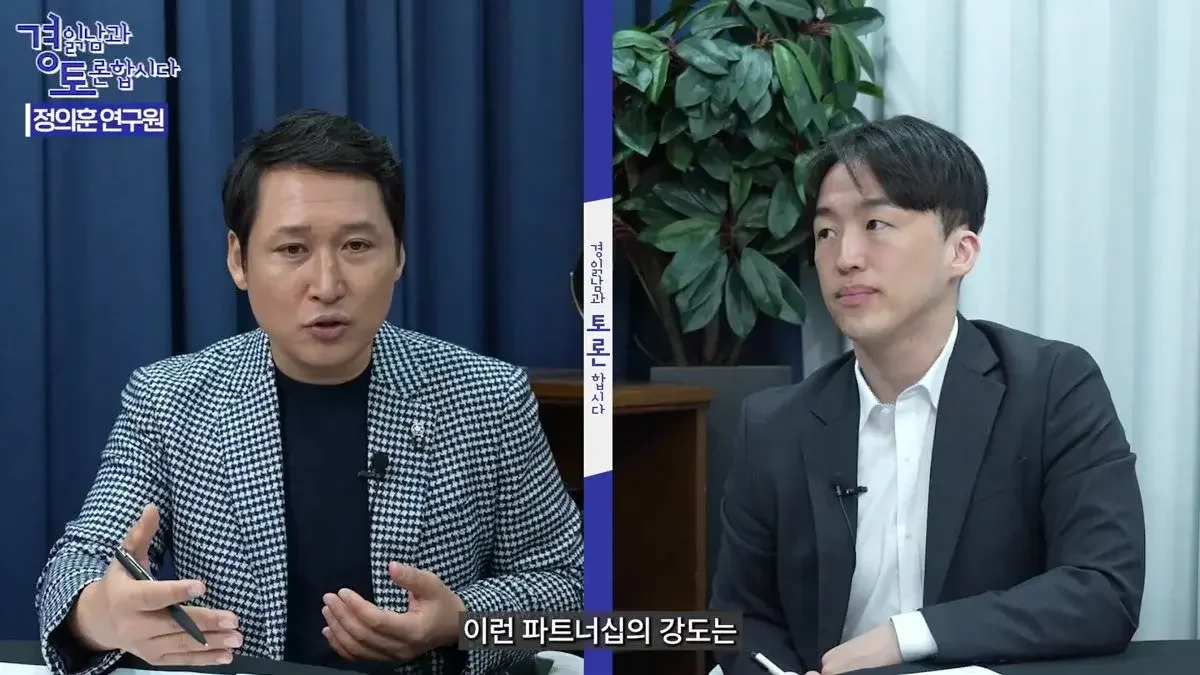
SpaceX is transforming into an AI infrastructure company as its AI business segment has now surpassed its traditional space business in total revenue. This strategic shift could facilitate a merger with Tesla to create a "Physical AI" ecosystem through combined technical and financial resources.
The business structure of SpaceX, led by Elon Musk, is undergoing a rapid transformation. Once a space company focused primarily on rocket launches and satellite communications, analysis suggests it is now pivoting toward AI infrastructure as a central revenue driver, increasing the possibility of a business integration with Tesla.
During a discussion featured on The Man Who Explains the Economy (Kim Kwang-seok TV), Jeong Ui-hun, a researcher at the Yusin Investment & Securities Research Center, evaluated Elon Musk's business direction as being very meticulously designed. Citing recent performance changes at SpaceX, Jeong noted that the AI business segment has surpassed the traditional space business segment in terms of total company revenue. This signifies that a key link has been established to complete the "Physical AI" empire envisioned by Musk.
From space company to AI infrastructure company: The transformation of SpaceX
Jeong offered an interpretation of the background behind a potential SpaceX listing that differs from conventional views. Initially, the dominant opinion was that SpaceX had sufficient cash flow, making the need for an IPO to raise funds low. When reports regarding a potential listing first emerged in the United States last December, Jeong forecasted that the possibility of an IPO was low because SpaceX was not in a situation requiring capital procurement to operate the space industry. However, analysis suggests that the actual push for an IPO may be a strategic choice considering synergies with Tesla.
"Looking at the second and third quarter results of SpaceX, the AI infrastructure area has become larger than the space business," Jeong explained. "With the creation of AI as an absolute central axis, the points of contact with the robotics and autonomous driving (Physical AI) areas pursued by Tesla have become clear." In other words, a structure is being completed where the AI infrastructure built by SpaceX can combine with the physical products (robots, cars) of Tesla.
The "Physical AI value chain" envisioned by Musk flows through infrastructure, models, services, and products. An anatomy of Musk's business groups reveals a value chain intended to complete infrastructure through Terafab (AI infrastructure), Starlink (communication infrastructure), and SolarCity and Boring (power infrastructure). In the AI model area, xAI operates, while in the service area, X (formerly Twitter), Groq, and Neuralink serve as platforms. Tesla's robots and autonomous vehicles are intended to serve as the final "products," forming a massive ecosystem.
Tesla-SpaceX merger: Synergies expected to overcome breach of trust risks
As the business structures interlock, the possibility of a merger between the two companies is resurfacing. Currently, while both companies share the same largest shareholder, they are strictly separate legal entities. Jeong analyzed the potential benefits of a merger from both internal and external perspectives.
Externally, business trust and efficiency between the two companies would be maximized. Because they are currently separate entities, issues regarding the burden of costs and "breach of trust" can arise when dispatching personnel or sharing infrastructure. For example, if Tesla's autonomous driving technical personnel are dispatched to assist with SpaceX's work, there is a structural limitation where the costs must be appropriately covered. However, if they become one company through a merger, such technical and personnel exchanges would become much smoother, allowing for efficient collaboration without the need for separate partnership agreements or acquisition procedures.
Internally, flexibility in fund management would increase. Both Tesla and SpaceX are technology-driven growth companies engaged in businesses requiring massive capital investment. Specifically, analysis suggests that the financial burden incurred when Tesla constructs large-scale data centers for AI infrastructure construction could be managed efficiently by combining it with the cash flow of SpaceX (revenue generated from sources such as Starlink). In recent situations involving interest rate issues, if the two companies merge to achieve economies of scale, they could gain an advantage in terms of securing funds.
The gap between the real economy and capital markets: The answer lies in the "notes"
The discussion also included a fundamental discourse on valuation. Using the cases of Tesla and Hyundai Motor Company, Jeong explained how indicators of the real economy and evaluations in the capital markets can differ. He cited the phenomenon where Hyundai Motor Company's revenue is absolutely larger than Tesla's, yet Tesla's market capitalization is overwhelmingly higher.
"The real economy looks at the numbers on financial statements, such as revenue, operating profit, and net assets, but the capital market looks at the 'notes' of the financial statements," Jeong said. He explained that the essence of the capital market is to bet on the "future direction" through information behind the financial statements—such as what the company's business segments are and what the market growth rate is—rather than current numbers.
The case of Naver also supports this. Following the COVID-19 period, Naver's revenue and operating profit grew, but its stock price trended downward once it was judged that expanding market share in the domestic market had reached its limits. The market judged that a new breakthrough was needed, given the difficulty of increasing share further unless the domestic population grows rapidly. Ultimately, the expert view is that a company must continuously present a "New Thing" to the market, not just financial results, to maintain a high valuation in the capital market.
Source: original video (YouTube)

0Comments
Comments are currently disabled.