
South Korea faces potential dollar stablecoin invasion in January
Professor Lee Seon-min warned that a lack of legal frameworks for won-based stablecoins could allow dollar-based stablecoins to dominate South Korea's domestic payment market starting in January. He also predicted that the rise of AI agents will shift the payment paradigm toward programmable stablecoins.

Professor Lee Seon-min warned that South Korea could face an invasion of dollar-based stablecoins starting next January due to a legislative vacuum. Without legal grounds for issuing won-based stablecoins, the domestic payment market remains vulnerable to dollar-based encroachment as AI agents begin to drive autonomous purchasing decisions.
An invasion of dollar-based stablecoins is being predicted in the South Korean financial market. Warnings have emerged that if the issuance of private won-based stablecoins is blocked while legislation is delayed, dollar stablecoins could ultimately encroach upon the domestic payment market.
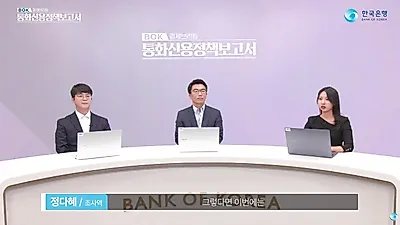
In a discussion presented by The Man Who Explains the Economy (Kim Kwang-seok TV), Professor Lee Seon-min engaged in an in-depth debate regarding the shift in the payment paradigm during the era of AI agents and the economic impact that South Korea's delayed legislation will bring. Professor Lee pointed out that South Korea currently lacks any legal basis regarding stablecoins and emphasized the urgency of preparing countermeasures.
"An era where refrigerators pay by themselves"... AI agents to redraw the payment map
Professor Lee predicted that the leadership in future payments will shift from humans to "AI agents." In particular, he analyzed that household appliances, especially refrigerators that operate 24 hours a day, will play a key role. This is because the era of "Physical AI" is arriving, where AI agents learn a user's consumption patterns, independently judge food shortages, and carry out orders.
"Future generations 20 years from now will be surprised by the fact that we paid for goods directly at online shopping malls," Professor Lee explained. "In an era where refrigerators make purchasing decisions for users, the adoption of stablecoins, which are programmable means of payment, will become inevitable." Scenarios were also presented where goods are purchased at lower prices through negotiations between AI agents (A to A payment) or where payments are made across borders.
As a specific example, Professor Lee mentioned the capabilities of "proactive agents." For instance, an agent might recognize that a user enjoys tteokbokki on rainy Wednesdays, check the weather, and if the tteokbokki ingredients in the refrigerator are empty, decide to order them autonomously. In this process, it becomes possible for agents to bring goods across borders or for multiple agents to gather to conduct price negotiations based on their collective purchasing power. Payments will ultimately be made with stablecoins, leading to a stage where delivery robots bring the goods and organize the refrigerator.
These changes are expected to become significant challenges for appliance companies such as Samsung Electronics and LG Electronics. "A refrigerator is a powerful device that runs 24 hours a day in the home," Professor Lee suggested. "When companies prepare for Physical AI businesses, they must certainly consider payment systems utilizing stablecoins." He added that while TVs may gradually disappear as they are replaced by mobile devices, refrigerators will not disappear, and the refrigerator's display will serve as a kind of "Vision," handling communication and conversation.
"Dollar invasion" amid legislative vacuum... Won stablecoins desperately needed as "defenders"
Unlike the technological changes, it was pointed out that South Korea's policy response is insufficient. "If legislation is not enacted, no one in our country can issue won-based stablecoins," Professor Lee warned. "Because there are no standards, we are in a situation where we must face the dollar stablecoins pushing in from next January with our whole bodies."
In particular, he expressed concern that once dollar stablecoins establish a foothold in the domestic payment market, user behavior will change, making it difficult to return to the won. "If users start using dollar stablecoins for six months, it is not easy for user behavior to change," he emphasized. "While won stablecoins may not be able to challenge the status of the dollar, legal grounds must be established so they can at least serve as 'defenders' to block the penetration of the dollar."
Currently, as the preparation of relevant bills such as the Digital Asset Basic Act is delayed, even the entities allowed to issue them or the standards for managing reserves have not been finalized. Professor Lee expressed regret over the lack of preparation, mentioning that bills proposed by former National Assembly members have been postponed and that plans for reports to the Blue House were not implemented. While mentioning that the Governor of the Bank of Korea recently made positive remarks regarding stablecoin issuance, he also expressed concern that discussions are moving around a bank consortium, and issues such as maintaining a stake of more than 50% remain unresolved, potentially preventing an agreement from being reached again.
CBDC and stablecoins should move toward a model of "coexistence" rather than confrontation
Regarding the relationship between Central Bank Digital Currency (CBDC) and stablecoins, the opinion was presented that "coexistence through division of roles" is necessary. Professor Lee viewed a model where the CBDC handles the public sector, such as national budget execution, and stablecoins handle various private payment demands, as desirable. He cited the model used by China, where the mainland uses CBDC and Hong Kong utilizes stablecoins. Conversely, he analyzed that the United States shows an "anti-CBDC" tendency because the stablecoin market has already been almost 99% dominated, making them feel no necessity to promote CBDC.
He countered concerns raised by some regarding privacy infringement upon the introduction of CBDC, stating that technical supplements are possible. "By utilizing blockchain technology, it is possible to maintain transparency while protecting personal information," Professor Lee explained. "Since stablecoins also have a structure where asset scales can be identified if only the address is known, the logic of personal information protection cannot be the sole basis for blocking the introduction of CBDC." Rather, he stated the view that using technologies like Zero-Knowledge Proof for national policy could provide stronger security than stablecoins.
Ultimately, the key is to align the technical foundations and remove regulatory uncertainty. Professor Lee urged a swift judgment from policy authorities, stating, "As long as the technical foundations are aligned, communication between CBDC and stablecoins is a technical problem that is not difficult."
Source: original video (YouTube)
0Comments
Comments are currently disabled.