
Professor Kim Gwang-seok warns investors to exit when FOMO reaches its peak
Professor Kim Gwang-seok explains that stock market volatility is driven by human psychology and warns investors to distinguish between the real economy and capital markets to avoid the FOMO trap.
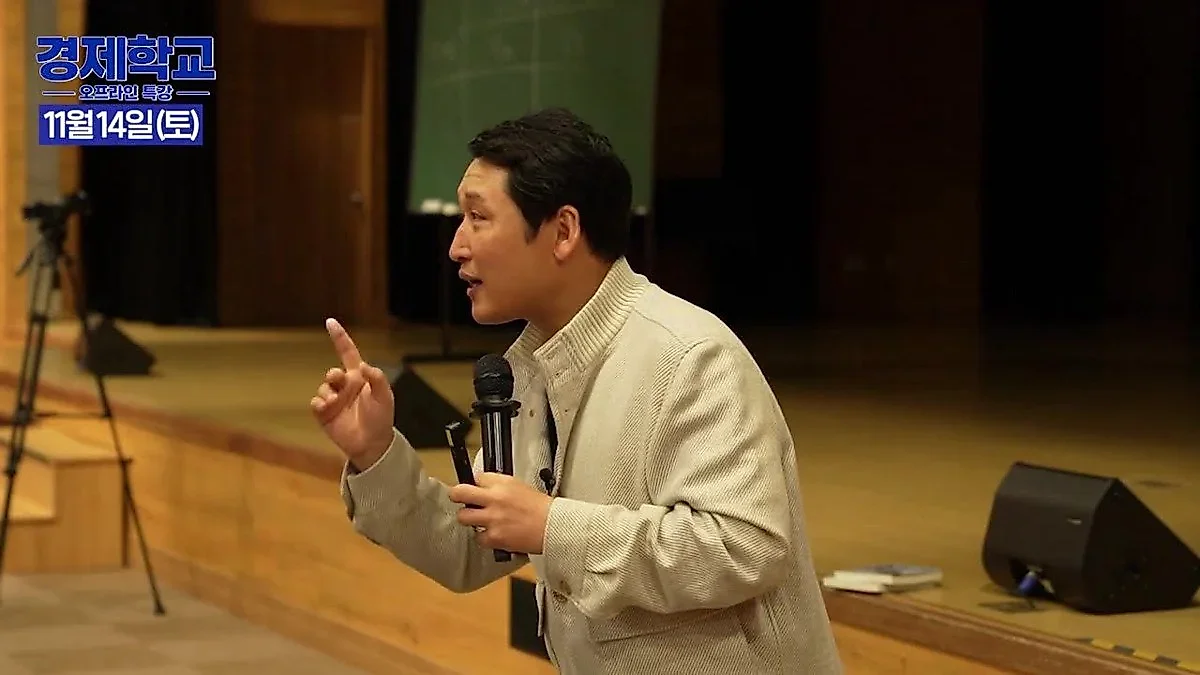
Professor Kim Gwang-seok warned that investors should exit the market when greed peaks, noting that global stock prices formed a bottom between April 3 and April 10, 2025, when fear regarding a US tariff war reached its height.
Stock market volatility ultimately stems from human psychology. When everyone is convinced of a rise and falls into greed, the market instead prepares for a decline; conversely, when everyone is gripped by fear and abandages assets, a bottom is formed. From an economic perspective, the core element an investor must distinguish is the divergence between the "real economy" and the "capital market."
The decisive difference between the real economy and capital markets
In a special lecture delivered by The Man Who Explains the Economy (Kim Kwang-seok TV), Professor Kim Gwang-seok identified the most common error made by investors as equating the real economy with the capital market. He explained that deteriorating indicators in the real economy do not necessarily mean the capital market will move in the same direction.
Professor Kim illustrated this using examples from 2025. At that time, the market was engulfed in extreme fear due to the declaration of a tariff war by the United States. When both sides announced mutual tariffs on April 3, 2025, a large-scale correction occurred in the market because fear that the intensifying tariff war would lead to a Great Depression reached its peak. However, in terms of the real economy, Samsung Electronics' exports to the United States did not decrease, and the mutual tariffs actually went into effect several months later in August 2025.
Ultimately, corrections in the capital market occur first when the psychology of "fear" reaches its peak, before the actual impact of the real economy manifests. "The period around April 3 to April 10, when the fear of the tariff war peaked, was the common stock price bottom for South Korea and approximately 200 other countries worldwide," Professor Kim explained. He added that the interval where an event occurs and fear reaches its peak is precisely the bottom of stock prices, noting that stock prices can actually rebound while real economy data is in the process of deteriorating.
The peak of fear is the bottom
Professor Kim analyzed the correlation between the duration of fear and stock price bottoms through major past economic events. In the case of the Middle East war that broke out in early 2026, the start of the war in late February caused a surge in international oil prices and spreading concerns over inflation. For the month immediately following the outbreak of war, the world watched related reports daily, anxious about oil prices and the progress of the war. However, from the perspective of the capital market, late March 2026—when fear reached its peak—was actually the period when global stock prices formed a bottom as all macroeconomic indicators, including international oil prices, government bond yields, and exchange rates, hit their peaks.
He summarized the duration of fear for each event as follows: the 2025 tariff war caused approximately 7 days of fear, the 2026 Middle East war caused approximately 30 days of fear, and the correction following the mid-term election results in the second half of 2026 caused approximately 5 days of fear. The commonality is clear: the market formed its cheapest prices when psychological fear reached its extreme, before laws or policies that directly affect the real economy (such as data center regulations or reductions in defense spending) were actually implemented following the opening of congress.
In particular, while offering a positive outlook for Samsung Electronics' 2027 performance, he pointed out, "I do not doubt that Samsung Electronics' performance will be good through 2027, but believing that the stock price will necessarily be good just because the performance is good is a logic that fails to distinguish between the real economy and the capital market." He emphasized that one must keep in mind that a company's fundamentals (real economy) and its stock price (capital market) can move independently.
The FOMO trap: Beware of greed
The psychology investors must be most wary of is "FOMO (Fear Of Missing Out)," the fear of being left behind. Professor Kim warned that the period when everyone agrees on and cheers for stock investment is exactly when FOMO reaches its peak.
Citing a case where an 80-year-old individual started investing in stocks for the first time in their life and made massive profits in just one month, he said, "When everyone agrees on stocks and enjoys profits, the market no longer agrees." In fact, the phenomenon in June of this year where basic stock investment books were most heavily sold serves as evidence that the public rushed into the market feeling FOMO. At that time, voices in the market stimulated FOMO by saying, "It's a disaster because I didn't invest in stocks," or "I should invest even if I have to withdraw my jeonse deposit."
Professor Kim explained, "Stock prices rise strongly because fear is erased and greed is embraced, and they fall strongly also because of psychology." Therefore, when others are enthusiastic and an investor thinks, "I should buy too," they should instead prepare to leave the market. He repeatedly emphasized the importance of a response strategy that is not swept away by market sentiment, stating, "One must exit at the point where FOMO reaches its peak."
Source: original video (YouTube)

0Comments
Comments are currently disabled.