
HUG introduces new trust system to protect tenant deposits
The Housing Urban Guarantee Corporation (HUG) has introduced the Secure Jeonse and Monthly Rent Trust, a new housing model where tenant deposits are held by a public institution rather than landlords to prevent fraud.
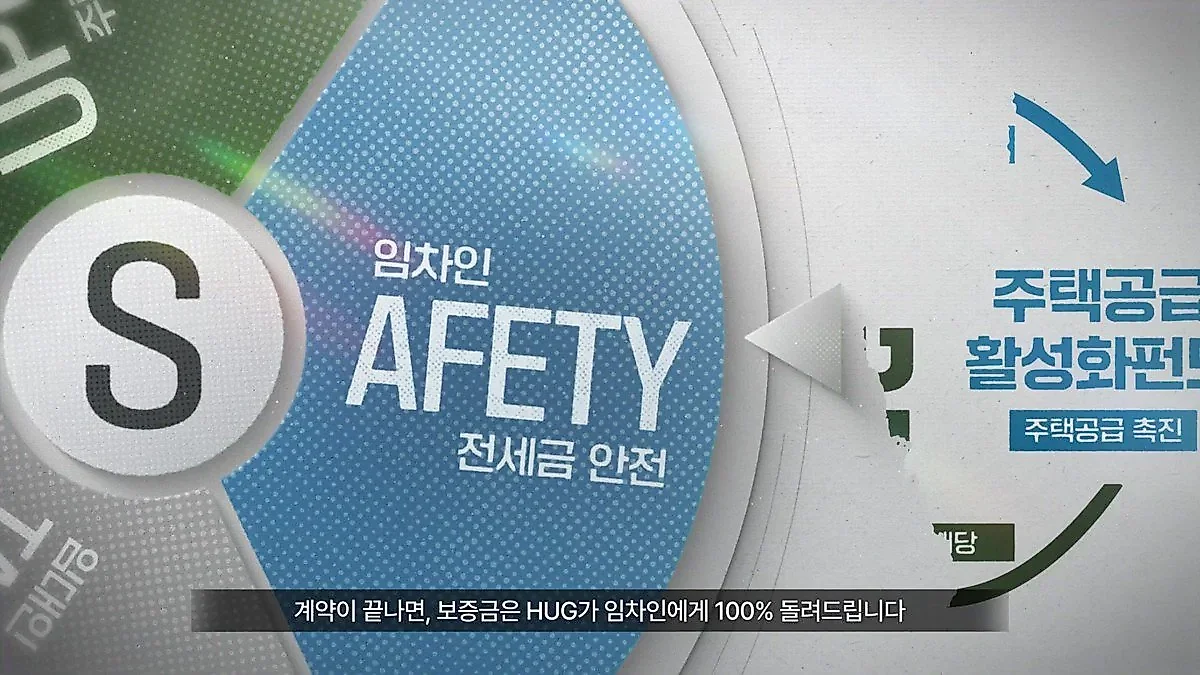
The Housing Urban Guarantee Corporation has launched the Secure Jeonse and Monthly Rent Trust, a system where a stabilization agency manages deposits to prevent fraud. Landlords can receive stable annual monthly income of 4.5% to 5% through the model, which aims to revitalize housing supply as monthly rentals approach 70% of the market.
A new housing model has emerged in which a public institution, rather than the landlord, directly manages tenant jeonse deposits while providing landlords with stable monthly income. This is the "Secure Jeonse and Monthly Rent Trust," introduced by the Housing Urban Guarantee Corporation (HUG) to alleviate anxieties regarding jeonse fraud and to revitalize housing supply.
According to the system explained by HUG, the Secure Jeonse and Monthly Rent Trust is a structure in which the landlord, the tenant, and HUG enter into a contract together. The most core change lies in the flow of funds. Previously, jeonse deposits paid by tenants went into the landlord's account, but under the Secure Jeonse and Monthly Rent Trust system, the tenant's jeonse deposit is deposited into a "Jeonse and Monthly Rent Stabilization Agency" instead of the landlord. When the contract ends, the system operates such that HUG returns 100% of the deposit to the tenant.
Combining monthly income without vacancy or delinquency concerns with deposit protection
This system focuses on simultaneously satisfying the interests of both landlords and tenants. Tenants can escape the risk of jeonse fraud and maintain housing with a lighter burden than monthly rent. The benefits for landlords are also specific. They can receive stable monthly income from a public institution without worrying about vacancies or rent delinquency. Notably, it is characterized by making it easier to find tenants even for houses with established collateral.
Substantial advantages were also presented in terms of yield. Landlords can receive stable monthly rent from the public institution approaching 4.5% to 5% per year. As there are no restrictions on house types or the scale of jeonse deposits, houses previously operated as monthly rentals can also participate. This acts as a mechanism to induce stable cash flow for landlords and smooth housing supply in the market.
Building a safety net that "protects from the start" based on 3,049 trillion won in guarantee capacity
HUG's recent move reflects the trends in the housing market that have changed following the jeonse fraud incidents. As the proportion of monthly rentals approaches 70% due to persistent anxiety over jeonse fraud, the intent is to build a preemptive safety net that protects funds from the contract stage, moving beyond a "post-event" response of returning deposits after an accident has occurred.
HUG has expanded its role as a leader in housing finance, starting as the Housing Business Mutual Aid Association in 1993 and evolving into the Housing Urban Guarantee Corporation in 2015. To date, the scale of guarantees provided has reached 3,049 trillion won, and the funds under entrusted management amount to 234 trillion won. The Jeonse and Monthly Rent Stabilization Agency, launched in 2026, is expected to use this accumulated guarantee capacity and fund management capability to reinvest the deposited jeonse deposits into housing construction projects, thereby performing the role of creating a virtuous cycle in the housing market.
Source: original video (YouTube)


0Comments
Comments are currently disabled.