
"Increasing Landlord Yields to Encourage Participation"... Market Changes Expected Following Introduction of Secure Jeonse and Monthly Rent Trust
HUG is introducing the "Secure Jeonse and Monthly Rent Trust" system to manage tenants' deposits directly and provide interest income to landlords. The system aims to alleviate anxiety regarding the return of Jeonse deposits and prevent gap investing by landlords.
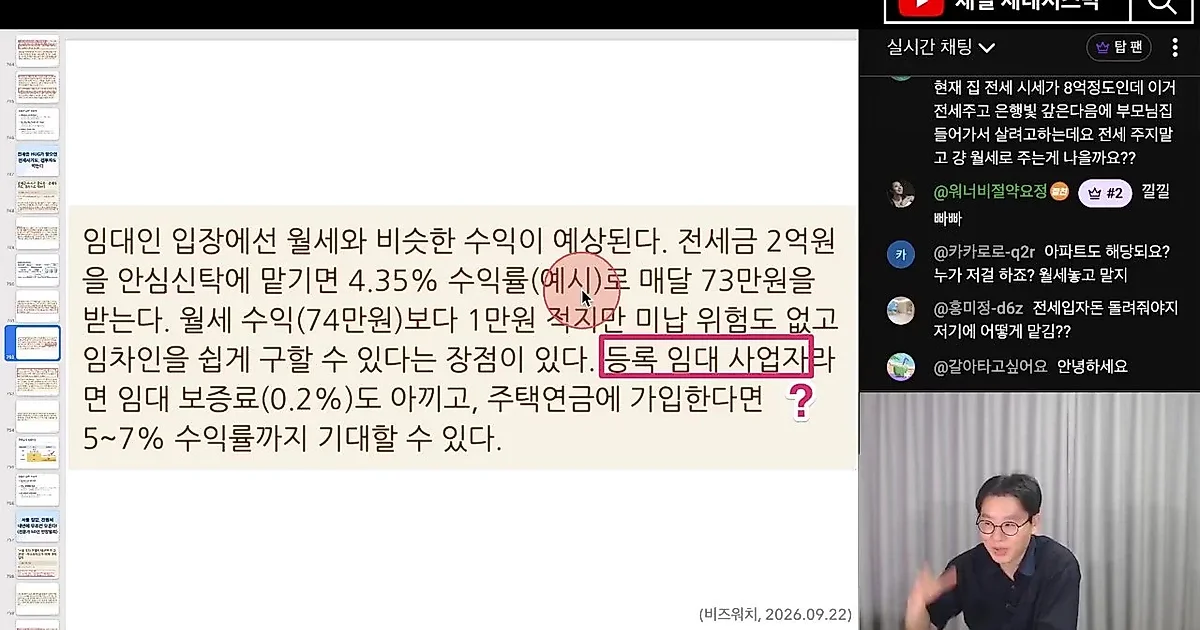
The 'Secure Jeonse and Monthly Rent Trust' system, in which HUG directly manages tenants' Jeonse deposits and provides interest income to landlords, is being officially introduced. This system aims to resolve tenants' anxiety regarding the return of Jeonse deposits and prevent gap investing by landlords.
HUG manages Jeonse deposits and provides income to landlords... effect of reducing housing costs
The core of the Secure Jeonse and Monthly Rent Trust is that HUG, as a Jeonse and monthly rent stabilization organization, directly manages the Jeonse deposits of tenants. By entrusting the deposit to the state (HUG) instead of the landlord, tenants can avoid the risk of Jeonse fraud, and landlords obtain interest income, which is the resulting cash flow, instead of holding the deposit. The government plans to provide a Jeonse-style structure to tenants and a revenue structure similar to monthly rent to landlords through this.
According to estimates by the Ministry of Land, Infrastructure and Transport, this system is expected to contribute to lowering the housing cost burden for tenants. For example, based on a house with a sale price of 300 million won and a Jeonse deposit of 200 million won, converting to pure monthly rent would result in an expenditure of approximately 740,000 won per month, but if a Jeonse loan (based on 80%) is utilized through the Secure Jeonse and Monthly Rent Trust, the monthly expenditure can be reduced to around 530,000 won. The Ministry of Land, Infrastructure and Transport explained that this has the effect of saving approximately 210,000 won every month, totaling 5.4 million won in housing costs over two years.
Landlord participation incentive is key... tax support measures under review
The success of the system depends on the participation of landlords. From the landlord's perspective, entrusting the Jeonse deposit to the trust and earning income must be more attractive than the expectation of capital gains through existing gap investing. Currently, this system is operated as an option rather than a mandate, but the possibility of it becoming mandatory depending on future policy directions is being raised.
The government is reviewing tax support measures to induce landlord participation. According to an official from the Ministry of Land, Infrastructure and Transport, if additional tax support being discussed with the Ministry of Finance and Economy is implemented, the landlords' yield is expected to increase, providing sufficient incentive to join. Some views in the market already estimate that the scale of the relevant agreement will range from at least 1 trillion won to potentially 2–3 trillion won. HUG plans to issue a recruitment announcement this October and intends to sign agreements after reviewing the target housing and contract conditions.
Effect of blocking gap investment and concerns over loss of asset formation opportunities
The Secure Jeonse and Monthly Rent Trust can act as a factor that prevents gap investing by multi-homeowners. This is because since HUG manages the Jeonse deposit instead of the landlord holding it directly, the method of purchasing houses with small amounts of money by using the Jeonse deposit as leverage may be restricted.
On the other hand, negative outlooks also emerge regarding the asset formation aspect for tenants. Concerns are being raised that if the existing life-cycle asset formation method—whereby individuals accumulate assets using Jeonse loans and later convert them to mortgage loans to purchase their own homes—changes to a structure centered on pure monthly rent due to the introduction of the Secure Jeonse and Monthly Rent Trust, opportunities for asset formation may disappear. In particular, how the change in housing types of Jeonse loan users will affect the market is a matter that must be observed through specific announcements and the implementation process in the future.
0Comments
Comments are currently disabled.