
Former investment expert reinterprets Goethe's Faust through a market lens
Former financial investment expert Al Sang-mu reinterprets Goethe's masterpiece Faust from the perspective of a market participant, drawing parallels between the classic work and modern economic phenomena.
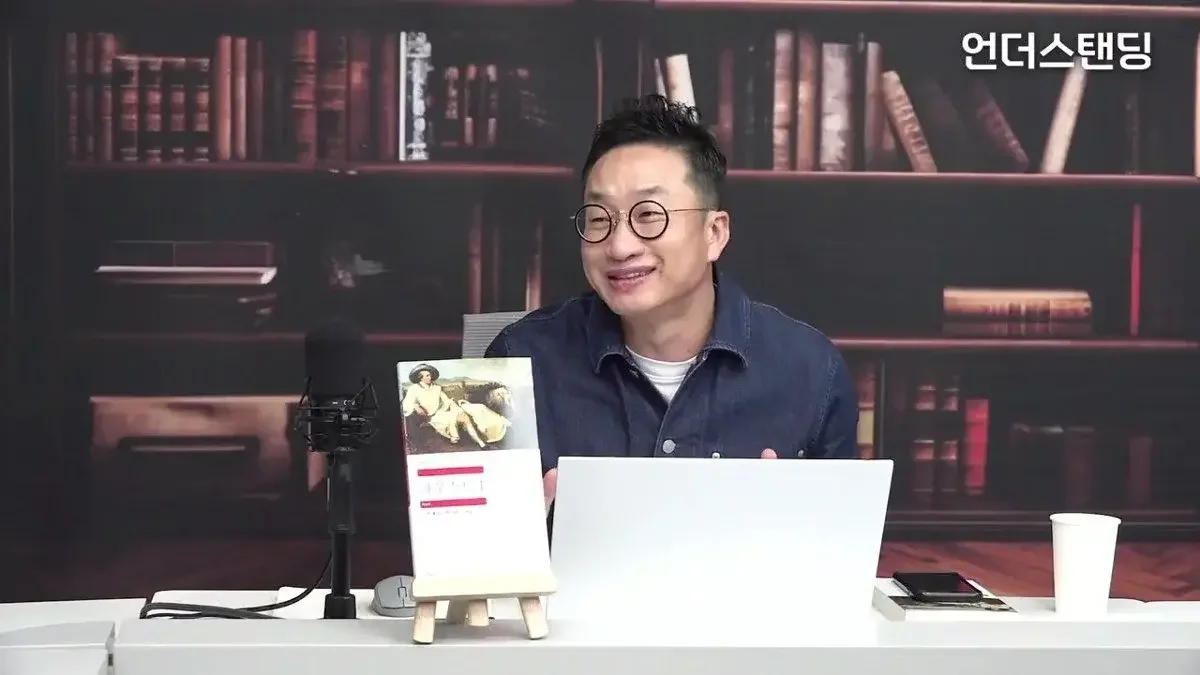
Former financial investment expert Al Sang-mu has analyzed Goethe's Faust as an archetype of the modern human, linking the 200-year-old masterpiece to contemporary economic phenomena such as monetary policy and artificial intelligence.
There are certain classics that people return to whenever the flow of the capitalist market is blocked. In a recent video from the YouTube channel Understanding: All the Knowledge in the World, former financial investment expert Al Sang-mu reinterprets Goethe's literary masterpiece, Faust, from the perspective of a market participant.
Al Sang-mu defined Faust as more than just a literary work, describing it as an archetype of the modern human that seems to prophesy modern economic and social phenomena. He explained that despite being a work from 200 years ago, it contains elements such as the principles of employment and concepts that can be linked to artificial intelligence (AI), thereby revealing the future of the market.
The Birth of the Modern Human Affirming Desire
Goethe's Faust is divided into Part 1, published in 1808, and Part 2, published in 1832. Al Sang-mu analyzed the work as the first form of a novel to affirm the image of a modern human who lives according to their own desires, moving beyond the human image that remained within the Christian worldview of the time. The process in which Dr. Faust obtains youth and pursues his desires through a wager between God and the devil is evaluated as having presented a new type of human to the people of that era.
In terms of composition, Part 1 has a relatively short and episodic character reflecting Goethe's youth, while Part 2 is a masterpiece completed in his later years that deals with higher-level themes. Al Sang-mu pointed out that while Part 1 contains the fantasies of youth, Part 2 expands into more macro themes, such as solving an emperor's financial crisis or land reclamation projects.
Currency Issuance, Homunculus, and Links to the Modern Economy
The key issue Al Sang-mu focused on is the economic setting appearing at the beginning of Part 2. He interpreted the scene where paper money is issued using buried treasure as collateral to revive the economy as being similar to modern monetary policy. This suggests that the operating principles of capitalism were already projected into literary symbols 200 years ago.
Furthermore, the passage where the artificial life form 'Homunculus' attempts to obtain a physical body leads to modern discussions regarding artificial intelligence (AI). The concerns regarding the uncontrollability that arises when a creature made by humans gains its own will align with the current issues facing AI technology. Al Sang-mu noted that these elements continue to repeat within the framework of modern society.
Wandering Humans and the Meaning of "Stay, thou art so beautiful"
At the conclusion of the work, Faust hears the sounds of land reclamation work and says, "Stay, thou art so beautiful." Al Sang-mu offered multifaceted interpretations of this line, suggesting it could be Faust's satisfaction with the sound of making money, or his satisfaction with having completed the utopia he established.
Regarding the basis upon which Faust was able to receive salvation, Al Sang-mu cited the sentence: "Man errs as long as he strives." This perspective suggests that the human attribute of constantly wandering and challenging oneself until death, much like Elon Musk, without knowing where the end of success lies, ultimately leads to salvation.
Source: original video (YouTube)
0Comments
Comments are currently disabled.