
Kim Young-ik warns of potential recession in first half of next year
Professor Kim Young-ik warned that the economy is likely to worsen during the first and second quarters of next year as the leading indicator cycle has entered a downward phase after peaking in July.

Professor Kim Young-ik warned of a possible economic recession during the first and second quarters of next year after the leading indicator cyclical change value entered a downward phase following its peak this past July.
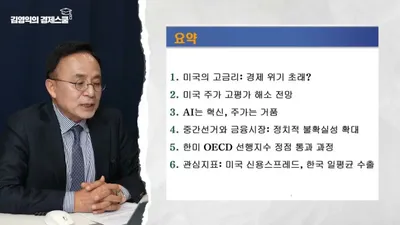
What is the key indicator investors should watch at the inflection point of the economic cycle? In a recent public lecture, Professor Kim Young-ik presented the "leading indicator cyclical change value" as the decisive criterion for judging economic trends, warning of the possibility of an economic recession in the first half of next year.
Kim analyzed that "the leading indicator cyclical change value has entered a downward phase after peaking this past July." He explained that a decline in this indicator, published by the Bank of Korea and the OECD, implies that the economy will worsen in the future. "While this year was in an expansion phase, the economy tends to worsen approximately two quarters after the leading indicator declines," Kim forecasted, adding, "There is a high possibility that the economy will worsen significantly throughout the first and second quarters of next year." Regarding investment strategy, Kim advised being aggressive when the leading indicator is rising—suggesting the purchase of KOSPI 200 ETFs or semiconductor ETFs if studying individual stocks is difficult—but reducing stock weight when the leading indicator declines.
'Daily Average Export Value' determines KOSPI direction and valuation
Given the specific nature of the Korean economy, export data is the most powerful tool for reading stock price trends. Kim emphasized that exports account for approximately 41% of Korea's GDP, making exports a key variable that determines economic growth and corporate profits. Notably, semiconductors accounted for 42% of total exports from January to October this year, surging to 49% in October. Thanks to strong semiconductor exports, Korea's economic growth rate has risen to around 3.7%, exceeding the potential growth rate of 2%.
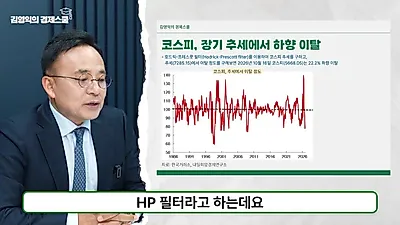
He advised that the "daily average export value" must be checked when predicting the direction of the KOSPI, as the correlation coefficient between the KOSPI and the daily average export value reaches 0.91. "There was a period this year where the KOSPI was overvalued by about 70% compared to the growth trend in daily average exports," Kim explained. "The stock price moved too far ahead of the export flow and eventually appeared to be dragged down by its master (exports)." In fact, as of October, the KOSPI entered an undervalued territory, dropping to the minus 3% level.
'Credit Risk' hidden behind the AI revolution and warnings of cash flow
Regarding the AI industry, which is a recent market hot topic, Kim warned that technological progress and capital flows must be viewed separately. Citing the electricity and automobile revolution of the 1920s or the IT revolution of the 1990s, Kim pointed out that while technology itself increases economic productivity, the problem always arises from "money (capital)." He noted that the Dow Jones Industrial Average plummeted 90% from its peak in the 1920s, and the Nasdaq bubble burst in the 2000s with an 80% decline, arguing that if optimistic expectations for technology lead to excessive capital inflows, bubbles form and eventually collapse, causing massive shocks.
Kim identified two risk factors in the current AI industry: excessive asset price bubbles and "credit issues." He analyzed, "In the past, there was a belief that AI companies would generate profits and return money, but now many companies are in a state of negative cash flow due to massive investments." Consequently, as companies must raise funds through corporate bonds or private equity funds, a serious credit crisis could occur if investors doubt profit realization and withdraw funds. Indeed, while U.S. Treasury yields have recently risen, corporate bond yields have surged, and signs of a liquidity crunch are appearing in private equity funds.
Kim suggested the "credit spread" as a specific indicator for investors to watch. "The credit spread, which represents the difference between the high-yield bond spread and the 10-year Treasury yield, may soon reach a critical threshold," he said, urging investors to "definitely check the credit spreads released daily by institutions such as the Federal Reserve Bank of St. Louis to confirm if serious credit problems are occurring in the U.S. economy." Currently, while this spread has not yet reached the long-term average of 5.2 percentage points, it is rising rapidly after hitting a low point.
In a weak dollar phase, KOSPI will be more advantageous than S&P 500
Kim identified the "dollar index" as a key variable for future asset allocation strategies. Mentioning the massive debt problem of the U.S. economy (over 22 trillion dollars), he predicted a high possibility that the dollar will shift toward weakness in the long term. He explained, "There is a correlation (0.8) that when the dollar index falls, the returns of the KOSPI are much higher than those of the S&P 500." Conversely, when the dollar index is strong, the S&P 500 tends to rise more than the KOSPI.
Kim also mentioned the impact of the U.S. political situation on the AI industry. He analyzed that if the Democratic Party, which controls both the House and the Senate, prioritizes environmental issues and regulates data centers, the investment cost burden for AI companies struggling to raise funds could increase further. In conclusion, Kim forecasted, "Over the next five years or so, the relative returns of the KOSPI will be better than the S&P 500 amidst a weakening dollar trend." However, he added that an asset allocation strategy by country is necessary depending on whether the dollar index is strong or weak at the time of investment.
Source: original video (YouTube)

0Comments
Comments are currently disabled.