
Hashed CEO Simon Kim: "In the AI Era, the State Should Hold Stakes in AI Infrastructure to Distribute Output"
Hashed CEO Simon Kim predicts that the advancement of AI will fundamentally change wealth distribution…
As artificial intelligence (AI) technology advances, a forecast has emerged that the existing methods of wealth distribution in capitalism will fundamentally change. As AI establishes itself as an essential infrastructure like electricity, there is an analysis that a model is needed where the state holds stakes in AI infrastructure and uses them to directly distribute the output to the people.
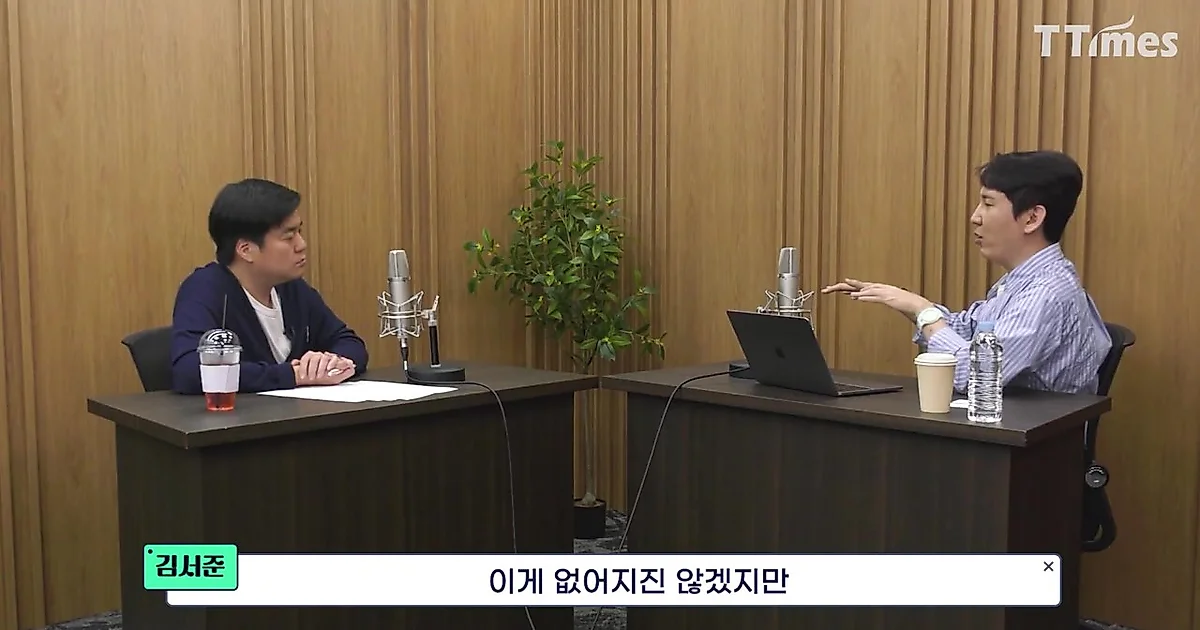
According to a T Times TV video, Hashed CEO Simon Kim diagnosed that the arrival of the AI era could break past measures of success or the premises of capitalism. Simon Kim explained, "In the past, measures of success existed like rankings or grades, but an era is coming soon where such things will become meaningless," and "A situation is coming where even the existing premise of capitalism, where making a lot of money was the objective function, could be broken." He added, "The answer is no longer just one," and "An era will come where people make their own choices about what kind of god they will become."
Limits of Tax-Centered Redistribution... "A Method of Sharing the Output Itself Must Be Introduced"
Simon Kim pointed out that when discussing wealth redistribution caused by AI, the existing 'tax' method has clear limits. While the 'robot tax' concept proposed by people like Bill Gates in the past assumed physical robots, current AI operates much faster in the digital realm in the form of 'agents.' Simon Kim said, "It's not like we are running just one agent, but we are running hundreds or thousands of them, and the efficiency of each agent differs," and "We cannot levy taxes on the number of agents, and since some agents are extremely efficient while others are less efficient and require running more agents, measuring this like a mathematical formula is practically near impossible."
The fact that various loopholes, such as tax havens, exist for taxes levied on corporations was also cited as a limitation. Simon Kim argued, "Even global big tech companies are rotating money in places like tax havers," and "In the end, taxes will not disappear, but as one of the other ways to solve this, distribution should be possible at the very moment value is created by AI."
As an alternative to this, Simon Kim suggested a method of sharing the output itself at the moment value is created, rather than a method of collecting and distributing taxes after the fact. He explained, "Rather than taxes, it is sharing the output itself," and "A model must coexist where the state holds stakes in AI infrastructure and distributes the tokens created there to the citizens as dividends." This aligns with basic income models using oil money in the Middle East or resource revenue dividend models in Alaska and Norway. Simon Kim analyzed, "In the United States, the government taking a stake in Intel shares or OpenAI giving stakes to the government is a very natural gesture in this context."
AI Tokens Could Become a New Form of 'Birth Certificate Benefit'
Simon Kim defined AI infrastructure as an essential good that the state must manage, much like electricity or water. This is because the difference in individual productivity depending on whether one uses AI can widen by hundreds or thousands of times. He emphasized, "The productivity difference between a person who can only perform Google searches and a person who can use AI will be a hundred or a thousand times," and "Just as the state provides compulsory education, AI tokens should be given to citizens for free." He explained that the method of distribution is highly likely to take the form of computational tokens, such as 'stable tokens,' rather than money.
In particular, he predicted that such a distribution method would be directly linked to national competitiveness. Simon Kim explained, "If you are born in an AI powerhouse, you will receive more AI tokens," and said this "can be defined as benefits attached to a birth certificate." Since individuals in countries lacking AI infrastructure may face constraints in productive activities using AI, he analyzed that AI token distribution at the national level will become a new form of welfare and a right to survival. He added, "If rural areas become 100% automated and produce rice in 10 to 20 years, a method where the state distributes that output itself to the citizens will be possible."
AI Infrastructure is a Modern 'Arms Race'... South Korea's Opportunity and the Japanese Market
The competition among nations to secure AI infrastructure is expected to resemble the arms race of the past Cold War era. Simon Kim analyzed, "If defense spending was the core pillar for protecting a nation in the past, it is now changing so that whether a country can provide AI infrastructure to its citizens is one of the largest pillars." This implies that if a nation fails to secure AI infrastructure, the very act of protecting the nation could be threatened.
Meanwhile, Simon Kim captured positive changes regarding the entry of South Korean companies into the Japanese market. He conveyed, "In the last one or two years, there has been a lot of talk among Japanese VCs (venture capitals) about wanting to invest in early-stage South Korean companies," and "South Korean companies are doing very well in the Japanese market, and a change is occurring where Japan also feels South Korea as an equal business partner." In particular, mentioning that services like the character chatting platform 'zeta' are achieving results in Japan, he predicted that South Korea's speed of tech adoption and temperament will be a great opportunity in the Japanese market.
0Comments
Comments are currently disabled.