
Far-left 'Die Linke' Reclaims First Place in Berlin Election… 'Housing Expropriation' Pledge Rises on Backing of Youth
The far-left party Die Linke has emerged as the largest party in the recent local elections in Berlin, Germany…
The political landscape in Germany is shifting. In the recent local elections held in the German capital, Berlin, the far-left political party 'Die Linke' took first place, shaking up the existing political structure. This is a result of far-left forces demonstrating a strong presence centered in major cities in response to the growth of far-right forces across Europe.
The Rise of 'Young Far-Left' Uniting the 2030 Generation
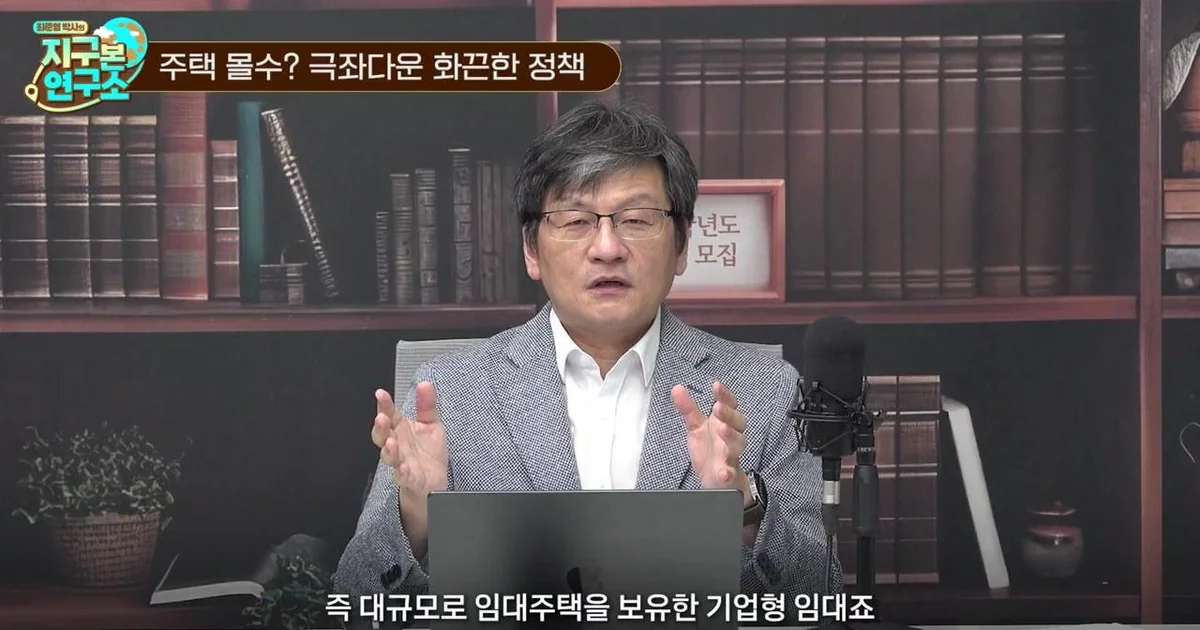
According to a video from Dr. Choi Jun-young's 'Globe Research Institute', Die Linke recorded a vote share of 25.7% in this Berlin local election, securing 44 seats and rising to the number one party. On the other hand, the center-right CDU recorded second place with an 18.8% vote share, taking 33 seats. The far-right party 'AfD' remained in third place, obtaining 16.3% and taking 28 seats. They are followed by Alliance 90/The Greens and the SPD, and the far-left Die Partei party also exists.
What is noteworthy is the rapid change in Die Linke. Die Linke, which is rooted in the Socialist Unity Party of Germany during the East Germany era, has long had a strong image as a party supported by the elderly. However, over the last three years, Die Linke has succeeded in transforming into a 'young party' with the 2030 generation as its mainstay. The video explained that the number of Die Linke members nearly doubled in one year, reaching a scale of approximately 123,000 as of 2025. This is analyzed as a pattern of generational replacement where those who felt resentment toward the growth of the far-right chose the opposing Die Linke.
Looking at the actual vote share by age group, this change is distinct. 49% of voters aged 25 to 34 supported Die Linke, and a high vote share of 43% was also shown in the 16 to 24 age group. In particular, the support rate in the 30s surged by 32%p compared to 2023, becoming the key driver of this victory. On the other hand, the support rate showed a declining trend from the mid-40s onwards.
'Cost of Living Relief' Strategy Benchmarking New York Worked
Behind Die Linke's victory were the specific characteristics of the city of Berlin and a sophisticated election strategy. Berlin has grown into a city where diverse cultures and immigrants coexist, but it is a place where housing instability has intensified due to skyrocketing rents caused by population inflow and increased investment. Die Linke tapped into this point.
Die Linke actively benchmarked the case of Mayor Mamdani in New York. Under the slogan 'From New York to Berlin,' they drew public response by placing themselves on equal footing with Mayor Mamdani. The 'Solidarity City' concept, which aims to resolve social inequality and lower the burden of soaring living costs, moved the hearts of the urban youth. In particular, as a result of actively utilizing SNS, they demonstrated overwhelming influence online, with related video views exceeding 6.3 million.
The movements of Elif Alparslan, who is being mentioned as a candidate for the next Mayor of Berlin, also draw attention. Born into an immigrant family of Türkiye descent, Elif Alparslan is a politician who has been active in advocating for immigrant rights; if she becomes mayor, she will become the first person of color and Türkiye descent in Berlin's history to serve as mayor. She built a friendly image by wearing passionate lipstick, large earrings, and comfortable clothing like jeans, drawing support from the youth. Elif Alparslan is also a dual citizen holding both German and Türkiye nationality.
Soaring Rents and 'Housing Expropriation' Controversy
The hottest issue in this election was undoubtedly the housing problem. As the population of Berlin gradually increases and facilities and investments grow, rents have recently skyrocketed. According to the video, Berlin is cited as one of the most expensive cities in the world in terms of rent and one of the cities with a high rate of increase. Rents are soaring, and people who cannot afford them are forced to keep moving.
Reflecting these demands, Die Linke presented challenging policies. In particular, the results of the referendum held in Berlin in 2021 served as the political background for this election. At that time, 58% of the referendum participants judged that corporate landlords holding large-scale rental housing were harassing residents by raising rents, and they agreed with the proposal to expropriate these commercial corporate rental apartments.
However, just because Die Linke took first place does not mean they will immediately monopolize the mayoralty. Negotiations are required to form a coalition government with the Alliance 90/The Greens, Die Partei, or the SPD to secure a majority of seats. This is because Die Linke needs about 10 more seats while having secured 44 seats. Dr. Choi Jun-young predicted that this result could act as a variable where far-left forces, which are further to the left than the center-left, unite against the rise of far-right forces expected to appear across Europe in the future.



0Comments
Comments are currently disabled.