
"Every Menu Item Has a Position"... Menu Composition Strategies to Increase Average Transaction Value
Menu composition is identified as a key factor in determining the sales of food service establishments. Analysis suggests that instead of simply listing food, a strategy is needed to assign clear roles to each menu item to induce customer orders.
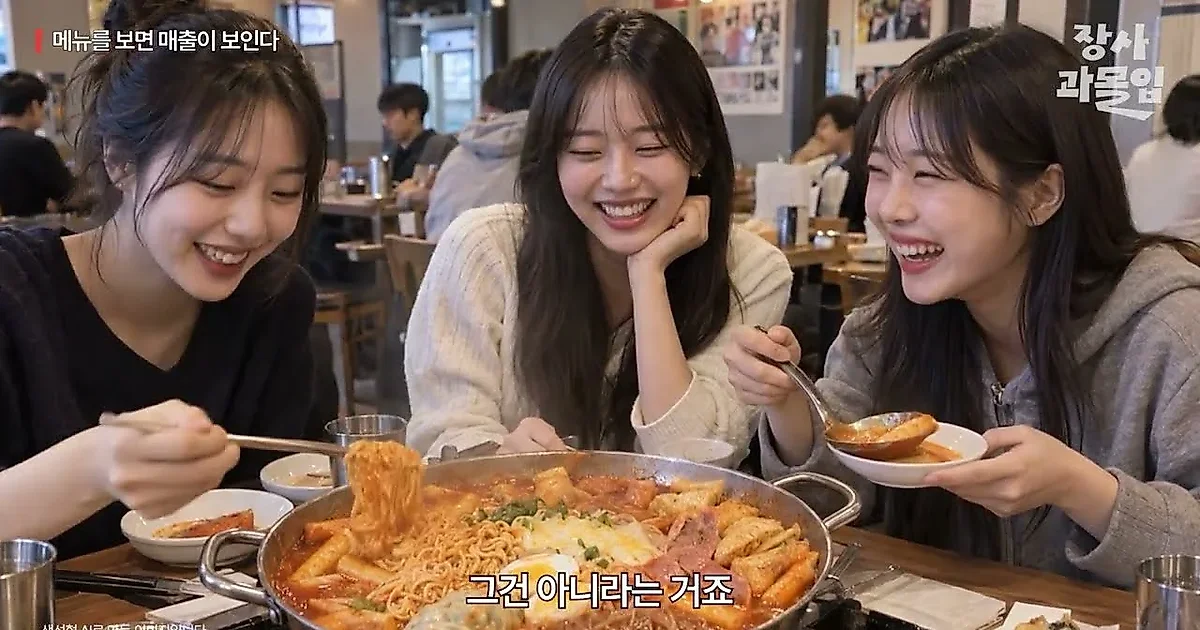
Menu composition has been cited as one of the core factors determining the sales of food service establishments. The analysis suggests that rather than simply listing food, a strategy is required to assign clear roles to each menu item to induce customer orders.
"Every menu item has its own role"... Distinguishing between signature and hooking menus
Bae Mun-jin, CEO of JD Branding, explained in a video that every menu item must perform its own role. CEO Bae emphasized that the brand's representative 'signature menu' and the 'hooking menu' that draws customers to the store must be clearly distinguished. A hooking menu primarily serves to attract customers by creating visual buzz on platforms such as SNS, but rather than generating direct profit, it acts as 'bait' to lure customers into the establishment.
CEO Bae pointed out that hooking menus are often confused with signature menus. Because hooking menus operate based on topicality, they have low sustainability, whereas signature menus possess the power to make customers visit repeatedly. Therefore, he advised designing the menu so that while customers are drawn in by the hooking menu, they ultimately consume the attractive signature menu.
The formula for designing hooking menus using 'allowable absurdity'
As a specific methodology for creating hooking menus, CEO Bae presented the concept of 'allowable absurdity.' This refers to methods such as providing an amount of food that seems absurd to customers, having overwhelming visuals, or placing absurdly expensive toppings on common food. For example, serving a regular latte in a large earthenware jar or placing uni on top of a cup noodle falls into this category.
However, a point of caution when designing hooking menus is that the cost of such items is bound to be high. CEO Bae explained that if a customer who orders a hooking menu eats only that item and leaves immediately, it is difficult to balance the profit structure. Therefore, the key is to create a combination structure between menus so that customers who order a hooking menu can naturally order other menus or side dishes. CEO Bae cited a Tangsu dish that maximizes visual effect by frying an eggplant whole as an example, mentioning the importance of a design that induces customers to move on to the main menu.
Pricing policies using comparison groups and 'Best Menu' labeling strategies
Practical strategies to increase menu efficiency include 'setting comparison groups' and 'recommended menu labeling.' CEO Bae advised that when marking 'recommended' or 'best' on a menu, it must be attached to the signature menu that ensures profitability. He explained that marking a bait product used to attract customers as 'best' is not strategically appropriate.
Furthermore, when establishing pricing policies, it is effective to create comparison groups so that customers can intuitively feel the value of a menu item. For example, when wanting to set a high price for a specific menu item, one can place a cheaper regular menu next to it to make that item appear to have higher relative value. CEO Bae added that through such setting of comparison groups, a standard can be provided for customers to judge the value of the menu.

0Comments
Comments are currently disabled.