
GTX, an Era of 'Time' Instead of 'Distance'... Reshaping the Metropolitan Housing Market
The paradigm of the metropolitan real estate market is shifting from physical distance to "time distance" due to the emergence of the Great Train eXpress (GTX). Professor Kim Kyung-min of Seoul National University analyzes how this "Time Space Conversion" phenomenon is fundamentally restructuring the spatial layout of the housing market.
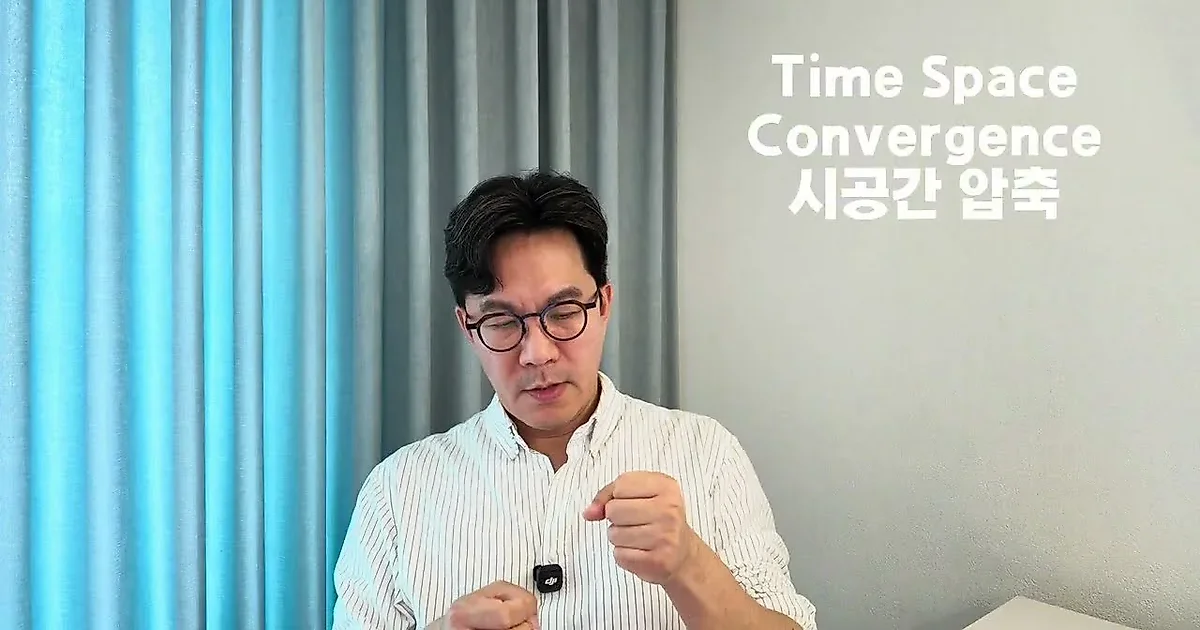
The paradigm of the metropolitan real estate market is rapidly shifting from a focus on physical distance to a focus on 'time distance.' Analysis suggests that the emergence of the Great Train eXpress (GTX) is going beyond a simple expansion of the transportation network and is fundamentally reshaping the spatial structure of the housing market.
Professor Kim Kyung-min of Seoul National University analyzed the influence of GTX on the metropolitan housing market through the 'Kim Kyung-min's Notes' YouTube channel. Professor Kim diagnosed that "once GTX is completed, the metropolitan housing market itself will change completely," noting that the existing criteria for judging real estate value, 'location and distance of space,' are changing into 'Time Space Conversion.'
"How many minutes it takes rather than how many km"… The core of the space compression phenomenon
Until now, the core question in the real estate market has been focused on physical distance, such as "how many km away is it from the Gangnam business district." However, in the GTX era, temporal accessibility, such as "how many minutes does it take to reach the business district," has emerged as a key variable determining housing prices. This is called the 'Time Space Conversion' phenomenon.
In the case of GTX Line A, the distance from Suseo to Dongtan, which previously took 70–90 minutes by existing regional bus, has been shortened to 19 minutes. From Seoul Station to Paju Unjeong, it also decreased from the existing 70-minute range to 21 minutes, meaning that although the physical distance remains unchanged, the temporal distance has been compressed to about one-third. Professor Kim explained, "As time is compressed, a phenomenon may occur where areas located in the middle feel psychologically further away instead."
Whether one holds access to business districts in both directions determines the housing price growth rate
The housing price growth rates by region following the opening of GTX showed very differentiated patterns. According to the data presented by Professor Kim, the growth rates of major station area complexes before and after the opening of GTX showed a large gap depending on the region. While Yeonshinnae rose by 12.7% and the area around KINTEX rose by 6.5%, Suseo recorded a 43% increase, Seongnam 36%, and Dongtan 39.7%. While the average growth rate of the southern region (Suseo~Dongtan) reached about 40%, the northern region was significantly lower than this.
The fundamental reason for this difference lies in the 'existence of business districts.' Southern regions such as Suseo, Seongnam, and Dongtan have excellent accessibility in both directions because they either target powerful high-wage jobs (business districts) such as Gangnam, Pangyo, or semiconductor clusters as destinations, or they possess business districts themselves as starting points. On the other hand, northern regions such as Unjeong or KINTEX are analyzed to have relatively weak competitiveness with business districts because there are no business districts at the starting point, only destinations like Seoul Station or Gwanghwamun.
Establishing a connected transportation network to implement 'Hub and Spoke' is key
The issue of 'spatial polarization,' where the benefits brought by GTX are concentrated only in specific station areas, was pointed out as a task to be solved. Using the case of Dongtan, Professor Kim expressed concern that "areas close to GTX stations show high preference, but areas that require an additional 20–30 minutes to move to the station may instead be marginalized due to lower convenience compared to using a car."
Therefore, for GTX to complete a true transportation revolution, the implementation of the 'Hub and Spoke' model is essential. This means that centered around the GTX stations, which are the center of the wheel (Hub), bus and complex transfer systems that connect surrounding areas like spokes (Spoke) must be organically linked. Citing the case of Shibuya, Japan, Professor Kim emphasized, "Just as regional buses are directly connected to terminals within mixed-use buildings to increase accessibility, GTX stations must function as complex transfer spaces that naturally connect with surrounding areas."


0Comments
Comments are currently disabled.