
"She used to look like Jun Ji-hyun"... The unstoppable appetite of a 50-year-old owner who gained 30kg
A recent TV CHOSUN LIFE video explores the dangers of middle-aged obesity through the case of Yang Eun-yeong, who gained 30kg in her 50s despite once being slim enough to be compared to Jun Ji-hyun. The report details how hormonal changes, irregular eating habits, and metabolic shifts contribute to rapid weight gain and chronic health risks in middle-aged women.
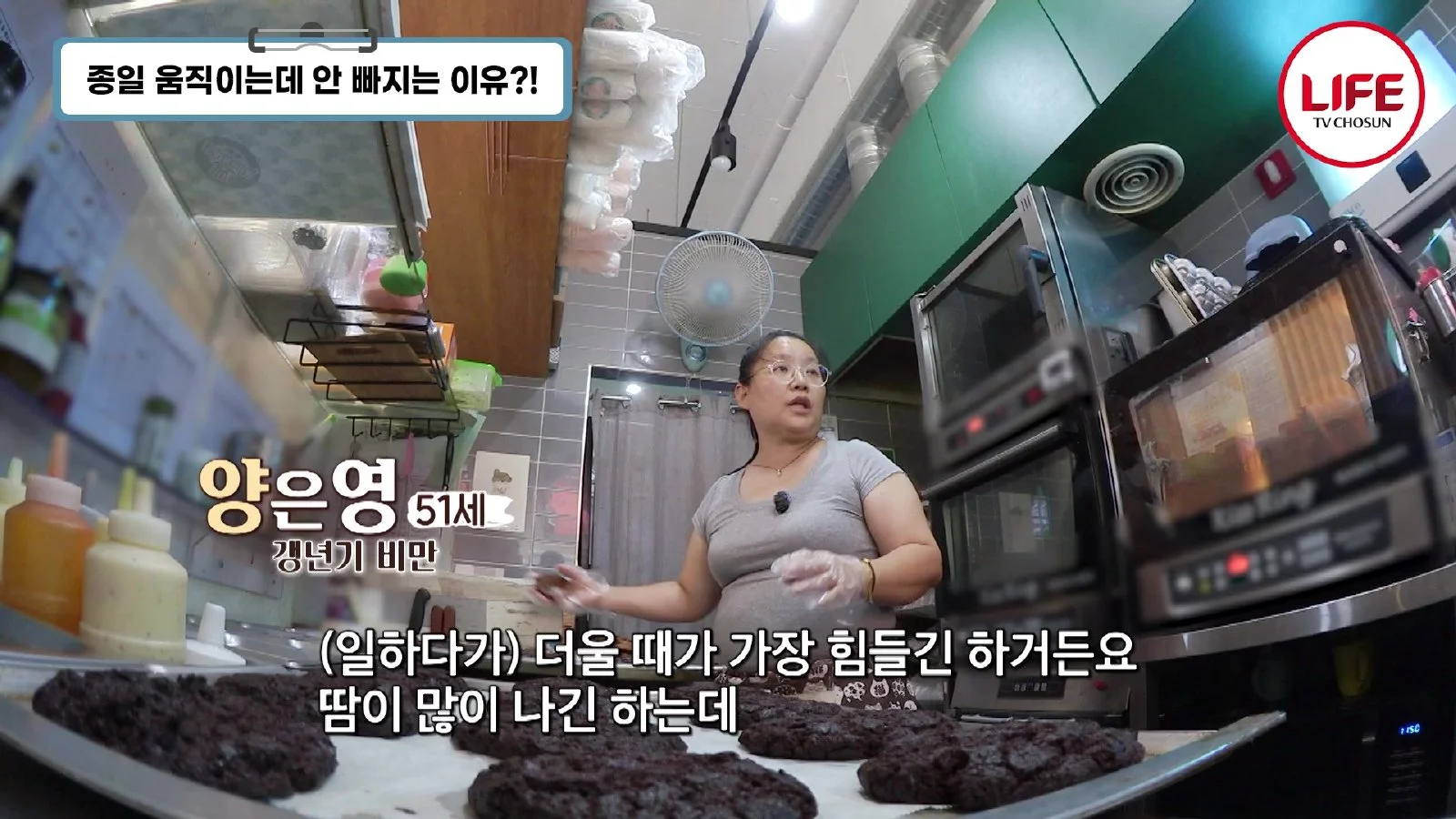
Rapid weight changes in middle-aged women are more than just a change in appearance; they serve as a health inflection point that can lead to hormonal imbalances and chronic diseases. In a recently released video from TV CHOSUN LIFE, the dangers of middle-aged obesity were addressed through the case of Yang Eun-yeong, who maintained a slim physique to the point of being told she resembled Jun Ji-hyun in the past, but has gained 30kg upon entering her 50s.
The danger of 'male-pattern physique' caused by hormonal changes after menopause
Weight gain in middle-aged women is closely related to changes in the body's internal hormonal system. According to the video, when menopause occurs, the secretion of female hormones decreases, and the ratio of androgens (male hormones) relatively increases. In this process, the way fat is accumulated also changes; while young women exhibit a female-pattern physique where subcutaneous fat accumulates in the hip area, after middle age, they transition to a male-pattern physique where visceral fat accumulates.

Yang Eun-yeong also experienced so-called 'age-related weight gain' upon entering her 50s. Her weight, which used to be in the 50kg range, has increased rapidly and is currently up by 30kg. In particular, she showed a pattern where fat concentrated heavily in the belly and upper arm areas. According to the expert explanation in the video, those who gain more than 20kg are found to have a 28% higher risk of overall cancer occurrence compared to those with no weight change. In Yang's case, abnormal signals are already appearing in her health checkups, such as fatty liver, hyperlipidemia, and pre-diabetes, analyzing that urgent weight management is required.
The vicious cycle of 'energy storage' caused by lack of mealtime and late-night intake
In addition to hormonal changes, irregular eating habits and the living environment are pointed out as causes of weight gain. As an operator of a sandwich shop, Yang is in an environment where it is difficult to eat meals on time due to the nature of her work. As situations where she had to stop eating when customers arrived repeated, she often replaced meals with condensed milk lattes, sweet drinks, or snacks. These habits become factors that raise blood sugar and induce additional energy intake.
In particular, meals taken late at night are cited as a key cause preventing weight loss. As a result of thermal imaging camera measurements, Yang's abdominal temperature appeared lower than the surrounding area. This means that the consumed energy was not dissipated as heat through physical activity but was stored within the body. Because our bodies tend to store energy rather than burn it at night compared to during the day, the more food is consumed late at night, the more fat accumulation is accelerated.
Decrease in basal metabolic rate, limits of exercise, and the importance of expert consultation
The reason middle-aged people struggle with weight loss is due to biological limits. As people age, the basal metabolic rate drops, changing the body structure so that weight is gained more easily even when eating the same amount, and it becomes difficult to sustain high-intensity exercise due to decreased physical strength. The video mentioned that the running time required to lose just 1kg of fat reaches a whopping 14 hours, explaining how difficult it is for an average person to control weight through exercise alone.
Experts advise that as the duration of a disease increases, it becomes harder to control chronic diseases such as diabetes or blood pressure, so active management is necessary before weight gain accumulates. In particular, they emphasized that if joint pain accompanies heavy weight, it is difficult to resolve through willpower alone, so the most effective method is to consult with an expert to find a treatment suitable for oneself.
Source: TVCHOSUN JOY (YouTube)

0Comments
Comments are currently disabled.