
Restaurant Competitiveness Shifts Toward AI Skills and Store Data
Restaurant competitiveness is shifting from marketing toward the ability to use AI. Restaurant brand planner Bae Mun-jin says training AI on store information can help operators improve brand quality, analyze menus and costs, identify target customers and assess competitors.
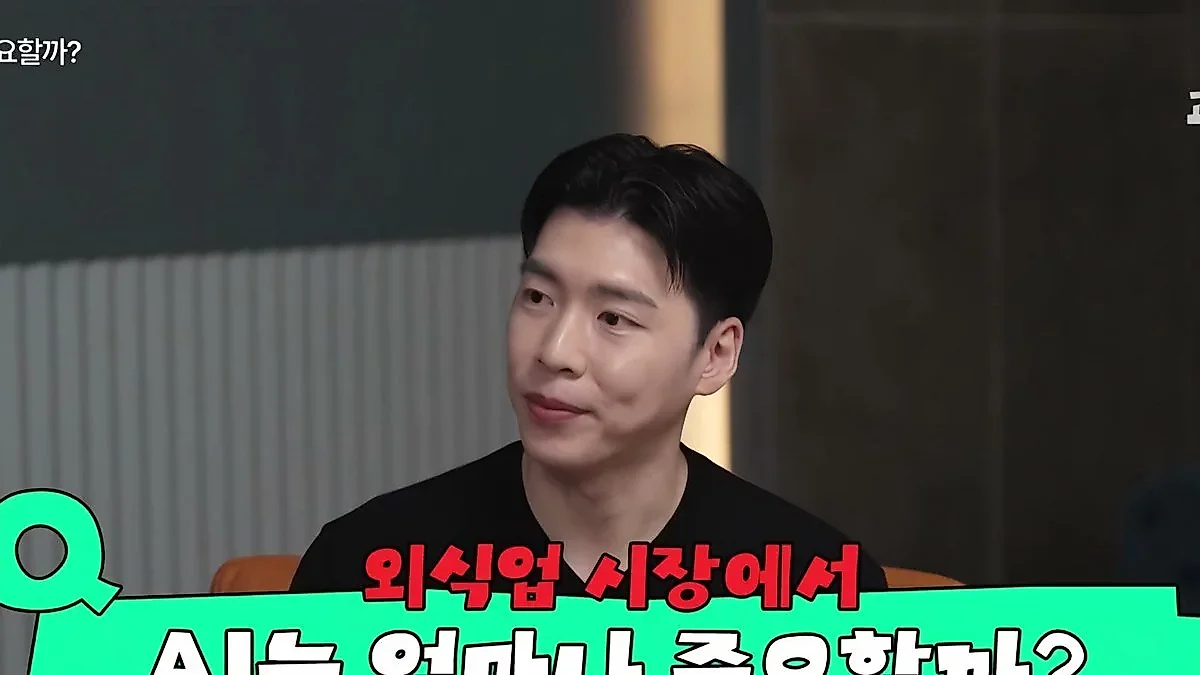
Restaurant competitiveness is shifting from a focus on marketing toward the ability to use artificial intelligence. In the “Jangsa Gwamorip” video released by Baemin Oesigeop Gwangjang, restaurant brand planner Bae Mun-jin explained how operators can use AI to improve brand quality and perform corporate-level tasks, including cost calculations, commercial district analysis and identifying target customers.
The starting point, Bae Mun-jin said, is to treat AI as a new employee who needs to learn about the restaurant. Even a highly capable system cannot provide practical help without specific information about the business.
Training “the smartest new employee in the world”
Bae Mun-jin described AI as “the smartest new employee in the world.” Just as a new employee needs a training period to become familiar with a restaurant, AI needs sufficient information about its commercial district, sales, main target customers and menu.
Teaching AI about the store was the most important approach Bae Mun-jin emphasized. That information does not have to be entered manually: operators can upload Excel files downloaded from a point-of-sale (POS) system to establish the basics, then ask specific questions to obtain more precise answers.
“If it is difficult to type in your store’s information one item at a time, you can enter POS data,” Bae Mun-jin said, describing questions grounded in data as the starting point.
Matching menu sales with profit contributions
Combining sales data with cost ratios allows AI to analyze how much each menu item contributes to profit. Bae Mun-jin explained that it can distinguish items that sell well but have low margins from those that sell less but contribute more to profit, then suggest where to concentrate promotions.
Operators can also identify the bottom 5–10% of menu items by sales performance and ask AI for reasons to retain or remove them. Using the supplied data, AI can offer assessments such as whether an item fits the brand’s direction or the characteristics of the commercial district.
Bae Mun-jin said this process can complete in just one hour work that multiple departments at large companies previously took several months to carry out.
Comparing competitors and selecting tools
Photos or screenshots of nearby competitors’ menus can also be entered into AI and compared with a restaurant’s own data. The comparison can reveal the restaurant’s distinctive strengths and shortcomings. Combined with commercial district information, it can support strategic decisions about how the business can stand out to customers.
For practical use, Bae Mun-jin mentioned ChatGPT, Gemini and Claude, saying the performance of paid versions determines the quality of the output.
For operators who prefer free versions, Bae Mun-jin suggested an approach using DeepSeek, which was described as having low usage fees and providing detailed information, before processing its results with ChatGPT or Gemini. Bae Mun-jin said this could be an efficient way to work.
Source: original video (YouTube)



0Comments
Comments are currently disabled.