
South Korea’s Chipmakers Urged to Broaden Partnerships Beyond NVIDIA
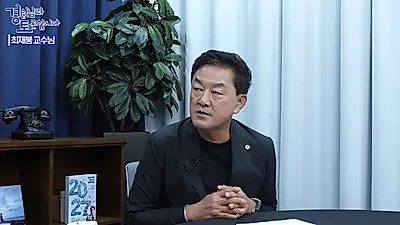
A three-way discussion on The Man Who Explains the Economy (Kim Kwang-seok TV) examined how Samsung Electronics, SK hynix and other chipmakers in South Korea could sustain their competitiveness. Participants highlighted HBM prices, shareholder returns and cooperation with companies such as AMD as key considerations.

Semiconductor companies in South Korea should deepen cooperation with partners beyond NVIDIA and expand their ability to design products around customers’ needs to sustain their competitive advantage, participants in a three-way discussion on The Man Who Explains the Economy (Kim Kwang-seok TV) said.
The economic affairs channel’s discussion examined opportunities and risks facing Samsung Electronics, SK hynix and other chipmakers in South Korea. Participants said their competitiveness could endure if growth in the artificial intelligence industry remained strong enough to offset pressure for interest rate increases.
They also warned that the industry’s current technological advantages could prove difficult to maintain without changes to its reliance on memory manufacturing.
Partnerships beyond NVIDIA
Recent visits to South Korea by global semiconductor companies, including a visit by AMD’s head and a meeting with Samsung Electronics, were presented as signs that companies in South Korea control technological “chokepoints,” or critical points in the industry.
As NVIDIA leads the market through its own ecosystem, companies such as AMD are moving to respond through open ecosystems. Memory semiconductors have become particularly important in that process, according to the discussion.
Participants cautioned that the three memory makers could become dependent on NVIDIA’s influence if they focused exclusively on its market. They proposed cooperation with alternative players such as AMD to develop advanced semiconductors through collaboration beginning at the design stage.
Such partnerships could strengthen technology alliances with the United States while offering an opportunity to counter low-cost semiconductors from China, the participants said.
HBM prices and shareholder returns in focus
Participants said a sustained AI cycle could extend the semiconductor cycle and help South Korea retain its competitiveness. They identified high-bandwidth memory (HBM) prices and shareholder return policies as key variables shaping the future share prices of Samsung Electronics and SK hynix.
The size of next year’s HBM price increases, expected to be determined at the two companies’ earnings conference calls scheduled for late October, was identified as a key input for earnings estimates. Experts remain divided over how large those increases will be.
Samsung Electronics and SK hynix have supported their share prices through measures including share buybacks. Participants said whether those measures were one-off actions or part of continuing plans would influence foreign investors’ reassessment of the companies’ price-to-earnings multiples.
For SK hynix, the discussion also raised the need for additional share buybacks and cancellations in connection with a recent index-inclusion issue.
Intel’s experience raises questions about lasting advantage
Participants questioned whether South Korea’s semiconductor industry could maintain its current lead indefinitely. They cited Intel, which once dominated the PC and server markets but encountered a crisis after failing to expand, as a warning about the risks of the industry’s present specialization in memory semiconductors.
They called for a shift from a manufacturing approach centered on “making a lot cheaply” toward customization, with products designed to meet customers’ needs.
The discussion’s central argument was that companies must build on their memory expertise to develop the capacity to expand across hardware and software if they are to turn their current technological chokepoints into sustainable competitiveness.
Source: original video (YouTube)

0Comments
Comments are currently disabled.