
92% of Debt Adjustment Recipients are Working... The Reality of the 'Vicious Cycle' Where Debt Cannot Be Repaid Even with Work
A structural issue has been identified where 9 out of 10 people using debt adjustment services are participating in economic activities but cannot escape the cycle of debt. This is due to a "vicious cycle" where unstable employment and the burden of living expenses prevent income from covering debt repayments.
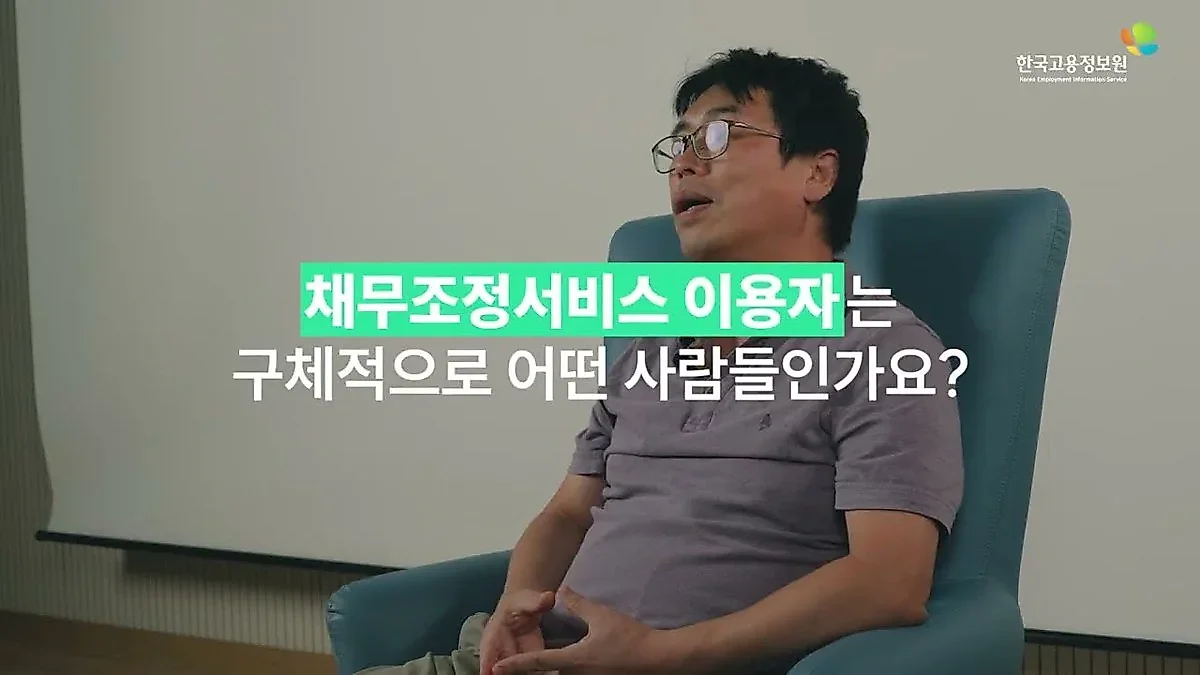
A structural problem has been confirmed where 9 out of 10 people using debt adjustment services are participating in economic activities but cannot escape the shackles of debt. This is because it is not simply a lack of will to repay debt, but a repeated 'vicious cycle' where unstable employment status and the burden of living expenses combine so that income cannot handle the debt.
This analysis, delivered by the Korea Employment Information Service (feat. Employment 24), contains the results of in-depth interviews regarding the labor experience and lives of 30 members of the financially vulnerable class. According to the results of analyzing the Credit Counseling and Recovery Service database for 2023, approximately 92% of debt adjustment recipients were working. About half of them were daily workers, and the proportion of the unemployed was only less than 10%. This suggests that debtors are not refusing to pay back debt, but are facing structural limitations where it is difficult to repay debt with only the income obtained through labor.
Debt patterns vary by age and occupation... Youth face 'high-risk investment', elderly face 'depletion of assets'
Debt problems showed different patterns depending on age group and type of occupation. The youth group tended to have frequent job changes and a high reliance on platform labor. Due to the characteristic of having a low burden of supporting a family, cases were confirmed where debt occurred due to high-risk investments such as coins or stocks. On the other hand, middle-aged and older people showed a pattern of downward mobility, moving to livelihood-type self-employment or high-intensity platform labor after being involuntarily pushed out of stable wage labor. In this process, the burden of supporting a family overlapped, sometimes leading to physical symptoms such as insomnia or shingles.
For the elderly, a 'retirement asset depletion type' pattern was prominent, where they use severance pay or pensions to repay debt. This is a problem that occurs when re-employment is blocked due to age limits even if they have a long career of service. By type of occupation, 7 out of 10 platform workers were revealed to be delivery workers; they had a strong tendency to take risks for high income, but were placed in a structure where it is easy to miss opportunities for conversion to regular positions. In the case of the self-employed, industries were diverse ranging from travel guides to unaffiliated workers, and they were often in the blind spot of the four major social insurances.
"Even hiding from family" Voluntary isolation and psychological crisis are common
The psychological pain commonly experienced by debtors manifested as anxiety, depression, and sleep disorders in conjunction with economic deprivation. In particular, the phenomenon of 'voluntary isolation' appearing regardless of age group is noteworthy. There were many cases where people voluntarily cut off relationships with family or friends to hide the fact of their debt. It was repeatedly observed that people chose isolation by severing social relationships, such as not returning home during traditional holidays or avoiding gatherings with acquaintances.
To solve these problems, suggestions were made that a 'complex support system' beyond simple financial support is needed. For the youth, financial education to help self-reliance is required, and for the elderly, support to restore confidence linked with health and welfare is demanded. For platform workers, group counseling to help employment as regular workers is needed, and for the self-employed, an approach like the 'Hope Return Package' which links business closure and job seeking is necessary, according to the analysis.
Experts pointed out that the difficulties experienced by the financially vulnerable are problems arising from the mutual entanglement of five elements: employment instability, financial dependence, welfare dependence, psychological instability, and weak social relationships. Therefore, the core conclusion of this study is that public employment services should be substantively connected with the fields of finance, welfare, and health, such as linking psychological counseling at the debt adjustment stage and expanding the case management functions of the Employment Welfare Plus Center.
Source: original video (YouTube)


0Comments
Comments are currently disabled.