
US shifts to 'breathing space' strategy to maintain superpower status, demanding more from allies
The United States is transitioning from a "benevolent hegemon" to a "transactional" power, seeking to maintain its global leadership by requiring allies to take on more defense responsibilities. This strategic shift comes amid intensifying US-China competition and rising security tensions in Europe and the Middle East.
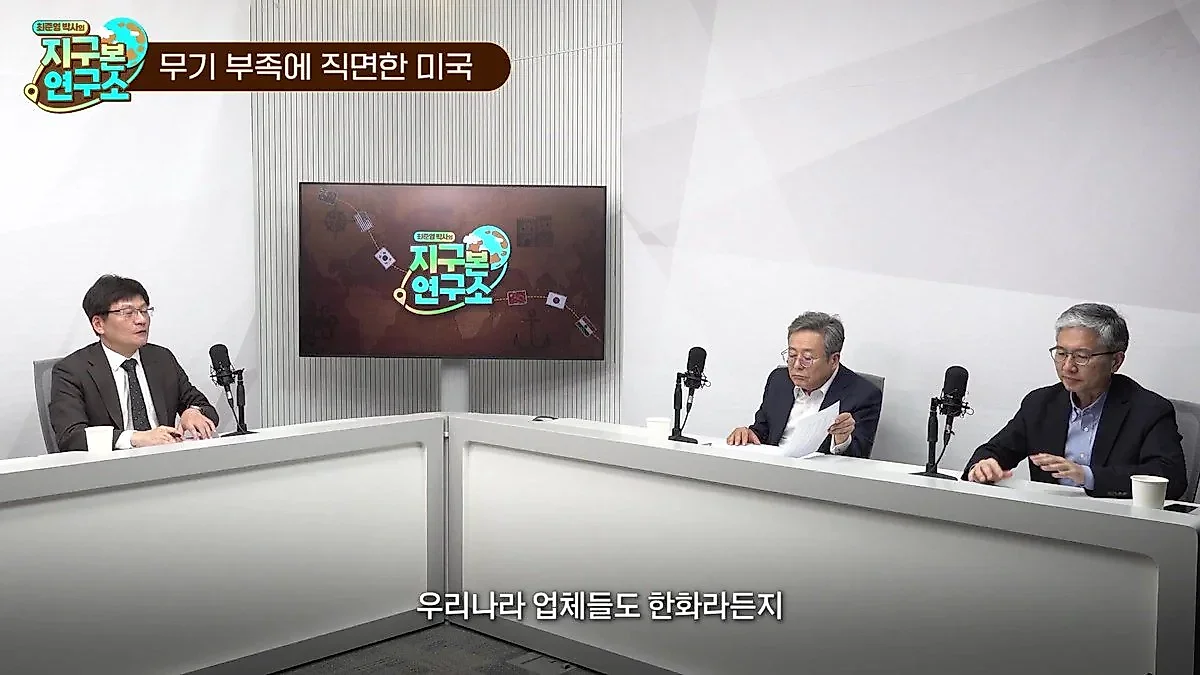
The United States is adopting a "breathing space" strategy to preserve its position as the sole superpower, increasingly demanding that allies take on more structural roles and defense cost-sharing. This strategic pivot comes as the international community enters an era of renewed military preparation, characterized by ongoing attacks in Riyadh, the capital of Saudi Arabia, and growing concerns over the escalation of the war in Ukraine.
An analysis provided by Dr. Choi Jun-young's Globe Institute explores the essence of US-China strategic competition, new American security strategies, and the changing nature of alliances. The discussion featured Cho Gu-rae, a senior advisor at Yulchon, who has served on the front lines of diplomacy for 35 years, and Kim Young-seok, director of the Sejong Institute, to diagnose the current global landscape.
US-China competition: A state-centered strategic rivalry, not ideological
Regarding the lack of structural achievements in recent US-China summits, Cho Gu-rae analyzed that the situation is "fundamentally different from the past US-Soviet Cold War." While the previous Cold War was a struggle over ideology and values, the current relationship is a "state-centered strategic competition" occurring across all sectors. Because the specific interests of each nation are so deeply intertwined, it is extremely difficult to reach the kind of reciprocal agreements seen in the past.
China's economic structure serves as a critical variable in this relationship. As an export-oriented nation, China relies heavily on the massive US market and a steady supply of cheap raw materials. "China has an economic form where the nation is maintained by producing goods cheaply and selling them to large markets," Cho said, noting that both China and the US are in a complex situation where neither can act recklessly toward the other regarding the US market. Consequently, even if the US-China relationship appears to be entering a management system based on interdependence, the actual strategic competition is expected to cast a shadow over international politics for a significant period.
Rising tensions in Europe and the US 'breathing space' strategy
The security landscape in Europe is also shifting following the war in Ukraine. Kim Young-seok reported on the heavy atmosphere at the recent '14 Baltic States Defense Forum,' diagnosing that countries in Eastern Europe and Northern Europe are facing the possibility of actual war as they prepare for hybrid attacks from Russia. Tensions are mounting, evidenced by drones presumed to be Russian being shot down near Lithuania and attacks on Ukrainian railway facilities near Poland.
Kim also noted changes in the patterns of Western weapons support. While support was initially focused on defensive tools like anti-tank and portable air defense weapons, the scope has expanded to include tanks, armored vehicles, fighter jets, and long-range strike systems, breaking past "taboos." In particular, the situation where Ukraine utilizes large-scale drones to strike strategic bomber bases deep within Russian territory is something that would have been difficult to imagine during the Cold War, increasing the risk of escalation.
Amid this chaos, Dr. Choi Jun-young defined the US movement as a "breathing space to maintain the status of the sole superpower." The analysis suggests that when the US demands higher defense cost-sharing and more structural roles from allies in regions like the Middle East or the Korean Peninsula, it is a strategy to reduce the costs of direct US intervention while addressing security instabilities through allies. Rather than abandoning hegemony, the US intends to efficiently maintain a US-centered order by inducing allies to achieve "self-reliance" so they can defend themselves. This aligns with a strategy to increase focus on the US mainland by inducing allies to stabilize their own regions rather than having the US intervene directly in the Middle East.
Transition from 'benevolent empire' to 'transactional alliance'
This shift in US behavior accompanies a change in how it views alliances. While the US previously acted as a "benevolent hegemon" providing public goods to maintain the international order, it is now clearly exhibiting a "country-first" approach. Cho Gu-rae suggested that the US appears to be "withdrawing from the very order it created," implying that the nation no longer has the intention to manage the order at its own expense. He noted that the US is moving away from being a nation that managed and tolerated everything, moving toward a great power concept that acts aggressively for narrow national interests.
The US view of alliances, represented by the Trump administration, is thoroughly "transactional," viewing alliances as relationships based on costs and benefits rather than a combination of values or ideology. "Alliances are basically transactional relationships, but currently, the US is conducting those transactions in a very short-term and arbitrary manner," Cho criticized. Reflecting the perception of "countries using America" mentioned by former President Trump, the US is demanding excessive costs from allies under the pretext of preventing security free-riding. This "predatory hegemon" aspect and arbitrary transactional method of the US are expected to be the largest variables facing future South Korean defense and diplomatic strategies.
Source: original video (YouTube)

0Comments
Comments are currently disabled.