
UK Prime Minister Andy Burnham questions Brexit legitimacy, begins building political case for EU reentry
UK Prime Minister Andy Burnham has begun a political buildup to rejoin the European Union by questioning the legitimacy of the 2016 Brexit referendum, citing external interference.

UK Prime Minister Andy Burnham has initiated political moves toward rejoining the European Union (EU) by questioning the legitimacy of the 2016 Brexit referendum. He appears to be building a justification for reentry by arguing that the decision to leave was a distorted judgment caused by foreign interference.
"Distorted Judgment Due to Foreign Interference"... Political Build-up for Reentry
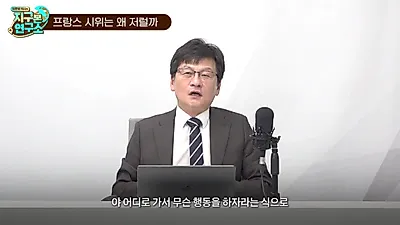
According to an analysis from Dr. Choi Jun-young's Globe Institute, Prime Minister Andy Burnham recently mentioned that Russia directly intervened in the 2016 Brexit referendum. This is interpreted as an intention to establish a logical basis for reentry by claiming the vote at the time was not an autonomous decision by the United Kingdom, but a result shaken by external forces.
The United Kingdom does not have a separate referendum law. Therefore, to hold a referendum for reentry, the Prime Minister would need to include it as a pledge in the next general election, win, and then enact a separate law. Analyzing his questioning of the Brexit error, it appears Prime Minister Burnham is conducting a "political build-up," which is the first step toward holding a future referendum.
"Generation Z Left Behind"... Changing Public Opinion in the UK
The atmosphere in British society has changed significantly since Brexit. The dominant assessment is that the "freedom from EU regulation" and "economic prosperity" expected at the time of departure have not been properly realized in reality. Given the weak manufacturing base, signing Free Trade Agreements (FTAs) with other nations had low effectiveness, and the cost burden resulting from the severed close ties with Europe has instead increased.
Of particular note is the difference in perception between generations. Recent polls show that the group most strongly desiring EU reentry is Generation Z in the United Kingdom. Those who were minors or lacked voting rights during the Brexit referendum are now experiencing the changed reality as adults. Unlike previous generations who enjoyed opportunities for employment and education by traveling across Europe, today's youth feel deprived of opportunities, feeling trapped in an "island nation" with restricted freedom of movement.
Unlike the past, when pro-Brexit opinion was centered on the elderly, the demand for reentry across society is increasing as the natural demographic shift of the pro-Brexit generation meets the economic dissatisfaction of the youth.
EU Unanimity Threshold and the "10-Year Barrier"... Political Tool or Substantial Push?
Even if the will to rejoin increases within the United Kingdom, a return to the EU will not happen immediately. Dr. Choi Jun-young emphasized that for the United Kingdom to re-enter the EU, it must meet strict quantitative entry criteria, similar to the case of Ukraine, and above all, must obtain "unanimous" approval from the current 27 member states.
From the perspective of EU bureaucrats, who experienced institutional confusion due to Brexit, there is a high possibility they will not readily accept the United Kingdom's return. If the process of the United Kingdom readjusting its internal regulations and standards to match the changed EU systems is considered, it is forecasted that it could take a long time of more than 10 years until actual reentry occurs.
Ultimately, there are coexisting analyses that Prime Minister Burnham's recent moves are a political strategy to strengthen the leadership of the Labour Party while simultaneously pushing for substantial reentry. The calculation is that by preempting the reentry issue, he can check competing forces such as Reform UK and gain an advantage in the next general election. It is highly likely that the judgment was made that he could seize the initiative simply by presenting a political justification, rather than through a policy requiring a massive budget.
Source: original video (YouTube)


0Comments
Comments are currently disabled.