
Bank of Korea freezes base interest rate at 3.00%
The Monetary Policy Board of the Bank of Korea has frozen the base interest rate at 3.00% per annum, signaling a tactical pause in its tightening cycle to observe the impact of previous hikes.
The Bank of Korea has paused interest rate hikes at 3.00% per annum to monitor economic indicators, following consecutive increases in July and August. While the central bank maintains a restrictive stance, it is observing factors such as the 2.8% core inflation rate and the recent stabilization of the KRW/USD exchange rate.
The Monetary Policy Board of the Bank of Korea has frozen the base interest rate at 3.00% per annum, initiating a tactical adjustment in its monetary policy pace. After implementing two consecutive 0.25 percentage point increases in July and August, the Bank of Korea has signaled its intention to maintain a restrictive stance while closely monitoring responses in economic indicators.
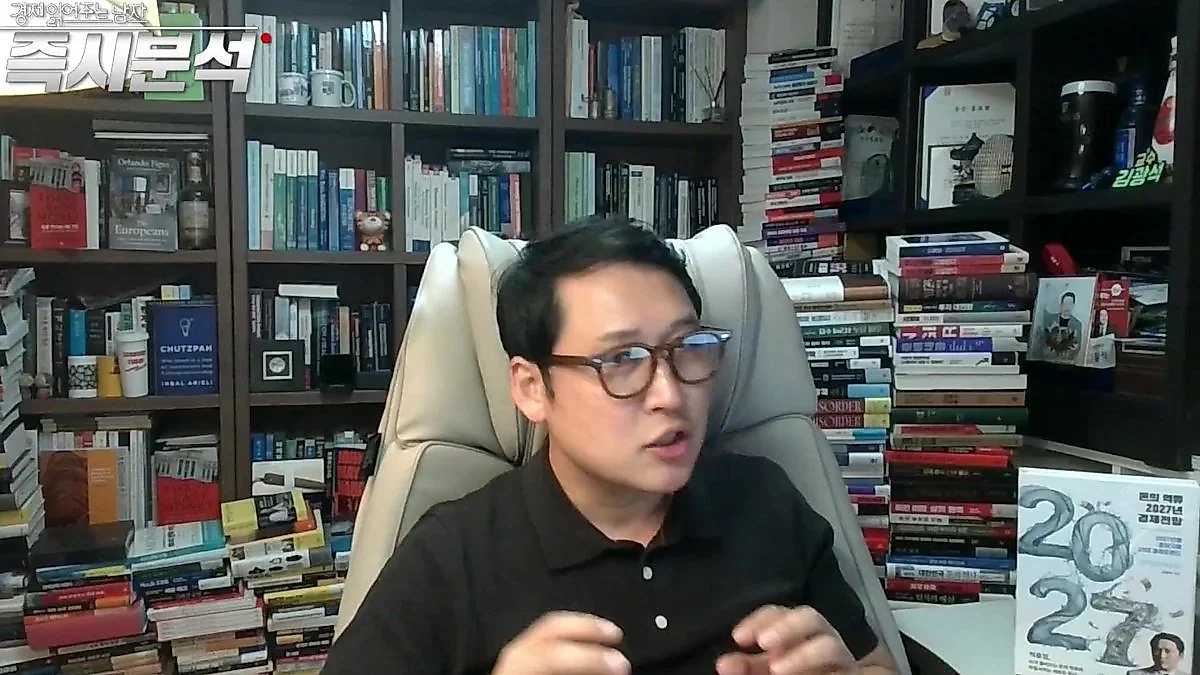
According to an analysis of this decision by the economic analysis channel The Man Who Explains the Economy (Kim Kwang-seok TV), this freeze is characterized as a "hawkish pause" rather than the end of the rate hike cycle, as it does not rule out the possibility of further increases. The Bank of Korea is evaluated to have completed preemptive measures through the consecutive hikes in July and August. This has allowed the Bank to secure a "Lag Effect" (time lag) for policy effects to manifest, providing room to observe changes in key economic indicators such as household debt, the real estate market, inflation trends, and the KRW/USD exchange rate. The video emphasizes that this decision is a speed adjustment made while signaling potential future hikes, interpreted as an intention to flexibly adjust the optimal timing for interest rate increases for the Korean economy.
Balancing expectations of peaking inflation against international oil price variables
One of the core indicators influencing the Bank of Korea's decision is price stability. Current inflation rates are showing a downward trend from their peak, signaling an entry into a stabilization phase. The inflation rate has decreased from its peak, and the core inflation rate is also at the 2.8% level, lower than its peak. However, it is difficult to conclude that price stabilization is entirely complete. Regarding import price indicators, the import price inflation rate in won terms shows a downward trend from its peak at 18.8%, but the import price inflation rate in dollars remains at a high level. Analysis suggests that the recent decline in the KRW/USD exchange rate, which strengthened the won, acted as a factor in preventing inflation from rising too sharply.
Additionally, the variable of a sudden resurgence in international oil prices remains. As international oil prices have surged again in 2026, they are continuously stimulating inflation, and the possibility cannot be ruled out that the October inflation indicators, to be released in early November, may rise again or pass a new peak. The reason the Bank of Korea is keeping the possibility of additional rate hikes open while seeking to flexibly adjust the timing of such hikes is due to this uncertainty regarding upward pressure on inflation.
Sharp temperature difference between semiconductor boom and perceived economy
In terms of the economy, the imbalance in growth across industries acted as a major variable in the rate decision. Due to the boom in the AI semiconductor industry, the growth outlook for the Korean economy is trending upward. The IMF forecasts South Korea's economic growth rate at 3.3% this year and expects the boom to continue through next year. However, as this growth figure includes new semiconductor investment, there are limits to viewing the entire economy as having fully recovered.
Growth is concentrated in specific sectors centered on semiconductors. Considering the proportion of semiconductor-related workers among the 29 million total employees, the perceived economy felt by the majority of the public remains cold. While semiconductor companies have relatively low burdens in raising funds through corporate bond issuances due to guaranteed growth even in a high-interest-rate environment, companies in other sectors are experiencing significant difficulties with new loans or corporate bond issuances. The fact that high interest rates could act as a double burden for the majority of people who do not feel an economic recovery—especially given already high inflation—is one of the factors that caused hesitation regarding consecutive interest rate hikes.
Financial stability brought by exchange rate stability and M2 growth rate reversal
Regarding financial stability, improvements in external conditions supported the justification for the freeze. It is significant that the KRW/USD exchange rate has recently stabilized, moving toward the low 1,300 won range. This is a result of the narrowing interest rate gap between Korea and the U.S., combined with changes in money supply indicators. In fact, while Korea's M2 (broad money) growth rate fell to the 5.7% level (9.9% based on the pre-revised indicator) after peaking at 12.2% in June, the U.S. M2 growth rate recorded 5.8%, showing a reversal. This change in liquidity flow and the stabilization of the exchange rate provided the Bank of Korea with the financial leeway to not rush into aggressive additional rate hikes.
However, future market volatility remains a challenge. As uncertainty increases ahead of the U.S. midterm elections, there is a possibility of large-scale capital outflows, leading to forecasts that a period of significant volatility or uncertainty may continue from the second half of October through early November.
Source: original video (YouTube)


0Comments
Comments are currently disabled.