
Interest rate cut expectations could trigger new liquidity rally in 2027
During a three-way discussion hosted by The Man Who Explains the Economy (Kim Kwang-seok TV), experts analyzed whether the current AI industry correction is a temporary struggle or a sign of waning demand, forecasting a shift toward a liquidity-driven market by 2027.
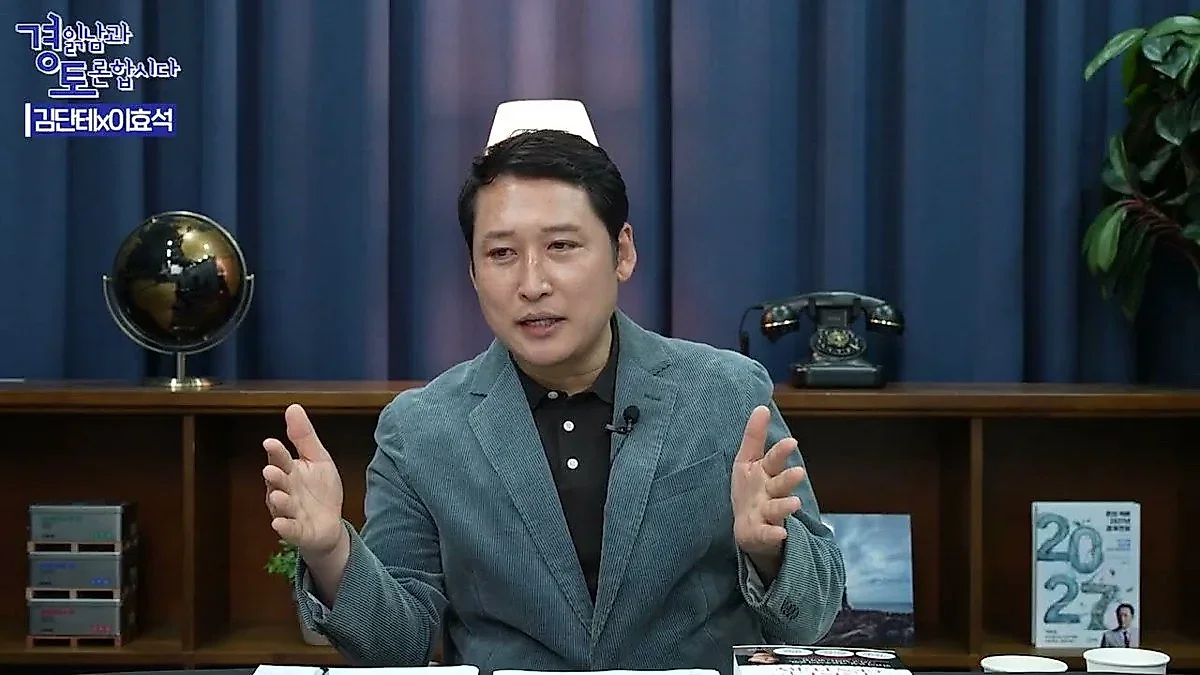
A shift in the macroeconomic environment starting in early 2027 could usher in a new liquidity-driven market as inflation rates are predicted to drop sharply. Professor Kim Kwang-seok suggested that expectations for interest rate cuts could replace vigilance against hikes, potentially prompting expansive fiscal and monetary policies.
As questions regarding the growth trajectory and infrastructure investment sustainability of the AI (artificial intelligence) industry fuel market volatility, projections have emerged that the macroeconomic environment could shift drastically starting in 2027, potentially ushering in a new liquidity-driven market. A recent in-depth discussion among experts examined whether the current correction phase for AI-related companies is due to a lack of demand or temporary growing pains caused by interest rates and costs.
The three-way discussion, presented by The Man Who Explains the Economy (Kim Kwang-seok TV), featured Lee Hyo-seok, Kim Dante, and Professor Kim Kwang-seok, who shared views on the earnings outlook for AI infrastructure companies and macroeconomic variables. The core of the debate focused on the current stage of the AI-related stock price correction and how future interest rates, inflation, and political variables will determine the market's direction.
GPU rental and memory prices remain at 'peaks' as fundamentals stay strong
Perspectives on the current AI industry correction phase varied. Kim Dante diagnosed the current correction as being in its early stages, posing the sustainability of AI data centers and computing demand as a key question. He specifically noted that GPU (graphics processing unit) rental prices remain at high levels. "Most GPU rental prices are currently near all-time highs or at very high levels," Kim stated, citing the fact that cloud companies such as AWS and Nebius are continuing to raise contract prices.
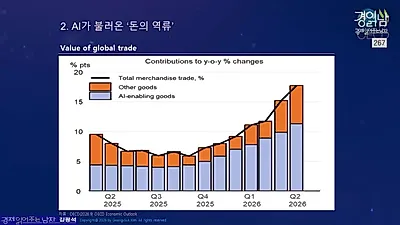
This phenomenon is also appearing in the memory semiconductor market. With DRAM spot prices also remaining high, the analysis suggests that the fundamentals of AI infrastructure-related companies remain sound. Lee Hyo-seok noted that "the earnings of most AI infrastructure companies will come out well," pointing out that the market's concern is not immediate earnings, but rather sustainability after the second half of 2026. While market participants see little possibility of corporate earnings dropping until the second half of 2026, they are reportedly wary of the period following that, specifically the second half of 2027 and 2028.
However, risks arising from contract structures between companies were identified as a variable. It was pointed out that companies like CoreWeave, which secured long-term contracts for GPUs at fixed prices in the past, may face difficulties in securing profitability now that prices have surged. This was explained as being similar to a situation where one takes out a fixed-rate loan during a period when interest rates are falling, potentially creating a "messy" credit risk zone where parties may attempt to change contracts even if it means paying penalties. Professor Kim Kwang-seok noted the difference between this and market risk, adding, "Market risk involves admitting one's own fault, but credit risk can take on a messy aspect, such as legal battles where one party decides the other has defaulted on money."
Trump midterm elections and oil price growth rates to determine 'weather'
Professor Kim Kwang-seok presented scenarios by focusing on macroeconomic "weather" rather than the movements of industrial sectors. He predicted market trends by linking the political situation in the United States with oil prices and inflation rates. Regarding the United States, he analyzed that the Trump administration would seek to maintain capital investment, which contributes about two-thirds of GDP growth, ahead of the midterm elections. However, he cited the potential weakening of investment will as a variable due to congressional authority issues following the election. Based on current Polymarket data, the possibility of a Red takeover is considered quite high, which could lead to restrictive operations regarding budget authority that must pass through Congress.
The relationship between international oil prices and inflation rates drew particular attention. Kim projected that "after the international oil price growth rate peaks in 2026, the growth rate itself will drop significantly in 2027, even if oil prices remain at high levels." His logic is that after seeing a growth rate that nearly doubles from $50 in 2025 to $100 in 2026, the growth rate will converge toward 0% in 2027, even if oil prices stay above $100. Due to the arithmetic nature of inflation being calculated compared to the same month of the previous year, he analyzed that a period will arrive starting in early 2027 (February or March) where the inflation rate drops sharply.
"From 2027, the vigilance against interest rate hikes will disappear, and instead, expectations for interest rate cuts will take effect," Kim predicted. He further foresaw that "at this point, both fiscal and monetary policies could move expansively, supplying significant liquidity." In the case of South Korea, he suggested that fiscal injections could occur, such as in cases of excess tax revenue, and that this flow could lead to a liquidity-driven market in 2027. This suggests that the current correction period may be a process of transitioning toward the 2027 liquidity market.
The 'magic' of interest rate cuts... restoring investment capacity for non-tech companies
The discussion concluded with the influence of interest rates on the market. Kim Dante described interest rates as the "magic key," agreeing that a drop in interest rates is the core variable that could solve all problems. He pointed out that during the KOSPI correction this past July, non-tech companies hesitated to invest in AI infrastructure despite wanting to, because the cost of issuing corporate bonds was burdensome due to high treasury bond yields. In other words, high treasury yields transferred to corporate bond yields, suppressing the investment capacity of non-tech companies.
Ultimately, the sustained growth of the AI industry depends on the interest rate path. If interest rates fall, the procurement costs for companies decrease, which in turn acts as a driver to support demand for AI data centers and computing. Experts expect that even if the current correction goes through messy credit risks, a time will come when the fundamentals of the AI industry are highlighted again in conjunction with a trend of interest rate cuts.
Source: original video (YouTube)
0Comments
Comments are currently disabled.