
Economist Hong Chun-wook advocates mean reversion over momentum investing
Economist Hong Chun-wook explains his preference for the "mean reversion" investment strategy over "momentum" investing, noting that even great companies eventually return to average returns.

Economist Hong Chun-wook explained his preference for mean reversion investing on his YouTube channel, noting that the U.S. Shiller P/E has recently soared to 40x compared to its historical average of approximately 16 to 17 times.
Investors reading asset market trends are largely divided into two groups: the "momentum school," which rides upward trends to enjoy acceleration, and the "mean reversion school," which believes that extreme overheating or stagnation eventually returns to the average. Economist Hong Chun-wook stated on his YouTube channel, "Hong Chun-wook's Economics Lecture Notes," that he is an investor who views the market from the perspective of the latter, mean reversion.
"Rockets Eventually Land on the Ground"... The Conflict Between Mean Reversion and Momentum
Hong divided basic investment principles into two forces: "momentum," where assets gain speed and soar as if into space once they gain strength, and "mean reversion," where even great companies eventually return to ordinary returns due to variables such as competition and interest rates. He explained that while he followed momentum in his youth, he shifted toward mean reversion around 2007–2008.
He used Apple as an example. While Apple is a very great company, its performance in recent years shows it is undergoing a process of "becoming ordinary" by descending to levels similar to other stocks. "It is difficult to find companies that rise like rockets, and because I have a personality that exits midway—like deploying a parachute rather than waiting to fly past the stratosphere into space—I eventually turned to mean reversion," Hong confessed.
In contrast, the momentum school focuses on assets with strong supply and demand and acceleration, such as the M7. This method utilizes the phenomenon where capital from pension funds worldwide flows into stocks included in index funds, accelerating their rise. Hong added that unlike those who believe such momentum can last forever, the mean reversion school pursues contrarian investment—buying when extremely cheap and selling when expensive—based on the premise that performance will eventually become ordinary.
This principle of mean reversion is embodied in the "Shiller P/E" devised by Professor Robert Shiller. This method evaluates current stock prices using earnings from the past 10 years, considering the uncertainty of future profit forecasts. According to Hong, the Shiller P/E in the United States has formed an average between approximately 16 and 17 times from 1870 to the present, but it has recently soared to the 40x level. "There are times when the market becomes a bubble or a panic occurs, causing it to deviate from the historical average level of 16–18 times," he explained. "Even if it deviates, it possesses the nature of eventually returning to the average level, though it may take decades."
The Revival of the Japanese Stock Market and the Logic of Undervaluation in South Korean Stocks
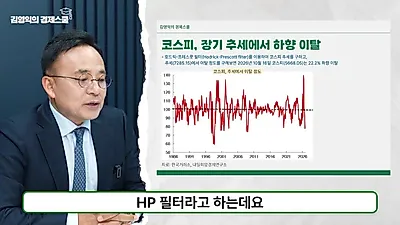
Hong cited the Japanese and South Korean markets as examples proving his investment style. He attributed his positive view of Japanese stocks since 2018 to "historical valuation." He argued that he advocated for aggressive weight increases because Japan's PBR (Price-to-Book Ratio) was undervalued by about 30–40% compared to its historical average at the time. Indeed, between 2009 and 2013, the Japanese market was undervalued by 30–40% relative to its historical average PBR, and subsequently, the Nikkei Index showed a trend of rising nearly 10 times in 13 years alongside the implementation of Abenomics. However, as the Japanese stock market has recently reached the upper end of its valuation band, he diagnosed it as being in the realm of trading rather than aggressive buying.
Regarding the South Korean market, he recalled his judgment from last year. The reason he viewed South Korean stocks as undervalued at the time was that the South Korean stock market was excessively suppressed despite export leading indicators, such as the ISM Manufacturing Index in the United States, not being bad. "Standing on the opposite side of the market mainstream is the mean reversion strategy," he said, emphasizing the importance of "rebalancing"—selling assets that have exploded in value to buy undervalued assets at the bottom of the valuation.
He actually warned of risks and called for rebalancing in May–June of this year when the South Korean stock market rose like a rocket, and he also offered a forecast that the United States would be better than South Korea in 2026.
"U.S. Treasuries are More Attractive Than Stocks"... Asset Allocation Viewed Through Real Interest Rates
What assets should be noted at this point? In addition to the PER used to judge the attractiveness of stocks, Hong presented the "real interest rate," which measures the attractiveness of bonds, as a key indicator. The real interest rate is the interest rate adjusted for inflation and helps measure the intrinsic value of an asset. He noted that while the average real interest rate in the United States over the past 30 years was at the 1.5–2% level, this figure has recently been rising sharply.
Hong forecasted, "The current real interest rate level is exceeding 2.5% and heading toward 3%, and if it rises to this level, it will be difficult for the United States economy to hold out." He predicted that if the real interest rate becomes excessively high compared to the historical average, a recession that hits the economy may appear, and in this process, mean reversion will occur again, causing the real interest rate to fall. His analysis is that during periods when real interest rates are high, bonds are attractive, whereas conversely, when they are too low, stocks are more attractive than bonds.
Accordingly, he summarized his recent investment strategy as follows: while U.S. stocks had been more attractive than bonds, the market has now entered a zone where U.S. Treasuries are more attractive. "When a gap opens up that is too large compared to the historical average, those are the levels for buying and selling," he said, advising to objectively judge the market's position using 30-year long-term trends such as PBR bands. He added that this method is not merely for short-term trading but can serve as a criterion to judge whether it is a period to steadily accumulate assets moving forward.
Source: original video (YouTube)


0Comments
Comments are currently disabled.