
Soongsil University undergraduates redesign robot waist to expand workspace
Undergraduate students at Soongsil University's MAIROBOT lab are redesigning a robot's waist structure to increase its reach and operational workspace.
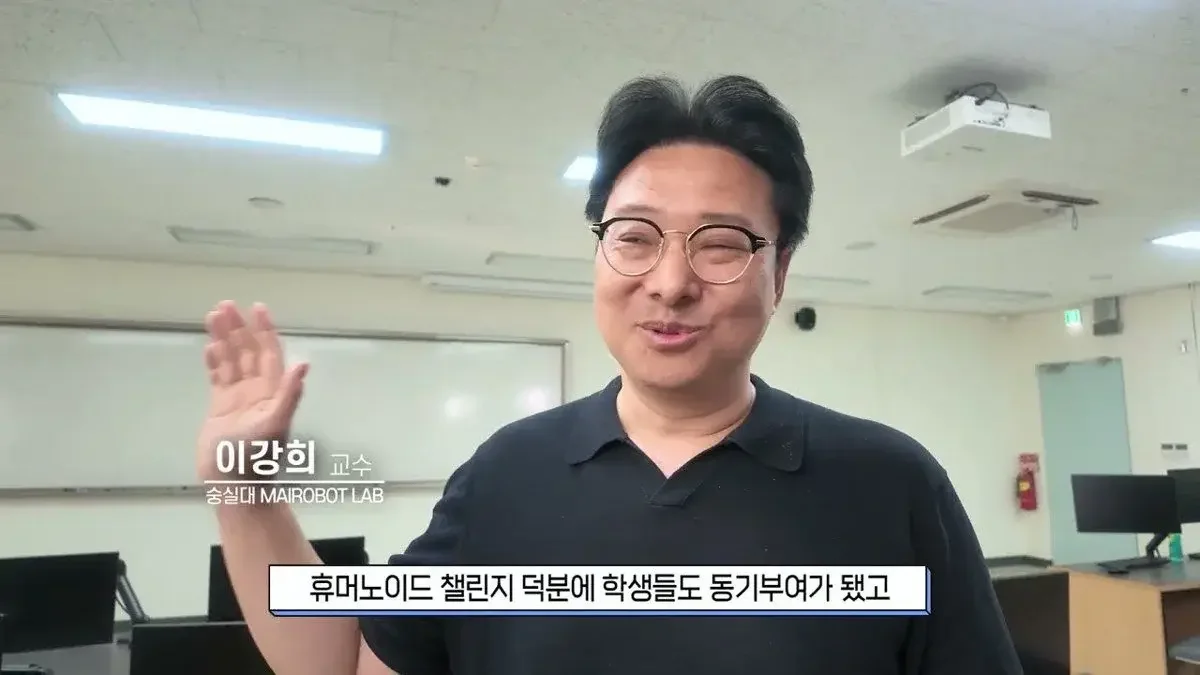
Research at the Soongsil University MAIROBOT lab continues following the Humanoid Challenge held in the summer of 2026. While the competition, hosted by the Ministry of Trade, Industry and Energy, served as a test of robot performance, it provided the lab students with experience in designing robots, modifying code, and practicing independent judgment and problem-solving.
Autonomous research methods in an undergraduate-only lab
The Soongsil University MAIROBOT lab is characterized by being composed entirely of undergraduate students without any graduate students. Members divide roles ranging from component design and styling to hardware manufacturing, building robots from start to finish. The students operate in an autonomous atmosphere, staying late into the night to immerse themselves in research.
The environment of an undergraduate-only lab offers the advantage of being able to freely set the direction of research. Even lower-grade students participate actively, gaining experience in building the entire pipeline from design to operation. Although they did not win awards at the recent Humanoid Challenge, they are finding meaning in their research by achieving their set goals.
Improving the 'waist' structure to expand robot workspace
The lab's core current task is modifying the waist section of the robot. Existing robots had a fixed waist, limiting their reach to only 550mm. The research team decided to change the waist structure to expand the robot's workspace, as the waist joint must move to allow the robot's arms to reach objects further away.
Once the hardware design is complete, components are manufactured through CNC machining. During the design stage, the Inventor app is used to check for interference and tolerances, and the components undergo a precise manufacturing process due to the nature of structures that must withstand high loads. However, unexpected variables often arise during actual assembly and operation. During the recent waist structure modification, one axis stopped due to a motor activation signal issue, but team members continued the work after identifying and resolving the cause.
The goal of 'Robonoid Human' to turn failure into assets
The research team analyzes past achievements and determines next tasks through weekly meetings. They undergo a process of explaining why a robot moves in a certain way using numerical data and graphs, and verify the operating range through simulations. While it is frequent that movements intended during the design stage are not implemented after actual assembly, the students believe that identifying current errors is a process of preventing future problems.
The robot with the improved waist structure is now able to extend its arms over a wider area than before. However, as the range of motion increased, instability issues arose, such as the upper body leaning forward. Consequently, the research team is conducting tuning work, focusing not just on moving more, but on how to move safely.
Their goal is to create humanoids that can replace humans in factories in the future. They continue their research based on a vision to increase efficiency in industrial sites by automating dangerous tasks through robot technology.
Source: original video (YouTube)



0Comments
Comments are currently disabled.