
Germany's PISA Science Score at 486, Only at Average Level... Der Spiegel Criticizes as 'Very Serious'
Following the 2025 PISA results, Germany's education system is facing criticism as its science scores remain near the OECD average and significant gaps exist…
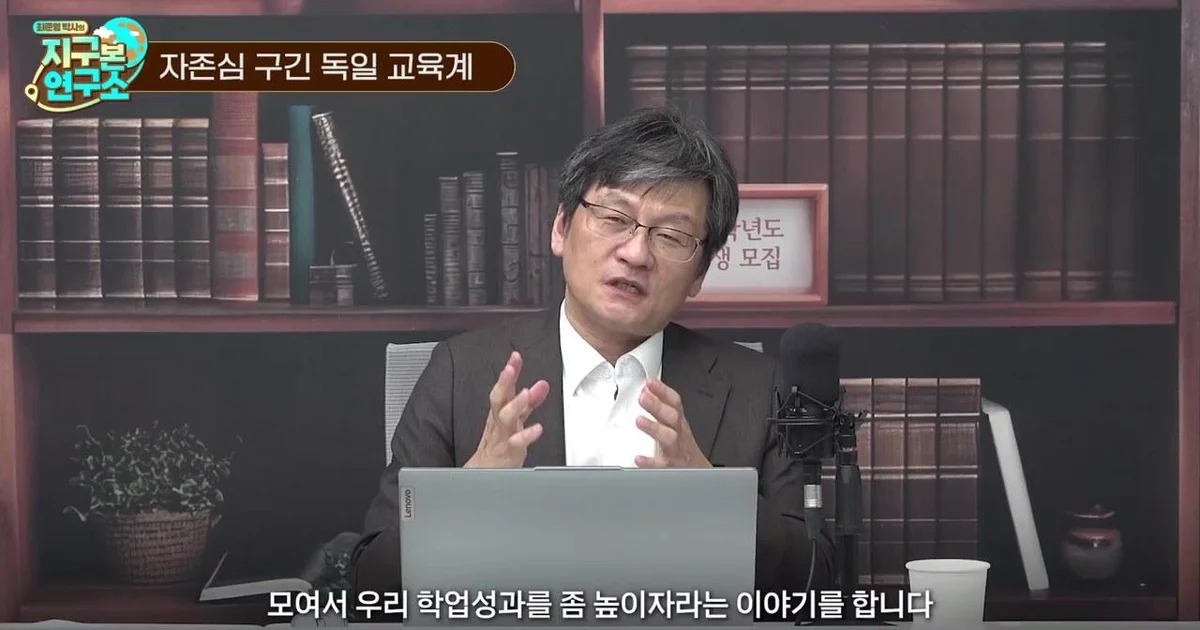
With the recent release of the 2025 Programme for International Student Assessment (PISA) results, the German education sector has suffered a blow to its pride. According to a video from the YouTube channel 'Dr. Choi Jun-young's Globe Institute', while there are many discussions in Korea about following German education or claiming it is ideal, the current educational situation in Germany is quite poor looking at these PISA results.
Science score of 486, Math and Reading barely at average level
PISA is an assessment that compares the levels of students in various countries based on 15-year-olds, covering three subjects: reading, science, and mathematics. It does not look at grades alone but also evaluates students' household economic situations, school conditions, psychological states, and school satisfaction. Originally focused on OECD countries, the scope has gradually expanded, with 760,000 students from 91 countries participating in the 2025 exam.
According to the video, Germany's science score stood at 486, remaining near the OECD average, while math barely touched the average line. Reading was also only slightly above average. In contrast, South Korea and Japan received scores close to 500 in reading. Germany also fell below average in the ability to solve problems using computers. Regarding China's high scores, it was added that it is better to exclude them from comparison, as the results represent only students selected from regions with good conditions (BSJG) such as Beijing and Shanghai.
Der Spiegel: 'The patient is Germany, and the condition is very serious'
Germany's most representative weekly magazine, Der Spiegel, criticized these results in a two-page article. The article diagnosed German education in a manner suggesting that the patient is Germany and its condition is very serious. Looking at examples reported by Der Spiegel, many German students were unable to solve problems such as how much to increase ingredients if they prepared food for four people but invited six guests. A more serious problem is that the bottom 20% of students fail to meet even the most basic requirements. This means there is not a thick middle class forming the average, but rather a serious hole at the bottom tier.
The shock of 1997 TIMSS and 2001 PISA and 'First Aid'
The controversy over Germany's academic achievement has continued since the 1990s. Germany participated in an academic achievement assessment involving multiple countries for the first time in 1997; at that time, it was not PISA but TIMSS, which tests math and science, and about 45 countries participated. German society was turned upside down when it was revealed that German 8th graders, equivalent to 2nd graders in middle school in South Korea, recorded achievement levels only at the level of 6th graders in elementary school. Subsequently, discussions arose for the federal and state governments to gather, conduct common exams by state to understand each other's situations, and change educational policies toward teaching in a way that is easy for students to understand.
Four years later, in the 2001 PISA, 32 countries participated, and Germany only reached the 21st rank in reading and the 20th rank in math and science. At that time, Finland was at the top, and South Korea was in the top 1 or 2. Der Spiegel used the blunt headline 'Are German students stupid?' and even terms like "German educational disaster" were used. German society concluded this was a matter of equal opportunity. Students in wealthy neighborhoods had decent grades, but the achievement of students in schools in areas with poor socioeconomic environments was very low, and family background and socioeconomic conditions were too directly linked to academic achievement. The video explained that socioeconomic environments should not be reflected directly in educational outcomes, and education should play the role of allowing the next generation to climb one step higher on the ladder.
Countermeasures followed. They provided more supplementary classes to students with poor learning performance and changed the teacher training system, which was evaluated as being pre-modern. To increase total learning time, students were called to school earlier, and as it was realized that many students receive no care at home, all-day schooling was expanded. The most core element was to clearly establish educational standards regarding what should be taught in schools and what students should learn, and to create an examination system that can effectively measure and compare learning outcomes.
An 'empirical turn' was also pursued. Self-criticism emerged that Germany's discussion-based education was an extremely individualistic method that ended once one spoke their thoughts coherently, neglecting the scientific knowledge analysis and evaluation of whether those thoughts were correct. Subsequently, the direction changed toward teaching more scientifically valid research results and thorough investigations in schools, and according to the video, Germany rose to the OECD average level in the 2004 PISA.
Career paths diverging at age ten... Criticism from the PISA coordinator
However, the problem that whether a home is poor or wealthy has a major impact on achievement remained. Regarding the 2007 exam results, the PISA coordinator strongly criticized the German education system, causing controversy again. In Germany, career paths are decided around the age of ten, around the 3rd or 4th grade of elementary school. Although it has changed a lot lately, theoretically, students suited for university entrance are quickly separated into Gymnasium, those suited for office work are separated into the intermediate stage Realschule, and those needing vocational training are separated into Hauptschule.
The point of the criticism was that students are separated too early. If schools are divided based on academic ability at the point of having studied for 3 to 4 years in public education, it is impossible to give opportunities to students who mature late or want to work hard, and students in Hauptschule find it difficult to have the motivation to move up because their surrounding friends' grades and family environments are similar. Later, in the mid-2000s, Germany invested in improving math and science academic achievement through a program called SINUS, and in 2008, Chancellor Merkel emphasized that she would continue to increase investment in education, calling Germany an 'Education Republic'. In the 2012 PISA, Germany's scores were shown to be clearly above the OECD average.


0Comments
Comments are currently disabled.