
The 'English is Useless' Debate Spreading in China in the Era of AI Translation... New English Textbooks Feature Dragon Boat Festival and Overseas Aid
As AI translation technology advances, a debate is intensifying in China regarding the necessity of spending significant time and money on learning English.
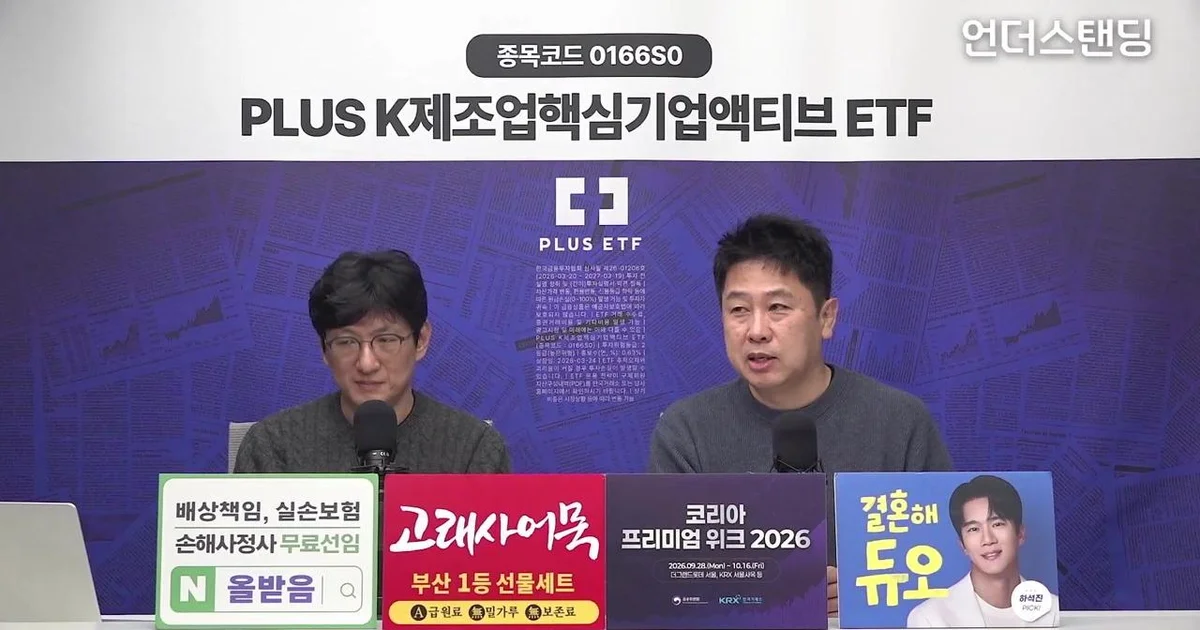
As AI translation technology advances rapidly, a debate is growing in China over whether it is still necessary to spend as much time and money on learning English as they do now. The video from 'Understanding: All the Knowledge in the World,' featuring Director Eo Ye-jin of the Haedam Economic Research Institute, explains that this debate is not merely a matter of 'English is unnecessary because there is AI,' but is also linked to technological competition with the United States, information control, and cultural separation.
The ability to speak English is no longer rare
The starting point of the debate is that as AI takes over not only real-time translation but also email writing and the interpretation of foreign documents and news, being proficient in English is no longer as rare a skill as it was in the past. According to the video, a large controversy erupted when a Chinese influencer and math teacher posted on social media suggesting that English, a mandatory subject in schools, should be changed to an elective. He argued that even if people spend a lot of money on English from a young age and take difficult university exams, they do not use English after graduation, and even if they learn it, they cannot speak a single word of English. He questioned whether it is right to evaluate English with the same standards and weight as Chinese or mathematics in an era where AI handles all translation and interpretation.
Similar movements are appearing in educational settings. According to the video, Shanghai has abolished English final exams, and there are opinions in the Gaokao, the university entrance exam, that the weight of English scores should be reduced rather than being equal to Chinese and mathematics. At a research university in Shenzhen, there were discussions about gradually phasing out English subjects since AI can translate everything. Previously, around 2021, policies to suppress private education were implemented to reduce the burden of private education costs and out-of-school homework, which once shook the English private education market.
From an economic perspective, AI has lowered the production cost of English education services. In the past, the reason learning English cost so much was the price of a conversation partner or someone to teach and correct them, but now, one can ask an AI to be an English partner even at two in the morning. The video also introduced a video where Chinese media interviewed Chinese people in highly educated regions by generation. Respondents answered that their English speaking level did not exceed 5 out of 10, citing that they learned too much based on exams and that English was not that necessary when working.
There are counterarguments. English is not just a means of communication, but also a gateway to information and other worlds, and a slight difference in ability can become a factor that widens the gap between social classes. Arguments are clashing that in the future, the cost of learning more advanced English will increase, and mediocre levels will not stand out, and since the way AI is used and the results will inevitably differ depending on language ability, English education must not stop.
From a 'Window to the World' to 'English that Explains China'
The video pointed out that the change in how China views English itself is a more important shift. Since Deng Xiaoping's reform and opening-up in 1978, English was regarded as a window to the world. In the process of foreign capital entering, acquiring overseas companies, and entering global supply chains and trade, English played a decisive role as a network to accept Western technology and make it one's own. However, it is explained that during the era of President Xi Jinping, as the stability of the system is considered more important than economic growth, English has been viewed as a threat because it could serve as a channel that invites Western values, individualism, or questions about power.
Textbooks are a representative example. According to the video, recent English textbooks for Chinese elementary and middle schools have changed significantly. Previously, they included content such as Halloween culture, American literature, and American life, but the new textbooks contain content about Chinese historical figures, the Dragon Boat Festival, and China's overseas aid in English. The reorganization has been carried out in stages starting from 2024 and has been fully applied since this fall. While English was once a window to accept the outside world, its role is now changing into a means to convey China's perspective and culture to the outside.
From 'Agent' and 'Token' to Chinese... Securing 'Discourse Power'
The third change is technical terminology. According to the video, the Chinese state-run media People's Daily released a commentary last August suggesting that the public reduce the use of English expressions related to AI and use Chinese expressions instead. The idea is to replace expressions commonly used in AI, such as 'agent' and 'LLM', with Chinese expressions. The explanation is that an opinion has formed that excessive use of foreign technical terms creates cognitive dependence. In fact, last March, China officially changed the expression 'token' to the expression 'qiyuan'.
The video explained this as a trend to secure an independent 'discourse power' that encompasses the language used to refer to technology and the supply structure in the competition for technological hegemony. Ultimately, China's English debate goes beyond the issue of educational efficiency and connects to technological competition with the United States, information control, and cultural separation. In the AI era, while the economic value of mediocre English may decrease, the opinion was also presented that advanced English ability, which allows one to directly understand original texts and grasp context and nuance, could instead become a differentiated competitive advantage.



0Comments
Comments are currently disabled.