
Joseon court reduced heating allocations to ease citizen tax burdens
The National Tax Service shared historical accounts of the Joseon Dynasty, detailing how the high cost of heating fuel for palaces led to policy changes and how the 'Household Labor Exemption' system rewarded social virtues.
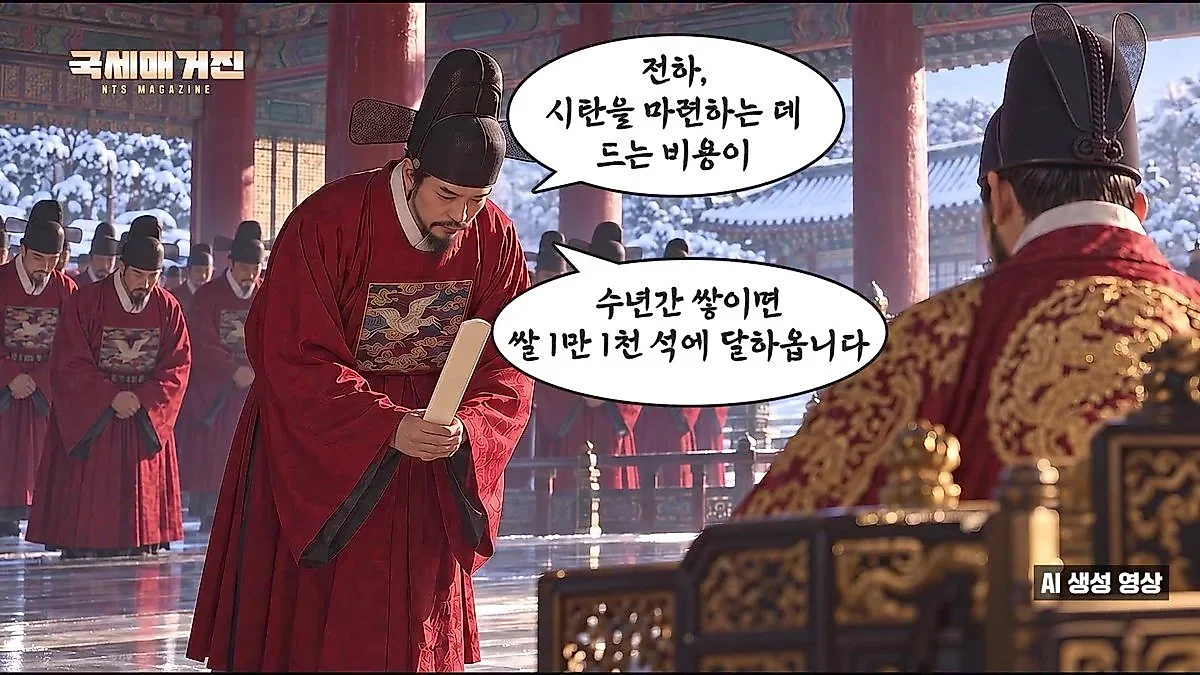
During the reign of Gyeongjong in 1720, the Joseon court proposed reducing sitan allocations for the Crown Prince's and concubine's palaces to alleviate the burden on citizens, as heating costs had reached 11,000 sacks of rice.
In the Joseon Dynasty, the cost of heating palaces for the winter was a matter directly linked to national finances and the tax burden of the people, extending beyond simple procurement. This was because the costs incurred in preparing 'sitan'—a collective term for firewood and charcoal—acted as a significant burden on the citizenry.
Tax stories from the Joseon Dynasty shared by the National Tax Service contain the concerns of the royal court regarding the procurement of sitan for palace heating. At the time, sitan was one of the tributes that citizens had to provide for the heating of government offices and palaces. According to records in the Annals of the Joseon Dynasty from 1720 during the reign of Gyeongjong, a proposal was submitted to the court to reduce the amount of sitan provided to the Crown Prince's palace and the concubine's palace.
Heating costs totaling 11,000 sacks of rice lead to reduction in court allocations
Min Jin-won, who served as the Minister of Taxation at the time, explained that the combined cost of preparing sitan over several years amounted to 11,000 sacks of rice. The cost of preventing the cold in the palaces was large enough to place significant pressure on national finances. Consequently, the court took measures to reduce the amount of sitan allocated to the palaces to alleviate the burden on the people caused by sitan procurement.
These records demonstrate how closely the process of securing essential resources for national operation was connected to the lives and tax burdens of the people. It shows that managing the heating efficiency of the palaces was handled in the same context as managing the corvée labor burden of the citizens.
'Household Labor Exemption' system granted corvée exemptions to filial sons and virtuous women
During the Joseo Dynasty, special systems existed to ease the burden of taxes and corvée labor for those who practiced social values encouraged by the state. This was 'Household Labor Exemption.' Household Labor Exemption was a system that exempted the burdens, such as corvée labor, that the state imposed on each household. Here, corvée labor refers to the obligation of citizens to provide labor for government construction projects or the transportation of goods.
The beneficiaries of Household Labor Exemption were primarily individuals who served as social models, such as filial sons who served their parents with utmost devotion or virtuous women. Joseon, which emphasized filial piety and chastity based on Confucian values, commended those who demonstrated such conduct at the national level and encouraged social values by providing practical economic benefits through Household Labor Exemption.
While the institutional methods differ, modern income tax deductions and the Household Labor Exemption of the Joseon Dynasty share commonalities in that the state encourages certain behaviors based on specific criteria and alleviates tax burdens. While the modern era provides deduction benefits for dependents or donations, Joseon rewarded those who practiced values such as filial piety and chastity through the method of corvée labor exemption. Although the forms of tax systems have changed over time, it is consistent that the state has guided social trends by linking values it deems important to tax benefits.
Source: original video (YouTube)


0Comments
Comments are currently disabled.