
Kim Yeong-ik advises reducing stock allocation to 20% amid market volatility
Professor Kim Yeong-ik forecasts a period of box-range adjustment for the KOSPI through next year and advises investors to maintain a 20% stock allocation while holding cash-like assets. He anticipates new investment opportunities will emerge in the first half of next year as the market separates winners from losers.
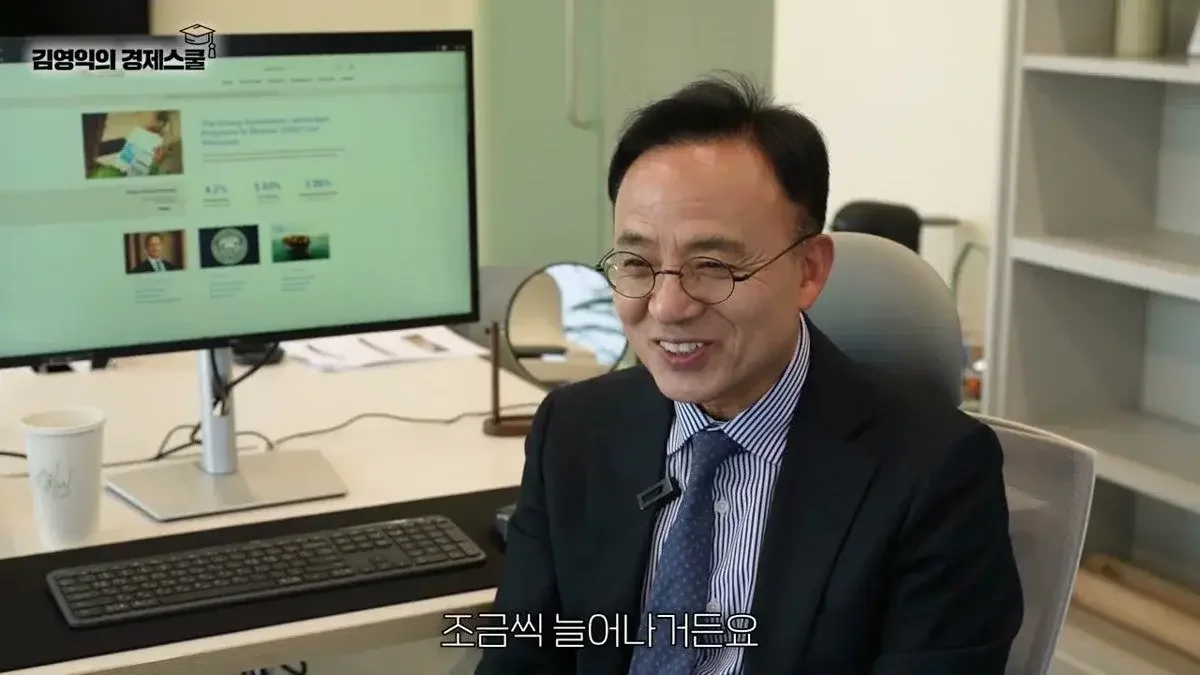
Professor Kim Yeong-ik recommended reducing stock allocation to around 20% as the KOSPI faces a downward phase, warning that the index could fall by 10% to 20% from current levels. He predicted that box-range adjustments will persist through next year, though new investment opportunities may arise during the first half of next year.
As the KOSPI market continues its downward trend amid increasing volatility, Professor Kim Yeong-ik has presented a specific asset allocation strategy, forecasting the first half of next year as a new window for investment opportunities.
Diagnosing the current market situation through the "Kim Young-ik's Economics School" channel, Professor Kim emphasized that now is a time for the "aesthetics of waiting," requiring patience. He defined the current market as an "extension of a downward phase." He noted that the decline has continued since the KOSPI recorded 9,380 points during intraday trading in mid-June, and considering the trend of leading indicators, he predicted that box-range adjustments will persist through next year, making it difficult for stock prices to rise significantly.
Mentioning the characteristic where a downward phase lasts for about 20 months when leading indicators fall, Kim analyzed, "It will be difficult for stock prices to rise significantly or even continue to fall through next year. If the economy worsens, the box range could move even lower." Accordingly, he strongly recommended "asset allocation" as a current response for investors.
"Reduce Stock Allocation to Around 20% During Leading Indicator Declines"
Kim provided specific guidelines for stock allocation based on market direction. During phases where leading indicators are falling, he suggested reducing stock allocation to around 20% and holding the remaining assets in cash-like instruments, such as short-term bonds. He explained, "If you hold cash-like assets, you can use them as an opportunity to reignite your investment when stock prices fall."
Conversely, he urged investors who currently hold high stock allocations to adjust their weight during every rebound. "When leading indicators rise, it is good to hold about 60% of financial assets in stocks," Kim advised. "In a highly volatile phase like the current one, a strategy is needed to gradually reduce stock allocation to around 20% whenever intermediate rebounds occur." He also left open the possibility that the KOSPI could fall by at least 10% to as much as 20% from current levels based on present indicators.
In particular, he stated, "The adjustment period will not end in the short term," adding, "Since the box-range adjustment will continue for at least the next year, waiting while holding cash is an investment in itself." He repeatedly emphasized that investors should establish their own "standards" to avoid the fear of missing a bull market during price surges or falling into panic during sharp drops. Kim pointed out, "Without a standard, you will buy stocks when optimistic stories emerge during price rises, and you will sell stocks even when asset prices are cheap when fearful stories are reported in the media during price drops."
"Separating Winners from Losers in First Half of Next Year... New Opportunities Will Arise Amid Crisis"
Predicting future market trends, Kim emphasized an attitude of preparing for 2027. He forecasted that next year will be a year where "uncertainty is high and volatility is great, but many companies will be weeded out while surviving companies will do even better." He specifically predicted that around the first half of next year, a period may arrive where stock prices surge again after a sharp drop, which would be the time to "separate the gems from the stones."
Mentioning instances where his past warnings were reflected in the market later than expected, he expressed regret over cases where investors suffered significant losses due to failures in risk management. He specifically lamented how some elderly investors in their 60s and 70s invested precious assets into the stock market and suffered great damage when certain investment banks (IBs) predicted the KOSPI would reach 10,000 or 12,000 points when the index was high.
To respond to these market changes, Kim continues to conduct courses through his "Practical Investment Classroom" to study economic trends, asset allocation strategies, and growth industries. He added, "Next year is a time when crisis and opportunity coexist," noting, "The market may face difficulties due to things like the US AI bubble theory, but this will be a very good opportunity from another perspective." He explained that his classes cover more practical content than the directional guidance provided on YouTube, such as presenting specific stock index figures through his own prediction models or studying promising industries based on analyst data.
"Establish Your Own Standards Based on Economic Indicators Such as Nominal GDP and Money Supply"
Kim mentioned specific analytical tools that investors should use to respond to market fluctuations. He revealed that he utilizes various economic indicators, such as nominal GDP, money supply (M2), and average daily export amounts, to set market direction. He also explained that he possesses daily, weekly, monthly, and annual prediction models, and re-establishes direction by checking each model whenever market conditions change.
"The direction often goes as expected; it is just that the timing is either early or late," Kim said, urging investors, "I hope you always establish a standard for yourselves." He specifically advised that investors holding pension-type assets should guard against emotional responses, such as selling everything at once to avoid losses during a price drop only to buy back later.
Finally, Kim emphasized, "Many companies will disappear next year, and surviving companies will do better. Since there will eventually be a period where prices rise again after a sharp drop, you must prepare in advance to seize the opportunity that will come around the first half of next year."
Source: original video (YouTube)

0Comments
Comments are currently disabled.