
Productivity gap between AI-adopting firms and others could reach two years by 2028
Kim Dae-sik of KAIST warns that the productivity gap between companies using AI and those that do not will expand exponentially, potentially reaching a two-year difference by 2028.
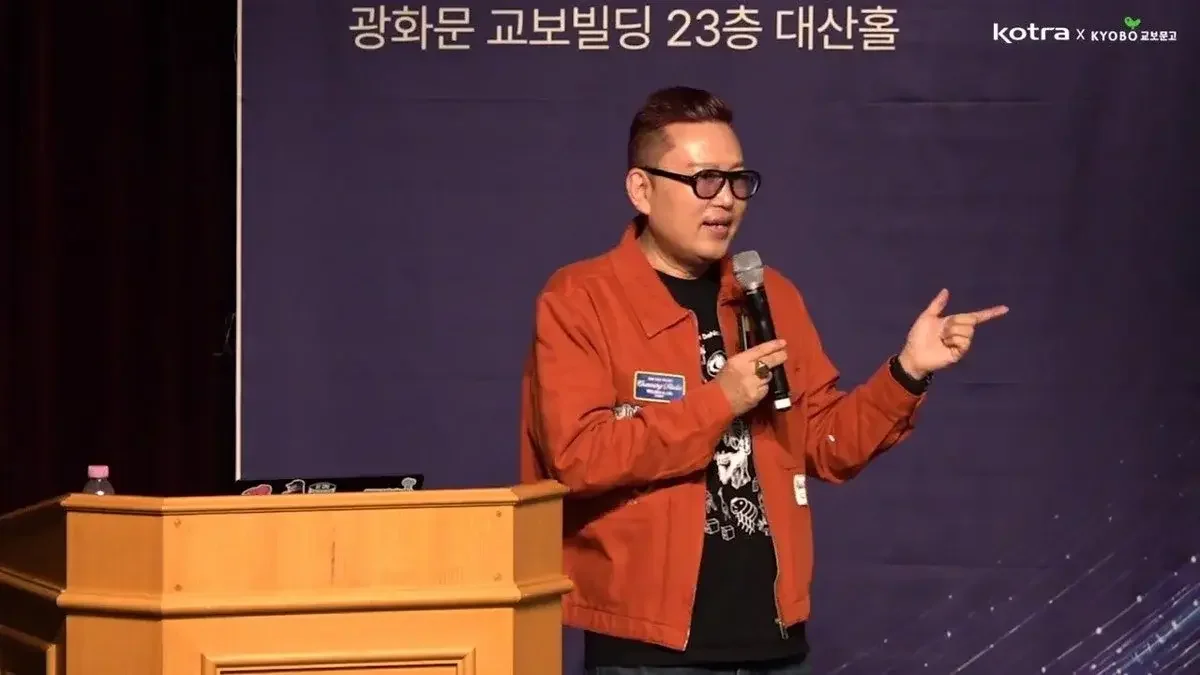
The productivity gap between companies utilizing AI and those that do not is expected to reach two years by 2028, according to KAIST professor Kim Dae-sik. During a briefing, Kim warned that the gap has already expanded from 30 seconds in 2023 to 6 hours currently.
As the pace of artificial intelligence (AI) technology development accelerates exponentially, warnings have emerged that the productivity gap between companies that utilize AI and those that do not will widen to an irrecoverable level. Beyond simply knowing about AI, the ability to effectively manage "Agentic AI"—which can judge and execute tasks independently—is expected to become a core indicator determining the survival of individuals and corporations.
During the "2027 Global Business Trends Briefing" presented by KOTRA TV, Kim Dae-sik, a professor at KAIST, emphasized that the development of AI technology should be viewed on a "linear scale" rather than a "log scale." This means technological progress is not a gentle curve but a series of explosive surges approaching verticality. "When ChatGPT appeared in 2023, AI was at a level that could replace about 30 seconds of human capability, but now it replaces about 6 hours of capability," Professor Kim diagnosed, noting that "technological development is not steady, but exponential."
"Productivity gap with competitors will reach two years in two years"
Professor Kim warned that whether a company adopts AI will be the decisive variable determining its success or failure. Because the speed of technological advancement is so rapid, the gap between companies that proactively adopt AI and those that do not is analyzed to grow uncontrollably over time.
He explained this using specific figures. In 2023, the difference was minimal, with companies using AI finishing work only about 30 seconds faster than those that did not. By 2025, a 45-minute difference had emerged, and currently, the gap has widened to 6 hours. "By the end of this year, this gap will widen to one week, and in two years, in 2028, the productivity difference between competitors will reach as much as two years," Kim said. "The moment a competitor begins to utilize AI well, our company will inevitably face difficulties. The only way is to use it before the competitor."
In particular, with the era of "Vibe Coding" opening—where anyone can code using natural language—technical barriers to entry have collapsed. Citing the Swedish startup Lovable as an example, Kim explained that in this era, even those without coding experience can obtain a result within 10 minutes by simply inputting a request such as, "Make an app that summarizes specific news and sends it to my email every morning at 7:00 AM." In fact, Google is generating 75% of its new code using AI, and global companies like Spotify are already reducing the proportion of direct coding performed by engineers.
Moving beyond Generative to "Agentic AI"... "2026 will be the era of those who command agents"
The AI paradigm is also shifting. The era of "Generative AI," which simply generates information, is fading, and the era of "Agentic AI," which performs selection and execution based on information, has arrived. Kim compared Generative AI to a "new employee" who requires frequent commands, whereas he compared Agentic AI to a "veteran" who completes tasks independently once a goal is set once a month.
As the speed of technological development accelerates, the completion point for Agentic AI is expected to be 2027, earlier than originally anticipated. Accordingly, individual survival strategies must be revised. Kim analyzed the necessary competencies by year: if 2023 was for those good at entering prompts, 2024 for those good at using AI tools, and 2025 for those good at Vibe Coding, then from 2026 onward, those who survive will be those who make as many AI agents as possible work on their behalf.
The possibility of AI replacement depending on the nature of the work was also mentioned. Kim classified human work into four combinations based on whether it is done "alone or together" and whether there is "an answer or no answer." He stated, "Work done alone that has a correct answer will be 100% replaced by Agentic AI." Conversely, he noted, "In creative fields that prefer work without a correct answer, AI will be needed, but unique human experience and knowledge will become even more important." He predicted that for professions like doctors or teachers, which must follow correct answers, AI will perform supporting roles while humans focus on "human skills" such as counseling and motivation.
"Emotional risk" scarier than technology... "AI is humanity's greatest gamble"
An analysis suggested that the biggest obstacle to AI adoption is not technical limitations but human psychological resistance. Citing a report from Garden Research, Kim pointed out that because Agentic AI directly threatens human jobs, the "identity confusion" and "survival instinct" felt by employees will be a key variable in technology adoption.
Indeed, according to data from the United States, 29% of all employees, and 44% of the MZ generation in particular, responded that they have intentionally interfered with AI utilization projects. This suggests that social consensus on whether to view AI as a tool or a competitor, and responses at the HR (Human Resource Management) level, may be more important than the technology adoption itself.
Finally, Kim warned of the imbalance between the speed of AI technological development and the speed of social adaptation. While AI evolves in units of weeks, political, economic, and social systems take years or even decades to adapt to change. "AI is like a gamble mixed with nine utopia buttons and one dystopia button," he said. "The question remains whether it is appropriate to continue this gamble while carrying the risk that the history of humanity could end."
Source: KOTRA TV (YouTube)



0Comments
Comments are currently disabled.