
Professor Kim Kwang-seok warns investors to exit during peak greed
Professor Kim Kwang-seok explains that successful investing requires distinguishing between the real economy and capital markets to identify psychological turning points. He warns that the peak of FOMO serves as a signal to exit the market.
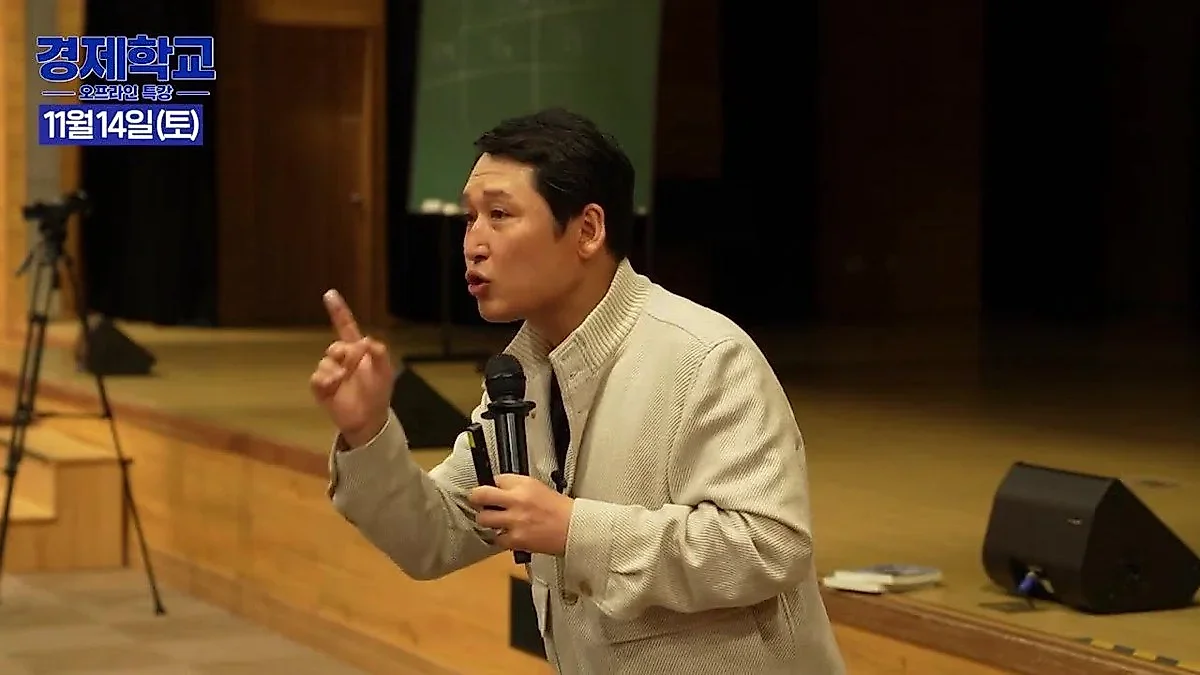
Professor Kim Kwang-seok advised investors to distinguish between the real economy and capital markets, noting that market lows often occur when fear peaks, such as during the 2025 tariff war or the 2026 Middle East war.
In the stock market, the experience of "buying only to see prices fall and selling only to see them rise" is not a mere coincidence. This is because the core driver moving the market is ultimately human psychology. From an economic perspective, to avoid the traps that investors easily fall into, one must clearly distinguish between the real economy and capital markets and capture the points where public sentiment reaches extremes.
In a special lecture presented by The Man Who Explains the Economy (Kim Kwang-seok TV), the psychological volatility faced by investors and macroeconomic response strategies to overcome it were discussed. Professor Kim Kwang-seok emphasized that both market rises and falls are determined by "psychology," explaining that the ability to read the point where fear and greed intersect determines investment success or failure.
The real economy and capital markets move separately
The most important principle presented by Kim is to "distinguish the real economy from the capital markets." While many investors believe that stock prices must fall if real economic indicators worsen, capital markets react first to sentiment before actual events occur. He advised, "If buying cheap at the bottom is an investment principle, you must use macroeconomic events as coordinates to judge which point is a cheap price."
He explained this using examples from 2025. At that time, the market was gripped by extreme fear of a "tariff war" following the announcement of reciprocal tariffs. On April 3, 2025, as both sides announced reciprocal tariffs, fear that the trade war would intensify overwhelmed the market, leading to a major correction lasting about one week. When the fear of the tariff war peaked, stock prices in approximately 200 countries formed their lows. Although the actual impact of the tariffs on the real economy appeared in August 2025 when the tariffs took effect, the capital market had already hit its low and prepared to rebound around April when fear peaked. At that time, even though Samsung Electronics' exports to the United States had never decreased, the market abandoned risky assets due to fear of being unable to export.
The case of 2026 is similar. When a war broke out in the Middle East in late February, the market remained on edge for a month, trembling with fear over the development of the war. Kim analyzed that "late March 2026, when the fear of the Middle East war peaked, was the low point for global stock prices," noting that this period was the peak for treasury yields and exchange rates in the first half of 2026, where all macroeconomic indicators converged. Even if the war continues, the market reacts once the peak of fear passes, such as when international oil prices failed to renew the high point of March 2026.
Fear is short-lived, while real shocks come later
Kim specifically categorized the "duration of fear" following major economic events. The fear following the 2025 tariff war lasted about 7 days, while the 2026 Middle East war pressured the market for about 30 days. Additionally, the fear following the results of the mid-term elections in the second half of 2026 was relatively short, lasting about 5 days. He evaluated that while fear regarding data center regulations or reductions in defense spending shook the market after the mid-term elections, these were lower in intensity and duration compared to the tariff war or the Middle East war.
The important point is that this fear appears before the actual impact on the real economy. For example, issues such as data center power demand obligations and the announcement of bills only affect the real economy after the opening of Congress, but stock prices undergo corrections earlier during the "fear stage." In other words, by the time negative data from the real economy actually begins to appear, it is often a period where the capital market's correction has already ended and is rebounding.
Citing the cases of Samsung Electronics and SK hynix, he added, "The fact that performance will be good until 2027 (real economy) does not immediately guarantee a rise in stock prices (capital market)." Kim stated that he has met with the heads of each division at Samsung Electronics 40 times this year and does not doubt their performance through 2027, but pointed out that "the logic claiming that because performance is good, the stock price will also be good, is a failure to distinguish between the real economy and the capital market."
The peak of FOMO is the exit signal
The momentum for a strong market rise comes from erasing fear and embracing "greed." The market rises when everyone possesses the greed to become wealthy. Kim warned that investors must be wary of the "FOMO (Fear Of Missing Out)" that occurs during this process.
He explained this using examples from his surroundings. He mentioned a case where an individual in their mid-80s, who had never invested in stocks throughout their life, invested retirement funds this past May driven by the market uptrend and earned massive profits in a single month. Kim emphasized, "This is exactly the period when everyone agrees that stock prices will rise, but it is at such times that the market, instead, does not agree with them." He stressed, "The peak of FOMO—when voices grow loud suggesting everyone buy basic stock investment books or even withdraw jeonse deposits to invest—is the peak of the market." In fact, this past June was the month when basic stock investment books were sold the most, suggesting that many entered the market feeling FOMO.
Ultimately, successful investing requires the courage to move contrary to public sentiment. Kim explained, "A strong rise in stock prices is the result of erasing fear and having greed, and a strong fall in stock prices is also due to psychology." He reiterated the importance of a contrarian approach—buying at the low point dominated by fear and exiting at the high point dominated by greed—stating, "At the point where FOMO reaches its peak, we must exit the market."
Source: original video (YouTube)


0Comments
Comments are currently disabled.