
US inflation surge adds pressure on South Korean stocks as AI leadership shifts
US producer prices rose 1.3% in September from the previous month, exceeding market expectations and adding to uncertainty over interest rates. Professor Kim Kwang-seok said South Korean stocks also face pressure from a shift in AI market leadership, arguing that stocks outside the leading group are not investment candidates.
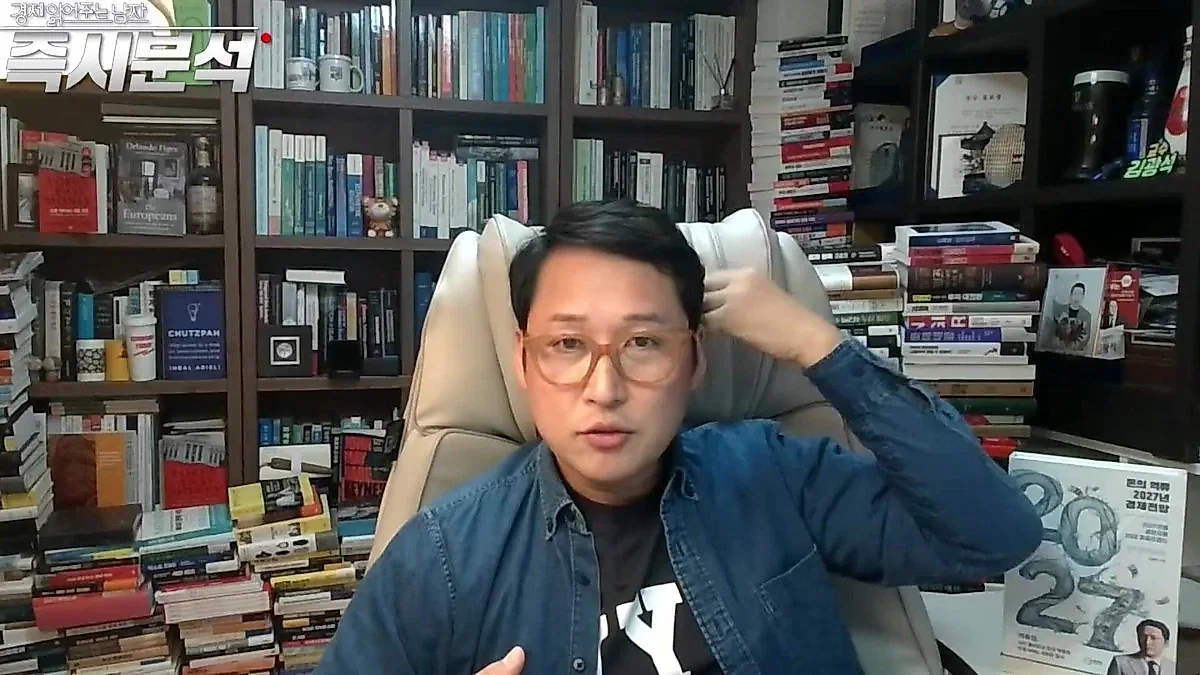
A sharper-than-expected rise in US producer prices is heightening tensions across global financial markets, adding interest-rate uncertainty to the pressures facing South Korean stocks as leadership within the AI industry shifts.
September’s producer price index, or PPI, rose 1.3% from the previous month, exceeding market expectations. In an analysis presented by The Man Who Explains the Economy (Kim Kwang-seok TV), Professor Kim Kwang-seok said rising inflation pressure had increased the likelihood of another US interest-rate increase, with short-term Treasury yields moving higher.
The analysis described PPI as a leading indicator of the consumer price index, or CPI. With the September CPI report released the previous day followed by an unfavorable PPI reading, it warned that the inflation outlook for October and November could turn sharply negative. Inflation figures above market expectations could cause substantial market turbulence.
Kim said the pressure was also worsening companies’ financing conditions. He cited CoreWeave, a provider of AI cloud infrastructure, whose bonds issued to raise funds carried interest rates of more than 15%.
Recalling remarks from a breakfast seminar, he asked: “Would any business leader here issue bonds at 15% to launch a new business?” He argued that issuing bonds to finance new ventures was close to impossible in such a high-interest-rate environment.
For South Korean equities, Kim described a combination of adverse developments. He said the market’s center of gravity had shifted to the United States after July’s correction and identified South Korea’s failure to keep pace with changes in market leadership as a central reason for its weakness.
“After July’s correction, it is the US market,” he said cautiously, explaining that a liquidity-driven rally was continuing with US stocks at its center.
Kim placed market leadership at the heart of investment decisions. He described 2025 as the year of graphics processing units, or GPUs, a core component of data centers, followed by memory semiconductors in the first half of 2026. The market was now in a transition as leadership moved into other areas, he said.
“If a stock is not a market leader, it is not an investment candidate,” Kim said. He attributed NVIDIA’s range-bound trading in 2026 to its loss of the leadership position it held in 2025.
To illustrate South Korea’s limitations within the AI industry, Kim cited global AI token market-share data. He said the United States and China dominated the AI model companies capable of developing models themselves and providing services. China accounted for 60% and the United States for 36%, leaving all other countries combined with about 4%.
South Korea’s share was just 0.02%, he said. Kim interpreted that figure as indicating that South Korea lacked companies developing their own AI models or delivering AI services to other businesses.
South Korea’s role in the AI value chain was concentrated in memory semiconductors used in data centers, the analysis said. It described Samsung Electronics and SK hynix as facing enormous opportunities in the real economy and identified tax revenue exceeding expenditure in 2027 as another potential opportunity.
The assessment was different from a capital-market perspective. Although South Korean stocks belonged to the AI value chain, the analysis said they were failing to participate in the global leadership trend centered on companies with AI services or models.
It concluded that the combination of inflation-driven interest-rate pressure and shifting leadership in AI was creating conditions in which investors were compelled to focus on the US-centered liquidity rally over the South Korean market.
Source: original video (YouTube)



0Comments
Comments are currently disabled.