
Is Excessive Greed for Higher Status Leading to Ruin? Analyzing the Jensen Huang Crisis Through the Philosophy of Wealth
Economic expert Kim Kwang-seok has analyzed the recent controversy surrounding NVIDIA CEO Jensen Huang, framing it as both a struggle for political hegemony and a manifestation of endless human desire.
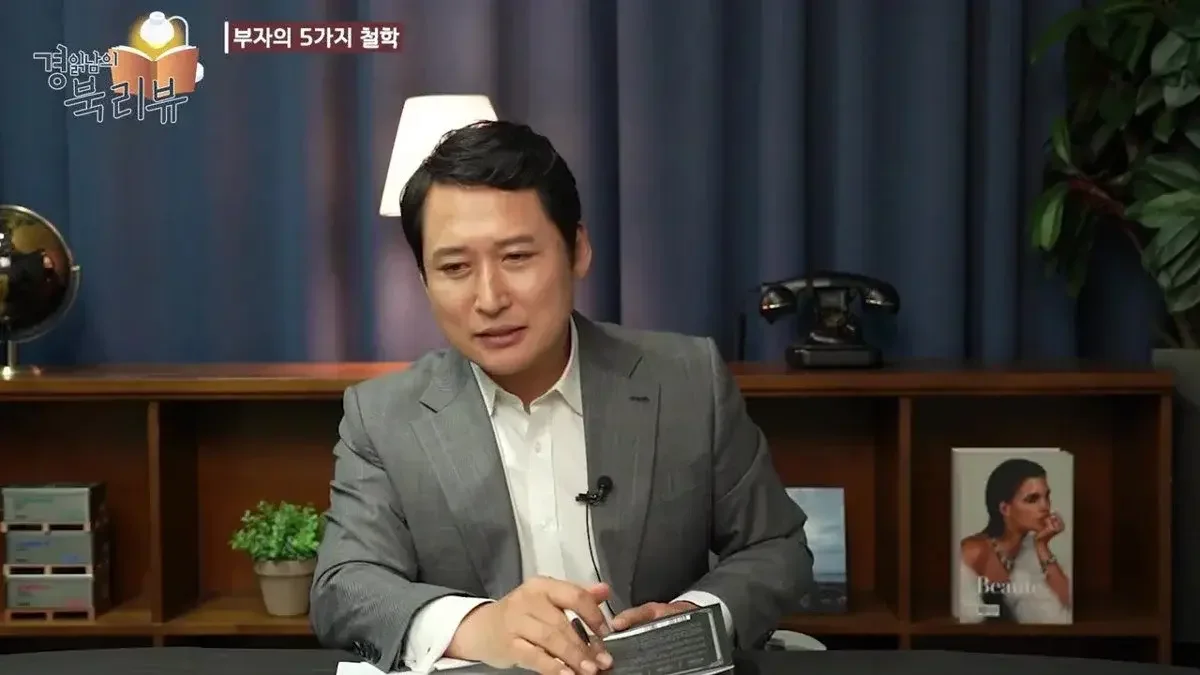
The recent controversy surrounding NVIDIA CEO Jensen Huang is expanding beyond a mere individual deviation into a massive political and economic upheaval. Through his channel, The Man Who Explains the Economy (Kim Kwang-seok TV), economic expert Kim Kwang-seok analyzed the essence of the Jensen Huang situation from two perspectives: the struggle for political hegemony and endless human desire.
The NVIDIA Ecosystem as a Tool for Political Hegemony Wars
Kim defined the primary essence of this situation as a "political duel" between the Democratic Party of Korea and the Republican Party. This is due to the immense power of the AI ecosystem NVIDIA has built. NVIDIA effectively dominates the AI market through a "circular finance" system that provides funds to hyper-scalers to purchase GPUs, and through the "CUDA ecosystem," which is difficult to leave once entered. Kim explained that NVIDIA does not simply sell the physical product of a GPU, but has created a structure where users must continuously supply GPUs by becoming immersed in the CUDA ecosystem.
Because of this monopolistic position, the company has become a target for political circles. The Democratic Party has campaigned on a platform to block data center construction by advocating for "AI deceleration" to control the speed of AI infrastructure installation, while the Republican Party opposes this by supporting "AI acceleration" that emphasizes growth. Kim analyzed that CEO Jensen Huang had been persuading the U.S. government that the CUDA ecosystem should be supplied to China to win the hegemony war against China, but this ultimately provided the pretext for political attacks. From Kim's perspective, the Democratic Party is attempting to use the Jensen Huang situation as a justification for "AI deceleration" to strengthen export controls against China.
The imbalance in GPU supply is particularly noteworthy. It is noted that the circumstances surrounding a single company called Megaspeed, headquartered in Singapore, receiving priority supply of 240,000 GPUs are difficult to interpret without considering power structures. This is highly unusual when compared to the 260,000 GPUs that the South Korean government, Samsung Electronics, SK, Naver, and Hyundai Motor Company have agreed to receive distributed over the next five years. In the case of South Korea, the supply consists of 50,000 for the government, 50,000 for Samsung Electronics, 50,000 for SK, 50,000 for Hyundai Motor Company, and 60,000 for Naver; Kim explained that it is highly bizarre for a single company like Megaspeed to secure a volume comparable to this entire group as a priority.
The Tragedy of the 'Losers' on the Ladder
Beyond the political background, another essence Kim noted is human desire. Citing Sahil Bloom's book *The 5 Types of Wealth*, he explained that history is full of stories of "losers" who take excessive risks to climb higher on the ladder, only to lose everything. As described on page 410, many people take excessive risks to climb higher on the ladder and eventually lose everything.
The reason why figures once praised as next-generation entrepreneurs, such as Sam Bankman-Fried and Elizabeth Holmes, met tragic ends in criminal indictments and guilty verdicts was ultimately due to a blind sprint toward "more." Kim suggested that CEO Jensen Huang was also revered as a next-generation big tech leader, but that excessive greed for higher status may have caused his ethical standards to collapse. He judged it to be "a tragedy caused by human desire to climb higher by taking excessive risks."
The future course of CEO Jensen Huang depends on the results of the congressional hearing scheduled for December. Kim predicted that if the situation is concluded as a simple personal matter (such as an affair), a return may be possible, but if there is sufficient evidence of violations regarding espionage laws, export control laws, or security-related laws, he would have to go to prison rather than return. The unique organizational structure of NVIDIA, the "one-key man system," was also mentioned. It is analyzed that because of a structure where 60 executives report directly to CEO Jensen Huang out of approximately 45,000 workers, it is a special system where communication among executives is less developed compared to other companies, which is acting as a factor in the control aspect of this situation.
What a Leader Who Forgot 'Lagom' Needs
Through this incident, Kim revisited the true value of wealth. He mentioned the Swedish word "Lagom." Lagom means "just the right amount" and signifies a state of balance and equilibrium. However, he emphasized that Lagom is not a fixed number, but a goal that one must define for oneself against constantly rising expectations.
Quoting a sentence from the book, "If you allow your expectations—the definition of enough—to grow faster than the rate at which your assets increase, you can never possess true financial wealth," he added that the value of "enough" would have been necessary for CEO Jensen Huang. Kim mentioned that if CEO Jensen Huang had possessed the value of "enough," he would not have reached this kind of situation. Ultimately, Kim's conclusion is that the Jensen Huang situation is a tragic facet created by unstoppable human desire, hidden behind the grand pretext of technological hegemony.
Source: original video (YouTube)


0Comments
Comments are currently disabled.