
NVIDIA scandals and the 'luck factor': Dr. Hong Chun-uk advocates asset allocation over individual stocks
Dr. Hong Chun-uk explains why investors should focus on index investing and asset allocation rather than individual stocks, citing the unpredictable "luck factor" and historical market volatility.

Even with a perfect analysis of a company's fundamentals and management capabilities, an unexpected variable can cause a carefully built structure to collapse. As seen in the recent case of NVIDIA, personal scandals involving management or sudden shifts in market trends force individual stock investors to face the uncontrollable realm of "luck."
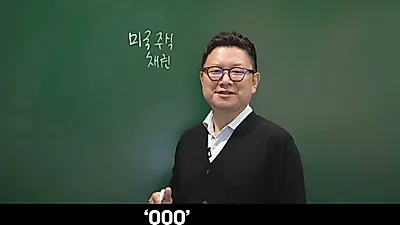
Through his YouTube channel "Hong Chun-uk's Economics Lecture Notes," Dr. Hong Chun-uk explained why investors should focus on index investing and asset allocation rather than individual stocks, drawing on painful past experiences. Observing that even companies led by extraordinary managers like Jensen Huang at NVIDIA can be shaken by individual issues, he emphasized that individual stock investing is a field that requires not only personal ability but also "luck."
"Cisco plummeted 90%, NVIDIA is no exception"... The unpredictable fate of individual stocks
Dr. Hong cited the case of Cisco, which held the position of the world's largest company by market capitalization during the IT bubble. At that time, Cisco was a prestigious company with immense performance and networks, but its stock price plummeted by more than 90% as the IT boom collapsed. Investors who were stuck at the peak in 2000 lost a long 25 years before finally reaching a recovery period.
Citing Peter Lynch's theory, he explained that no matter how well one selects stocks, the structure of making a profit relies on about 6 to 7 out of 100 stocks performing exceptionally well. This is because the remaining stocks often barely keep up with or even underperform market returns. He pointed out that even powerful companies like NVIDIA could see their efforts vanish instantly if uncertainties, such as management scandals, erupt.
“The ability to foresee the next leading stock and achieve large profits through long-term investment is an area that even I, after studying for 33 years and writing hundreds of books, find difficult to master,” Dr. Hong advised. “I will not discourage attempts to catch the next leading stock, but investors should lower their expectations and establish realistic strategies.” He warned of market volatility through examples such as EcoPro in August 2023 and Hyundai Heavy Industries in 2007, noting that by the time a leading stock is confirmed, there is often little profit left to be made.
The 'trap of long-term investment' felt during the financial crisis... The specificity of the South Korean market
The decisive turning point for Dr. Hong to abandon individual stock investing and pivot to asset allocation was the economic crisis in South Korea in the late 1990s. While working at a securities firm in 1996, he analyzed and invested in highly blue-chip companies, but suffered as stock prices were cut by more than half during the 1997 foreign exchange crisis (IMF). At that time, South Korea had a structure extremely vulnerable to external shocks, such as plunging export prices and skyrocketing exchange rates.
"No matter how good a company was, it was useless in the face of a national crisis," he recalled, noting that he once saw a stock hit the lower limit for 11 consecutive years. He drew a sharp line against advice such as "just buy blue-chip stocks and hold them for 10 years," stating, "That is something said by looking only at the extremely lucky few who survived." Quoting Chung Ju-yung's "Did you even try?", he pointed out that discussing long-term investment after experiencing 11 consecutive years of currency fluctuations is an overly optimistic attitude.
Indeed, looking at the cases of companies that were once at the top of market capitalization, a continuous upward trend in stock prices is not guaranteed. He emphasized that the leading stocks of specific industries can change at any time, citing examples such as Korea Electric Power Corporation, which was number one in market capitalization in 1997; Hyundai Heavy Industries, which was number two during the 2008 global financial crisis; and LG Energy Solution, which was number two during the secondary battery boom in 2022. He added, "While our country's companies possess tremendous competitiveness, one should not speak carelessly about stock prices continuing to rise in a trend in the South Korean market."
Assets that move inversely to exchange rates... The core of asset allocation is 'risk diversification'
Ultimately, the conclusion Dr. Hong reached is an asset allocation strategy of holding assets that move in opposition to stocks. He stated that having gone through the 1997 foreign exchange crisis and the 2008 global financial crisis, he learned firsthand how dangerous it is to hold only Won-denominated assets in a place like the South Korean market, which is weak against external shocks. He explained that during the 2008 financial crisis, he personally learned the importance of holding assets that move inversely to stocks.
He emphasized that "stock prices tend to fall when exchange rates rise," and that investors should include foreign currency assets like the US Dollar (USD) or Japanese Yen (JPY), which increase in value during crisis situations, or assets like gold in their portfolios. He added that he became convinced of the need for asset allocation that can supplement the vulnerability of Won-denominated assets during crises, having personally experienced the value fluctuations of the Yen through trips to Japan. He also presented the fact that, based on an analysis of 20 years of data, bull markets occur when exchange rates fall and stock prices rise as a basis for asset allocation.
Dr. Hong suggested that for individual investors to endure market volatility while focusing on their realistic lives, systematic asset allocation based on index investing is the most efficient method rather than making high-stakes bets on individual stocks. He recommended index investing to individual investors who must focus on reality outside of investing and stated that he would continue to share specific methodologies in the future.
Source: original video (YouTube)


0Comments
Comments are currently disabled.