
Memory giants face TSMC dependence as HBM4 requires advanced logic processes
The transition to sixth-generation HBM4 is forcing memory manufacturers to integrate with TSMC's foundry ecosystem to meet complex logic processing demands. This shift is being accelerated by NVIDIA's push for customized memory architectures that require advanced semiconductor manufacturing.
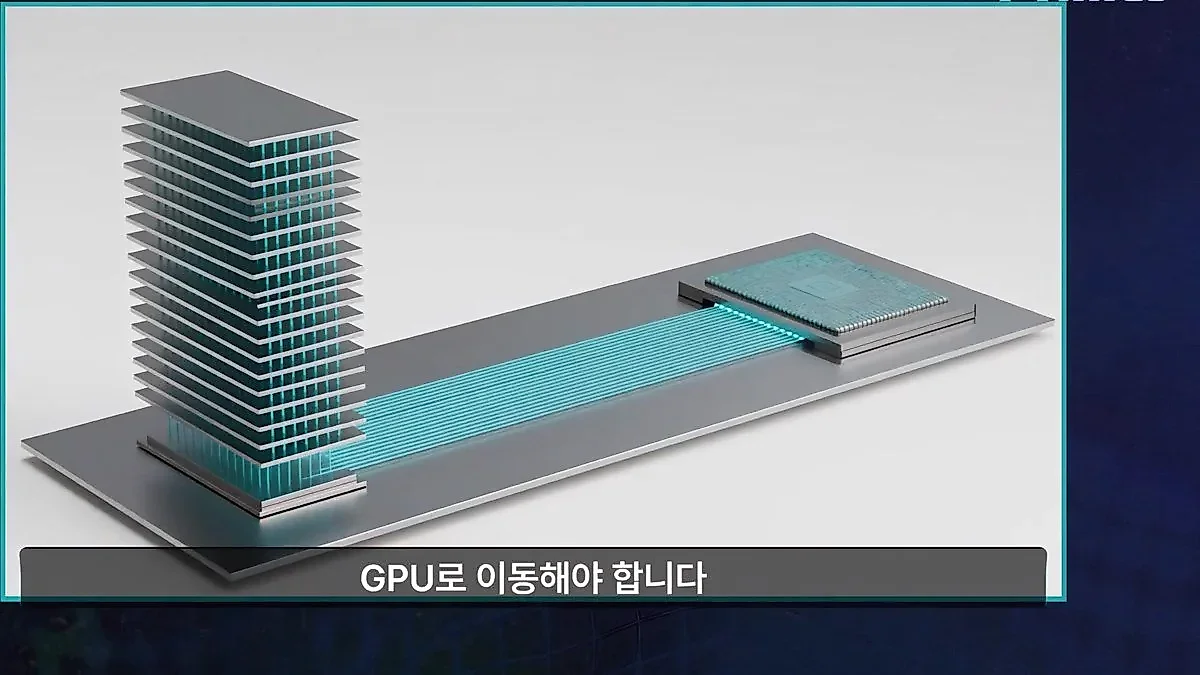
The shift toward sixth-generation HBM4 is forcing memory companies to rely on TSMC's foundry technology to produce complex base dies. This transition follows NVIDIA's demand for customized HBM that utilizes 3nm-class processes to increase bandwidth by 30% and reduce power consumption by 15%.
TSMC, often referred to as the "super vendor" of the semiconductor industry, is shaking up market leadership by penetrating the core processes of memory semiconductor companies. At the center of this shift is High Bandwidth Memory (HBM), the core of Artificial Intelligence (AI) memory. The landscape is transforming into a structure where domains previously handled independently by memory companies are becoming impossible to execute without TSMC's advanced foundry technology.
The Transformation of the Base Die: Surpassing the Limits of Memory Processes
HBM is a structure where multiple DRAM chips are stacked vertically like an apartment building. The part at the very bottom that supports the entire stack is called the "Base Die." Until now, the base die served as a simple "entrance" to transfer data between the stacked DRAM layers. Because up to the fifth-generation HBM (HBM3E), only basic circuits to transmit signals were required, memory companies such as Samsung Electronics, SK hynix, and Micron were able to manufacture them using their own processes.
The change begins with the sixth-generation HBM (HBM4). As the data transfer speeds required by AI chips increase rapidly, the number of signal lines (I/O) serving as data pathways is nearly doubling from the existing 1,024 to 2,048. The problem is that the control circuits required to handle these massive signal lines have also become twice as complex. This creates a challenge of implementing more than twice the amount of circuitry within the narrow area of the base die.
Existing memory processes are specialized in densely printing "cells" that store data, which limits their ability to implement logic circuits that perform complex calculations and decisions. Consequently, the advanced logic processes used to manufacture GPUs or CPUs have become necessary for base die production. As a result, memory companies are facing a situation where they must naturally entrust base die production to foundry companies like TSMC, which possess logic chip manufacturing capabilities.
NVIDIA's Demand for 'Customized HBM' Accelerates Dependence on TSMC
The momentum of this trend is further accelerated by the strategy of NVIDIA, the absolute leader in AI semiconductor design. NVIDIA is pushing for "NVHBM," a customized HBM optimized for its own GPU designs. The core of NVHBM is moving the "memory controller" (which acts as a warehouse manager), previously located inside the GPU, down to the HBM's base die.
When the controller moves directly beneath the memory chips, the GPU is relieved of the burden of memory management operations, allowing that space to be filled with computational circuits. This results in a 30% increase in bandwidth and a 15% reduction in power consumption. However, the base die, now housing the "brain" of the controller, becomes a functional computational chip rather than a simple support structure. NVIDIA is demanding that this base die be manufactured using ultra-fine processes (3nm-class) identical to those used for the GPUs themselves.
In particular, because NVIDIA produces its GPUs at TSMC, it seeks to unify the HBM base die with TSMC's processes for the sake of design and verification convenience. This has created a structure where memory companies must ultimately enter the TSMC ecosystem to supply products to NVIDIA. According to an analysis by T Times TV, the importance of the base die has surged, accounting for approximately 15% of the total HBM manufacturing cost. This has led to concerns that a significant portion of profits may flow to foundries rather than memory companies.
Strategies of the Three Memory Giants: Between 'Independent Paths' and 'Cooperation'
The memory industry is employing different strategies to respond to the restructuring of the ecosystem around TSMC. SK hynix has been the fastest to join hands with TSMC. It has already established a cooperative relationship to entrust the HBM4 base die to TSMC's 12nm-class process starting from 2024. The calculation is to avoid losing leadership in the next-generation market through preemptive foundry cooperation.
Micron has stated that it will maintain its own processes up to HBM4, but will use TSMC's base die starting from the next generation, HBM4E. On the other hand, Samsung Electronics is pursuing an independent path, leveraging its strength as the only company that possesses both memory and foundry businesses. Samsung Electronics is attempting to reduce its dependence on TSMC by directly producing base dies through its own foundry processes.
However, industry analysis suggests that memory companies are engaged in intense deliberation to avoid being relegated to a simple subcontracting structure. A "multi-foundry" strategy is emerging to avoid total dependence on TSMC, such as SK hynix considering the option of entrusting part of the HBM4E base die to Intel foundry. Ultimately, the decisive factor in the future HBM market is expected to shift from who can stack the chips better to who can most precisely match NVIDIA's designs and TSMC's process requirements.
Source: original video (YouTube)



0Comments
Comments are currently disabled.